Thursday, 08 October 2026
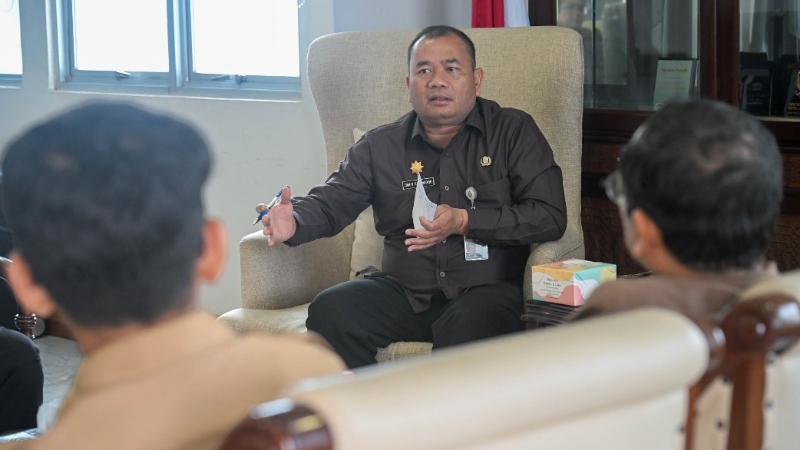
MEDAN | INDATANEWS.COM - The North Sumatra Provincial Government has reaffirmed its commitment to close cooperation with the Medan Center for Drug and Food Control (Balai Besar Pengawas Obat dan Makanan/BBPOM Medan) in monitoring the safety of processed food products manufactured by micro, small, and medium enterprises (UMKM). The initiative is aimed at protecting public health while strengthening the quality and competitiveness of local products, including UMKM products targeting export markets.
The commitment was conveyed by Acting Provincial Secretary of North Sumatra Timur Tumanggor on Tuesday, October 6, 2026, during a meeting with Head of BBPOM Medan Mojaza Sirait and his staff. The meeting was held in the Provincial Secretary's office at the North Sumatra Governor's Office, Jalan Pangeran Diponegoro Number 30, Medan.Various areas of cooperation between the North Sumatra Provincial Government and BBPOM Medan were discussed during the meeting. Particular attention was given to ensuring that processed food products available on the market comply with applicable safety and quality requirements.
Timur said joint monitoring involving various stakeholders could help improve the quality of products manufactured by UMKM. In his view, supervision should not focus solely on production quantity or volume. Equally important is ensuring that products meet the required standards, thereby enabling businesses to expand their market reach.The program is intended to help UMKM meet the required product standards while strengthening consumer confidence. Halal certification is also an important instrument for businesses seeking to expand their markets, particularly when their products are intended for markets with specific requirements.
Timur also welcomed BBPOM Medan's proposal to establish joint production facilities. These facilities could eventually be provided by the government and used jointly with UMKM to support production processes that comply with applicable standards.According to Timur, joint production facilities could provide a solution for UMKM that continue to face limited production capacity and inadequate equipment. With suitable facilities that comply with established standards, businesses could improve their production processes while maintaining consistent product quality.
"We hope that through joint monitoring involving all stakeholders, not only the quantity but also the quality of UMKM production in North Sumatra can be raised to a higher level. This step is intended to protect public health and increase the competitiveness of the national food industry, particularly processed UMKM food products for export," he said.The North Sumatra Provincial Government believes that improving UMKM product quality will not only affect business growth but is also directly linked to consumer protection. Safe food products that comply with applicable standards provide greater assurance to the public while strengthening confidence in local products.

The monitoring also covers the "Koperasi Desa Merah Putih" cooperatives. According to BBPOM Medan, these programs also require proper food safety oversight to ensure their implementation complies with applicable regulations and does not pose health risks to the public.
In addition to overseeing government programs, BBPOM Medan continues to monitor processed food products manufactured by UMKM. The agency also coordinates with the North Sumatra Office of Industry, Trade, Energy and Mineral Resources to provide assistance to UMKM and monitor products intended for export.Cross-sector coordination is particularly important because each export destination has its own regulations and standards for processed food products entering its market. UMKM seeking to expand into international markets must meet these requirements so that their products can be approved and marketed in the destination countries.
"Other countries have their own standards for controlling processed food products entering their countries. BBPOM itself issues between 5,000 and 6,000 documents every year," he explained.These documents reflect the scale of monitoring and service activities related to processed food products. At the same time, they demonstrate the importance of preparing UMKM to meet both administrative and technical requirements when their products are marketed internationally.
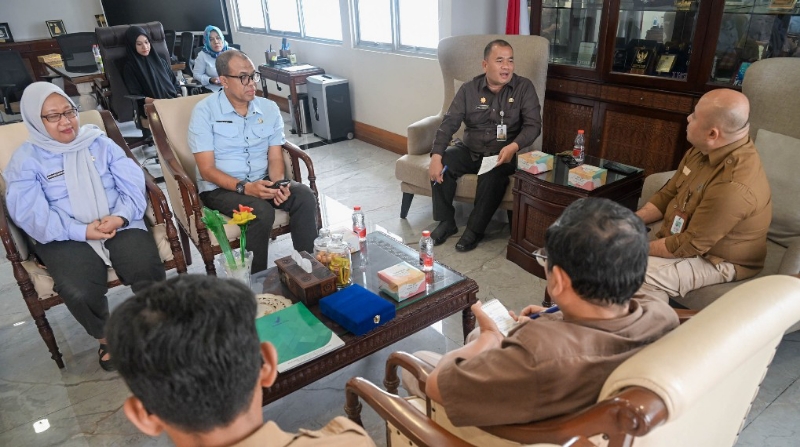
The cooperation should not be limited to monitoring measures. Assistance for UMKM must be provided simultaneously so that businesses understand and implement the applicable standards from the production process through to the marketing of their products.
Through a more integrated combination of assistance and monitoring, UMKM will have greater opportunities to improve product quality and expand their markets. Products that meet safety and quality standards will also have a stronger competitive position when entering national and international markets.For the North Sumatra Provincial Government, strengthening the UMKM sector is an important component of regional economic development. Therefore, improving the quality of processed food products must go hand in hand with certification, production facilities, business assistance, and consistent monitoring.
The cooperation between the North Sumatra Provincial Government and BBPOM Medan is expected to contribute to creating a safer and more competitive business environment. On one hand, consumers will receive better protection through food products that meet safety standards. On the other hand, UMKM will have greater opportunities to grow and increase their production capacity.These efforts can ultimately strengthen the position of processed food products from North Sumatra in the national market. If UMKM can meet the standards of their respective destination countries, greater opportunities will also emerge to increase exports of local products.
Through joint monitoring, assistance, certification, and support for the establishment of appropriate production facilities, the North Sumatra Provincial Government and BBPOM Medan seek to ensure that UMKM growth goes hand in hand with food safety and the protection of public health. (IDNC)REPORTER: Ahmad Zulfikar | EDITOR: Fik Sagala




 /home/u7391150/public_html/indatanews.com/theme/function.php on line 28