Sunday, 25 October 2026
MEDAN | INDATANEWS.COM - The legal aid organization Lembaga Bantuan Hukum (LBH) Medan has strongly condemned repeated food poisoning cases linked to the Free Nutritious Meals (Makan Bergizi Gratis/MBG) program. The organization believes food safety concerns within the government program can no longer be regarded merely as technical errors or negligence by kitchen staff, particularly as tens of thousands of children have reportedly been affected.
LBH Medan Director Irvan Saputra, S.H., M.H., said the series of poisoning incidents linked to the MBG program revealed serious problems in the implementation of a government initiative whose beneficiaries are children. In his view, the government must not limit its response to apologies or administrative sanctions against those considered responsible."Therefore, it is not enough to address MBG poisoning cases merely with apologies or administrative sanctions, such as closing SPPG facilities and dismissing their heads. These cases must instead be subjected to a full criminal investigation," Irvan said in an official statement issued on September 9, 2026.
Irvan said the poisoning cases must be examined from a criminal law perspective because their impact extends beyond minor health complaints. According to LBH Medan, some victims have suffered serious health problems after consuming meals distributed through the program.MBG Watch, meanwhile, has recorded around 42,000 affected children. Taking into account data from various sources, the overall number of victims has even been estimated at more than 50,000 people.
"This means that food safety within the MBG program is not an isolated problem, but a systemic problem that continues to recur and harm the children of our nation," Irvan said.In Irvan's view, the high number of victims demonstrates that the government must conduct a comprehensive review of the MBG program's implementation. The evaluation should not be limited to food providers' kitchens or Satuan Pelayanan Pemenuhan Gizi (SPPG) facilities, but must cover the entire implementation chain of the program.
LBH Medan said the MBG poisoning cases could raise suspicions of a criminal offense involving negligence if such negligence causes other people to suffer serious injuries or illness. In this regard, the organization referred to Article 474 paragraph (2) of Indonesia's new Criminal Code (KUHP), which provides for a prison sentence of up to three years and a Category III fine of up to Rp50 million.LBH Medan also referred to Law No. 18 of 2012 on Food. The organization cited Article 86 paragraph (2) in conjunction with Article 140, which requires anyone producing and distributing food to comply with applicable food safety and quality standards.
Violations of these provisions may result in a prison sentence of up to two years and a fine of up to Rp4 billion, according to the organization.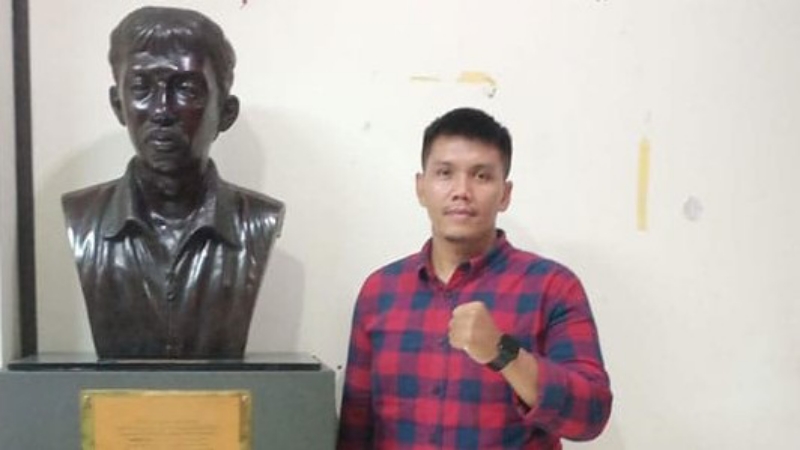
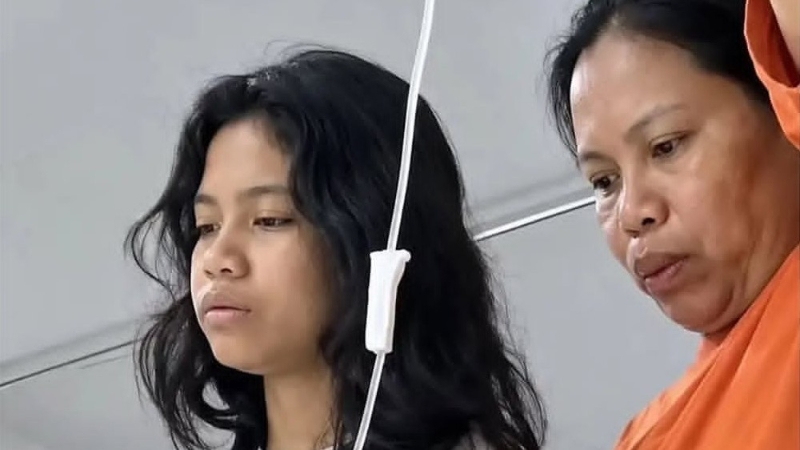
LBH Medan has highlighted the case of Febiola Br Purba, a high-achieving student at SMK Swasta Bersama Berastagi in Karo Regency, North Sumatra. According to LBH Medan, Febiola was among the victims of an MBG-related poisoning incident and has suffered serious health problems since the incident.
Irvan said Febiola's condition illustrates the concrete consequences children can face when the preparation and distribution of meals fail to meet food safety standards. According to LBH Medan, Febiola allegedly lost up to 70 percent of her memory as a result of the poisoning and is suffering from amnesia."This incident is a concrete example showing that MBG poisoning cases are not merely a technical problem, but may constitute a criminal offense that must be legally accounted for," Irvan said.
Irvan also referred to reports of victims who allegedly developed kidney problems. In his assessment, the condition further underscores the need for law enforcement authorities to conduct comprehensive investigations into every MBG poisoning case.LBH Medan stressed that the government cannot merely issue apologies, close SPPG facilities or dismiss their heads whenever poisoning incidents occur. Instead, the state must immediately assume responsibility for the safety of children participating in the program.
"Instead, the state must take responsibility in this case. President Prabowo and BGN Head Sudaryono must suspend the MBG program. What Febiola Br. Purba and tens of thousands of other children have experienced is a human rights issue. Therefore, under the Constitution, the state bears responsibility for protecting children and ensuring food safety," Irvan added.Irvan also addressed the development of poisoning cases following Sudaryono's appointment as head of the Badan Gizi Nasional (BGN). Sudaryono was sworn in by President Prabowo Subianto on July 22, 2026.
According to Irvan, the number of victims recorded between July and August 2026 remained high. The change in leadership at BGN, therefore, has so far shown no apparent improvement in the management and implementation of the MBG program."The change has by no means demonstrated an improvement in MBG governance. Instead, it has extended the list of children who have become victims of MBG poisoning," he said.
LBH Medan has called on the North Sumatra Police Chief (Kapolda Sumatera Utara) and relevant police units to immediately launch investigations and criminal inquiries into Febiola's case and the cases involving hundreds of other affected children. The organization said the investigations must establish why the food distributed to children failed to meet food safety standards.
Law enforcement authorities are also being urged to investigate possible negligence at every stage of the MBG program's implementation. This includes food procurement, processing, storage and distribution, as well as inspections of meals before they reach the children.LBH Medan further called on investigators to establish a causal connection between the food consumed by the victims and the health problems they experienced. If investigators find sufficient elements of a criminal offense, LBH Medan wants those responsible to be named suspects based on adequate evidence.
LBH Medan stressed that legal responsibility should not end with a single individual or institution. Law enforcement authorities must investigate all parties involved throughout the MBG implementation chain, including owners, employees or workers, as well as those responsible for supervisory functions within SPPG facilities.The organization also called on the North Sumatra Police to transparently disclose the results of the investigation to victims and the public. According to LBH Medan, this should include laboratory results involving the food and victims, as well as information on the progress of criminal investigations into MBG poisoning cases.
"LBH Medan has repeatedly and unequivocally informed the government and the public that the MBG project must be stopped because it harms the nation and the state. It must not merely be used as a project to provide benefits to certain parties, including officials, social organizations and political party affiliates," Irvan said.LBH Medan also linked the poisoning issue within the MBG program to the protection of human rights and children's rights. The organization said food safety in government programs must comply with Article 28B paragraph (2) and Article 28H paragraph (1) of the 1945 Constitution of Indonesia.
In addition, LBH Medan referred to Law No. 39 of 1999 on Human Rights and Law No. 35 of 2014 on Child Protection. According to the organization, these provisions reinforce the state's obligation to guarantee the survival, health, safety and protection of children.Within the framework of international human rights law, LBH Medan also referred to Articles 6 and 24 of the International Covenant on Civil and Political Rights (ICCPR), which Indonesia ratified through Law No. 12 of 2005. These provisions concern the right to life and the special protection of children.
LBH Medan further cited Articles 3 and 25 of the Universal Declaration of Human Rights (UDHR), which guarantee the right to life and everyone's right to an adequate standard of living for health and well-being.In light of the continuing series of incidents, LBH Medan believes the government must take stronger measures than merely imposing administrative sanctions. The organization is calling on the state to make the safety of children participating in the program its highest priority while also pursuing legal action against those proven to have acted negligently or to have been responsible for the poisoning incidents. (IDNC)
REPORTER: Darmailawati | EDITOR: Fik Sagala