Saturday, 03 October 2026
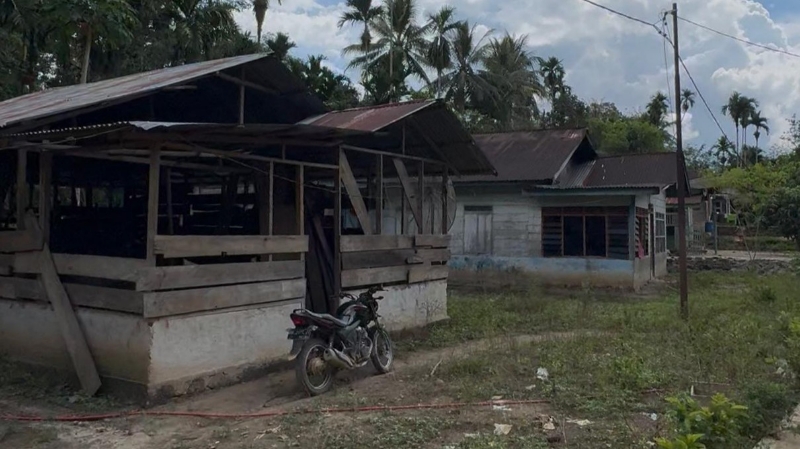
TAPANULI SELATAN | INDATANEWS.COM- Tanjung Baru Village, located in Huta Baru, Aek Bilah District, Tapanuli Selatan Regency, North Sumatra Province, is gradually losing its vitality. Once a lively settlement, the village is becoming increasingly deserted as a large proportion of its residents have decided to leave their hometown and relocate to other regions. Many of them have moved specifically to Jambi City.
Poor road conditions, inadequate infrastructure, limited telecommunications networks, and an unreliable electricity supply are among the main problems that have prompted numerous residents to abandon the village.Today, many houses in Tanjung Baru stand empty. Some buildings have already deteriorated because their owners left the village years ago. Agricultural land and plantations are also becoming increasingly overgrown as no one remains to cultivate or maintain them.
In the past, however, the village, whose residents predominantly share the Rambe family name, was known for its vibrant community life. Agriculture was one of the main sources of livelihood for the population. However, inadequate development and difficult transportation access increasingly made it challenging for residents to improve their economic conditions.The access road is covered with rocks, muddy sections, and deep potholes, making the journey particularly difficult. Both motorcycles and cars struggle to navigate the route. Visitors who want to reach the village are advised to use four-wheel-drive vehicles.
Along the entire route from Huta Baru to Tanjung Baru, there are virtually no residential buildings. The surrounding landscape consists mainly of extensive rice fields and rubber plantations owned by local residents.In addition to transportation difficulties, the community also lacks essential facilities. A reliable telecommunications network has yet to be established. Although mobile phone signals have occasionally become available in recent times, the coverage has only lasted for a few hours.
The electricity supply is equally problematic. Residents can only access electricity for several hours a day through a small-scale hydropower system. This situation significantly disrupts daily activities, particularly access to information and the development of economic opportunities.Despite the steady decline in population, Tanjung Baru's natural surroundings remain pleasantly cool. Lush trees surrounding the settlement give the village a green and picturesque appearance. However, the beauty of the landscape stands in stark contrast to its increasingly deserted social environment.
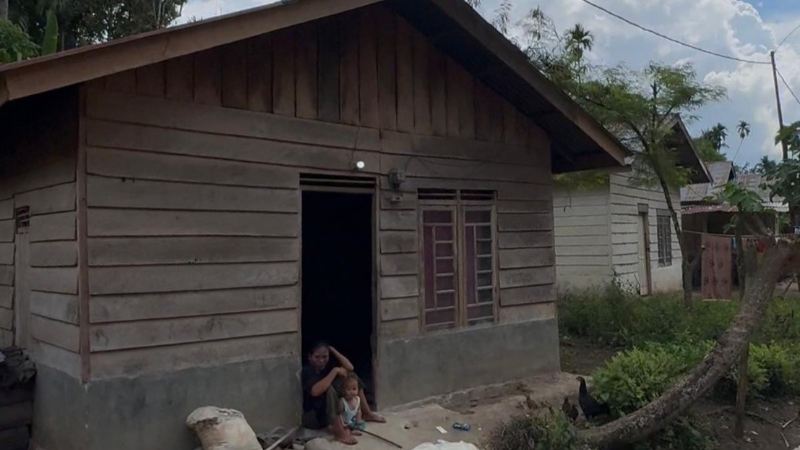
Isman explained that he has a strong desire to maintain and protect the village, which forms an important part of his life. This is why he continues returning to Tanjung Baru, even though his children and other family members now live outside the village.
"I want to take care of and preserve the Tanjung Baru area as best I can," Isman Rambe said some time ago during a meeting in Jambi City.According to him, approximately six years ago, Tanjung Baru was still a lively village with a relatively large population. At that time, a resident named Ali Tambunan was particularly active in addressing the needs of the village community.
Ali Tambunan, who previously worked at the Aek Bilah District Office in Simpang Biru, was known for regularly visiting the village and helping residents resolve various problems."Whatever problems arose, he would take care of them and do everything he could to find solutions," Isman recalled. "But Allah loved him more and called him (Ali Tambunan) back to Him earlier. From that moment on, the village gradually lost its vitality. There was no longer anyone who was as dedicated to handling village affairs. Of course, there were still people who tried to help, but no one was as responsive and committed as the late Ali Tambunan," Isman said.
Since Ali Tambunan's death, Isman believes that various problems affecting the village have no longer received the same prompt attention as before. This situation developed gradually, causing infrastructure development in Tanjung Baru to fall increasingly behind."Over time, development continued to decline. The village became increasingly neglected, and support became less and less available," said Isman, who has lived in the village for more than 30 years.
Isman recalls that during its most prosperous period, Tanjung Baru had approximately 50 families or households. Today, that figure has dropped dramatically, with only around 10 families remaining.The population decline has occurred because numerous families have left the village in search of better living conditions and income opportunities elsewhere.
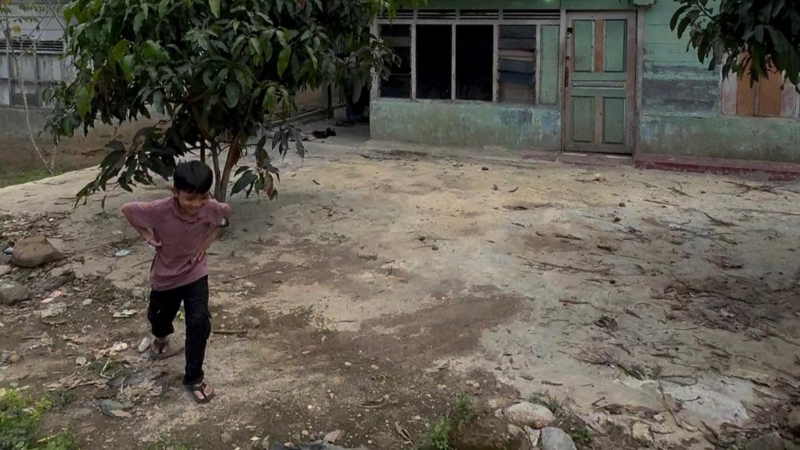
Difficult transportation access has had a direct impact on residents' economic activities. Most of the population depends on agriculture and plantation farming for their livelihoods. However, the poor road conditions make it extremely difficult for farmers to transport their harvests to nearby towns and sell their produce.
As a result, they have limited opportunities to increase their income. Faced with these restrictions, more and more residents have decided to move to other regions. Jambi City has become a particularly popular destination for many families because they expect to find better employment opportunities and higher incomes there.Gradually, houses that were once filled with activity have been left empty. Many homeowners have taken their parents, children, and even grandchildren with them to establish new lives in their destinations.
Meanwhile, the abandoned houses are beginning to deteriorate because no one remains to maintain them. Plantations and agricultural land are also increasingly neglected. Wild plants and dense vegetation have taken over cultivated areas, making some sections almost indistinguishable from forests.Isman is even concerned that outsiders could increasingly purchase land in Tanjung Baru under these circumstances, potentially gaining greater influence over land ownership in the village. According to him, some newcomers have already started buying properties, while many original landowners now live permanently outside the village.
He believes that some of the remaining residents may eventually follow their relatives and move away as well. If this trend continues, Tanjung Baru could ultimately lose its entire community life.Although Isman has a daughter living in Jambi City, he has no intention of settling there permanently. He only visits her for approximately two months before returning to his hometown.
"I only want to live in my home village. I want to take care of my hometown as best I can for as long as I am still alive. I also want to die in my homeland," he said in a sorrowful voice.For Isman, his hometown is more than just a place to live. It represents an important part of his life story that deserves to be preserved. That is why he has chosen to remain and care for the village for as long as his physical strength allows.
Residents Hope for Government Support for Roads, Electricity, and TelecommunicationsThe main access route to Tanjung Baru begins in Simpang Biru and passes through several settlements. These include Sigolang, Sipange, Sipagabu, Tapus Dolok, Tapus Godang, and Huta Baru before finally reaching Tanjung Baru.
The journey to the area highlights how limited infrastructure development remains in several remote parts of Tapanuli Selatan Regency.Based on this media outlet's observations several months ago, various remote areas still faced considerable infrastructure development needs. Although some regions have received infrastructure improvements, including repairs to damaged roads in Arse and Saipar Dolok Hole districts, many other areas continue to experience inadequate access.
In addition, the construction of a bridge in the Sipange area is among the projects intended to improve connectivity between different regions. The project has received support from the North Sumatra Provincial Government under the leadership of Governor Bobby Nasution.Nevertheless, residents in remote areas still need sustainable infrastructure development. Improvements to roads and bridges, a 24-hour electricity supply, and comprehensive telecommunications coverage are among the basic requirements for helping communities improve their daily lives.
The situation in Tanjung Baru also illustrates the broader challenge of urbanization affecting other rural communities. When economic opportunities and essential facilities are unavailable in villages, people, particularly those of working age, tend to seek better living conditions in larger cities.If this trend continues over the long term, migration could result in a substantial population decline. At the same time, local economies may shrink, community activities and mutual assistance may diminish, and residential buildings and agricultural land could remain abandoned and unused.
Furthermore, traditional customs and social relationships that have long shaped the identity of village communities could gradually disappear.Isman hopes the government will pay serious attention to the situation in Tanjung Baru so that the village does not suffer the same fate as other settlements whose populations have eventually dwindled to zero.
He also appeals to Tanjung Baru residents who have successfully established lives in other regions not to forget their origins and to contribute to rebuilding their hometown.In his view, responsibility for the village's development does not rest solely with those who continue living there. The government must also play an active role by providing adequate infrastructure, giving residents an incentive to return and help rebuild their homeland.
Among his main priorities are a properly accessible road, a reliable 24-hour electricity supply, and a telecommunications network that can be used at any time.Isman does not want Tanjung Baru to eventually become nothing more than a collection of abandoned buildings and plantations completely covered by dense vegetation. His wish is simple: the village, once full of life, should become a place where people can live permanently, pursue economic activities, and rebuild a strong community.
"I don't want Tanjung Baru to become a ghost village. It would be very unfortunate if that actually happened because many villages have already been abandoned in this way. I hope those who have moved to other regions will return, especially those who have become successful. People living far away should also help rebuild this village. In addition, I hope the government will provide proper road access, a 24-hour electricity supply, and telecommunications signals around the clock," Isman appealed.For Isman, preserving Tanjung Baru also means protecting the heritage of a village community that has developed over several decades. He hopes the government and those who have left their hometown will work together to revive the village before all its residents permanently abandon the place where they were born. (IDNC)
REPORTER: Dalil Harahap | EDITOR: Fik Sagala




 /home/u7391150/public_html/indatanews.com/theme/function.php on line 28