Thursday, 01 October 2026
MEDAN | INDATANEWS.COM - Inspector General of Police Suyudi Ario Seto has officially received approval from the Indonesian House of Representatives (DPR RI) to become the new Chief of the Indonesian National Police (Kapolri), succeeding General Listyo Sigit Prabowo. The approval was granted during the DPR RI plenary session on October 1, 2026, following the approval of his nomination by Commission III of the parliament through a fit-and-proper test process.
The change at the top of the Indonesian National Police (Polri) is not merely a change of officeholder. A change in the institution's top leadership always raises more fundamental questions: Is the new leadership capable of correcting existing problems, or will it merely continue previous patterns under a new guise?Suyudi places the vision of "Police Together with the Community" at the center of his leadership and describes fact-based criticism as an early warning system for the Polri. This approach is relevant, but the central question lies in its implementation. In an institution with extensive powers over freedom, security, and law enforcement, the quality of leadership cannot be measured solely by the concepts it presents. It must also be assessed by whether those powers can be transformed into accountable and clearly understood public service.
This is the central challenge facing the new police chief: public trust cannot be built through communication alone, but through consistent experiences with the legal system.Therefore, rebuilding trust must begin with oversight of police powers. The police undoubtedly need discretion and coercive powers to carry out their law enforcement duties. However, every power must have limits, justification, procedures, documentation, and a mechanism for correction. Power whose exercise cannot be explained will struggle to gain social legitimacy, even when it has a legal basis.
The next challenge lies in organizational culture. Structural reforms do not automatically change behavior. Structures can be altered through administrative decisions, while organizational culture develops through habits, leadership examples, promotion systems, recognition, and sanctions.Therefore, police professionalism must be demonstrated through daily actions: when receiving reports, interacting with citizens, using force, assisting victims, safeguarding the rights of suspects, and addressing internal mistakes. Promotions that fail to adequately consider integrity and past performance would weaken the message of reform. Conversely, consistent enforcement against violations would strengthen behavioral standards within the organization.
This organizational culture will subsequently be tested through law enforcement. What matters is not only how many cases are resolved, but whether legal procedures are consistently followed. The public must be able to see that the law is applied on the basis of evidence and due process, rather than status, connections, economic power, or public pressure.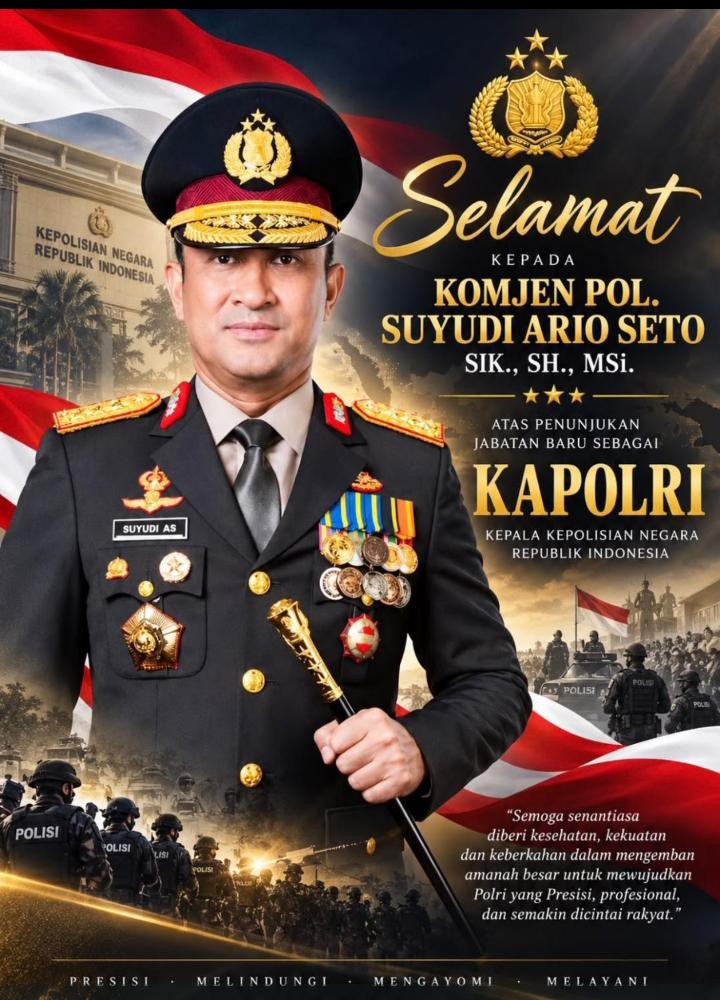
When a case receives attention because it spreads on social media rather than because legal mechanisms have functioned properly from the outset, it indicates a serious problem in the justice-access system. Public attention on social media should not be a prerequisite for authorities to take action.
At the same time, criticism must be understood as an instrument for correction. If criticism is described as an early warning system, it must be incorporated into institutional mechanisms: it must be received, reviewed, investigated, followed up, and translated into concrete changes. Without such a process, criticism remains merely a subject of public communication.The five areas of concern mentioned above essentially form one interconnected chain. Public trust is the outcome; accountability is the mechanism; a professional organizational culture is the foundation; consistent law enforcement is the evidence; and criticism serves as an instrument for correction.
Therefore, Suyudi's first 100 days in office should not become a stage for image-building. This period should produce measurable changes: complaints must be handled more quickly, investigative procedures made more transparent, violations by police officers sanctioned more consistently, services delivered in a more humane manner, and criticism genuinely translated into corrective measures.The formal mandate has been granted by parliament. The public mandate must be earned through performance.
The new police chief does not need more slogans about reform. Instead, the Polri must demonstrate that extensive powers can be constrained by law, guided by professionalism, effectively supervised, and used to advance justice.Suyudi's greatest test is not how strongly the Polri acts toward society, but how convincingly the Polri can account to society for every power it exercises. (IDNC)
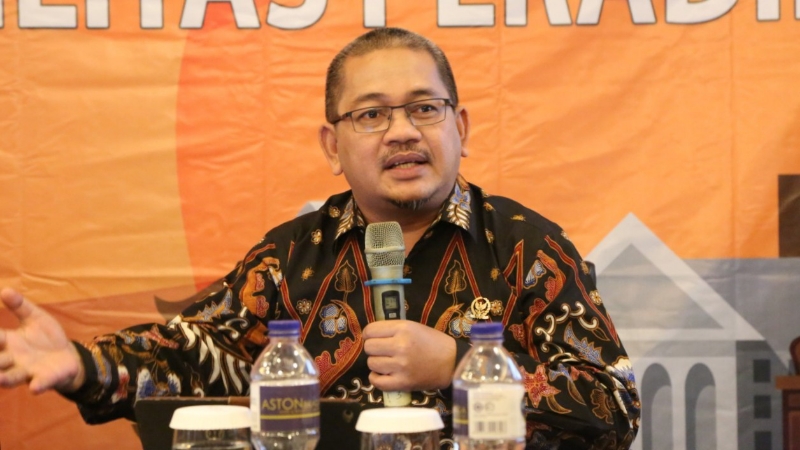
AUTHOR: Dr. Farid Wajdi, S.H., M.Hum(Founder Ethics of Care)





 /home/u7391150/public_html/indatanews.com/theme/function.php on line 28