Friday, 09 October 2026
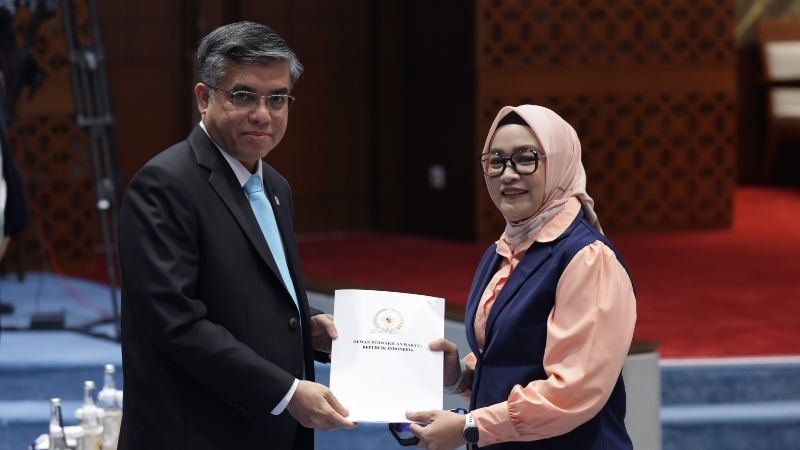
JAKARTA | INDATANEWS.COM - The Labour Protection Law, passed by Indonesia's House of Representatives (DPR RI) in a plenary session, contains a series of new and important provisions for workers and job seekers. The regulations cover various aspects of employment, ranging from equal treatment in the workplace, protection for job seekers, vocational training and employment placement to occupational safety and health (K3), as well as social safety nets for workers affected by termination of employment.
Labour Minister Yassierli said the government had drafted the Labour Protection Law in response to the Indonesian Constitutional Court (MK) Decision No. 168/PUU-XXI/2023. At the same time, the law is intended to consolidate labour regulations contained in Law No. 13 of 2003 on Manpower and the so-called Job Creation Omnibus Law, whose implementation has so far created legal uncertainty.
According to Yassierli, the new regulation places worker protection at the centre while also taking into account developments in the world of work and the continuity of economic activity.
"Worker protection is entering a new phase. The Labour Protection Law was developed to create clearer, fairer rules that are relevant to a world of work that continues to change and evolve," Labour Minister Yassierli said in a statement issued Wednesday, October 7, 2026, by the Press and Public Relations Bureau of the Ministry of Manpower.
Yassierli outlined 10 key points contained in the Labour Protection Law. The first concerns equal treatment in the workplace.
The regulation prohibits discrimination in recruitment, remuneration, career development and employment relationships. The government places the principle of equal treatment at the centre of the policy so that every worker, regardless of their background or individual circumstances, is treated fairly and with dignity.
The second point provides stronger protection for job seekers. The government is promoting more open access to labour market information while strengthening the obligation to report job vacancies. The measures are intended to prevent recruitment fraud, deception and the spread of fake job advertisements that could harm the public.
The third point concerns legal certainty in the implementation of internships and training programmes. The Labour Protection Law limits internships to a maximum of six months. Interns are also entitled to an allowance, occupational safety and health protection, as well as coverage under work accident insurance (JKK) and life insurance (JKM). They will also receive an internship certificate.
Labour Minister Yassierli stressed that companies must not use internship programmes as a means of replacing regular employees with cheaper labour. Internships must provide participants with opportunities to gain experience and skills and acquire knowledge relevant to the demands of the world of work.

The fourth point regulates fair employment placement. Recruitment and placement must be conducted objectively, transparently and without discrimination. The government is paying particular attention to people with disabilities, vulnerable groups and communities in disadvantaged regions so that they can gain more equal employment opportunities.
The regulation also prohibits companies and other parties from retaining workers' certificates or personal documents. This provides workers with legal certainty that they can retain possession of their personal documents throughout their employment.
The fifth point concerns balanced industrial relations. In building relations among workers, employers and the government, the government is guided by the principle of "A Progressive Industry, a Prosperous People."
The Labour Protection Law continues to guarantee workers' right to organise and express their interests. At the same time, the regulation provides legal certainty in resolving labour disputes, ensuring that conflicts can be settled through clearly defined procedures.
The sixth point establishes occupational safety and health (K3) as a fundamental worker right. Employers are required to ensure the safety and health of their employees through the implementation of an integrated K3 management system.
The approach is not limited to dealing with workplace accidents after they occur, but also places emphasis on risk prevention and the control of potential hazards in the workplace. Companies must therefore establish work systems that enable risks to be identified and reduced at an early stage, before they result in accidents or health problems.
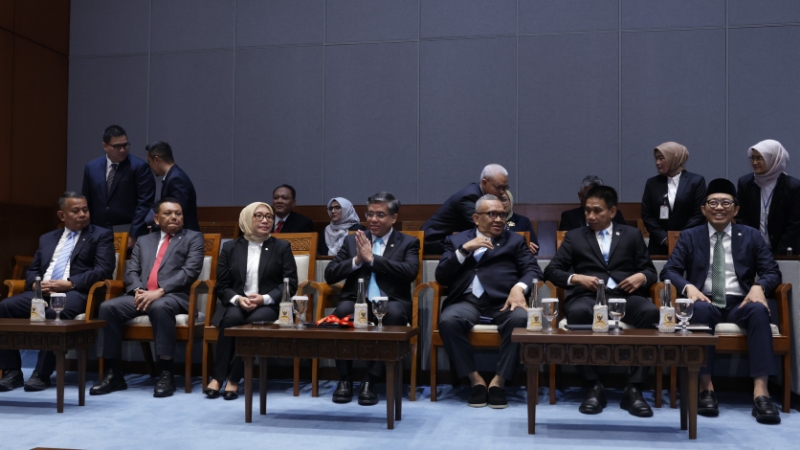
The seventh point strengthens labour inspection and the enforcement of sanctions. The government aims to establish more professional, independent and proactive supervision. The ratio between the number of labour inspectors and the number of workers and companies is to be adjusted. A supervisory committee will also be established to strengthen labour inspection mechanisms.
The regulation also provides for the gradual application of administrative and criminal sanctions. Through this approach, the government seeks to create a deterrent effect against violations while taking into account the continuity of economic activities.
The eighth point addresses the rights of women workers and workers with disabilities. The Labour Protection Law provides legal certainty regarding maternity leave and leave in the event of miscarriage, including provisions on continued wage payments. At the same time, protection for workers with disabilities is strengthened so that they can perform their jobs under equal conditions and with the same rights.
The ninth point concerns the social safety net for workers affected by termination of employment. The government provides for reserves for severance payments as well as unemployment insurance for workers whose employment has ended.
In addition, the regulation protects outsourced workers in state-owned enterprises (BUMN). It stipulates that the placement of outsourced workers is to be carried out through subsidiaries of state-owned enterprises. This is intended to provide clearer regulation of employment relationships and worker protection.
The tenth point addresses preparations for future changes in the world of work. The Labour Protection Law provides protection for flexible forms of employment, or the so-called "Future of Work," which are becoming increasingly widespread as a result of technological change and the development of new business models.
The regulation also strengthens the National Professional Certification Agency (BNSP) as an independent institution under the President. Strengthening the institution is expected to help improve workforce competencies and certification in line with the changing requirements of the world of work.
In addition, the Central Statistics Agency (BPS) is given a role in conducting surveys on the need for an adequate standard of living in coordination with the National Wage Council. The government is also promoting the integration of labour market data between the central government and regional governments.
The various provisions show that the Labour Protection Law is not limited to protecting workers during an existing employment relationship. The regulations also cover the period before entering employment, the period while performing work and situations in which workers face the risk of termination.
The government hopes that the consolidation of labour regulations and the strengthening of various areas of employment law under the new regulation will provide greater legal certainty for workers, job seekers and employers. At the same time, the economy is expected to retain sufficient room for growth as forms of employment and labour market challenges continue to evolve.
With its broad scope, the Labour Protection Law therefore establishes a new foundation for building employment relations that are fairer, safer, more equal and more adaptable to changes in the world of work. (IDNC)
REPORTER: Ahmad Zulfikar | EDITOR: Fik Sagala





 /home/u7391150/public_html/indatanews.com/theme/function.php on line 28