Thursday, 01 October 2026

JAKARTA | INDATANEWS.COM - The Ministry of Manpower has begun preparing a roadmap for the regulation of domestic workers following the enactment of Law No. 2 of 2026 on the Protection of Domestic Workers. The roadmap is part of efforts to establish a clearer and more targeted regulatory system for domestic workers while ensuring legal certainty regarding the rights and obligations arising from employment relationships.
Head of the Manpower Planning and Workforce Development Agency (Barenbang) at the Ministry of Manpower, Anwar Sanusi, said the new regulation provides an important impetus for changing society's perception of domestic workers. Domestic work has so far often been regarded as informal employment without a clear framework governing the employment relationship.Through Law No. 2 of 2026, the government recognizes domestic workers as workers with rights and obligations. This is intended to ensure that they are no longer viewed merely as "helpers" or "assistants," but as workers who carry out responsibilities and therefore require appropriate protection.
"We are very grateful that domestic workers are no longer regarded as helpers or assistants, but as domestic workers. This means they are recognized as workers who are entitled to rights, just like other workers," Anwar said on Tuesday, September 29, 2026, during a Ministry of Manpower webinar titled "Domestic Workers in the Care Economy – Toward Protected and Decent Work."Domestic workers play a role in the care economy because their work contributes to the continuity of family and household life. Their responsibilities include various household activities that, depending on the needs of each household, require specific knowledge, skills, and a sense of responsibility.
However, a significant portion of domestic work still takes place in the informal sector. This is one of the reasons the government needs to establish more structured regulations so that employment relationships between domestic workers and employers can be governed more clearly.The Ministry of Manpower believes that efforts to strengthen regulation must also take into account the specific characteristics of domestic work in Indonesia. The system being developed should be adapted to conditions on the ground so that the resulting regulations are not merely administrative in nature, but can actually be implemented by workers and employers.
On this basis, the government can gradually create a better-organized working environment for domestic workers. At the same time, domestic workers will have opportunities to develop their skills and professionalism in accordance with their respective areas of work.
One of the priorities of the Ministry of Manpower is the development of competency standards for domestic workers. According to Anwar, the government can use existing competency standards as one of the references for establishing a domestic worker competency system in Indonesia.
One possible reference is the competency standards used for the placement of Indonesian migrant workers in the domestic sector overseas. These standards can subsequently be adapted to the specific characteristics, conditions, and requirements of domestic work in Indonesia.Such adaptation is important to ensure that the competency standards do not merely replicate existing regulations, but instead address the actual needs of the domestic sector in Indonesia. The competencies of domestic workers may include both household-related skills and other knowledge that supports the professional performance of their duties.
With measurable competency standards, the government will have a foundation for improving the quality of domestic services. Domestic workers, meanwhile, can gain a clearer understanding of the skills they need to perform their work professionally.This step can also contribute to recognizing domestic work as a profession. When competencies are assessed based on clear criteria and regulations provide a definite direction, the position of domestic workers within employment relationships can be further strengthened.
Competency development must also go hand in hand with worker protection. Improving skills therefore cannot be viewed in isolation, but must form part of a system that ensures workers receive their rights in accordance with applicable regulations.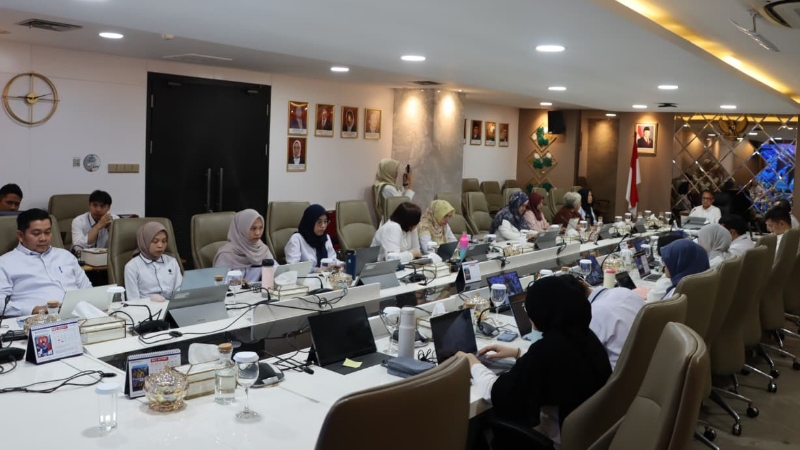
In addition to developing competency standards, the Ministry of Manpower must align these measures with the implementing regulations for Law No. 2 of 2026. The government must ensure that statutory provisions are translated into clear protection and regulatory mechanisms that can be implemented in practice.
The preparation of implementing regulations is particularly important because legislation needs to be complemented by instruments that bridge legal provisions and the practical management of employment relationships. With clear mechanisms in place, the government can provide guidance to the various parties involved in domestic work.For this reason, a roadmap for the regulation of domestic workers is important for establishing the government's step-by-step approach. The roadmap can serve as a foundation for developing policies, promoting competencies, strengthening worker protection, and further professionalizing domestic workers.
The government must also ensure that the regulatory framework provides legal certainty for domestic workers without overlooking the specific characteristics of domestic work. This approach is expected to contribute to clearer employment relationships and promote recognition of domestic work as part of the world of work.Anwar emphasized that the government needs clear direction so that the recognition of domestic workers does not stop at changing social perceptions or introducing legislation. Policy implementation must lead to concrete changes in the status and professionalism of domestic workers.
"In the future, we need to have a clear roadmap so that domestic work can truly develop into a recognized profession," Anwar said.The roadmap is expected to enable the Ministry of Manpower to systematically establish the regulatory framework for domestic workers. Strengthening the legal foundation, competency standards, worker protection, and professionalism are key aspects that must be pursued simultaneously so that domestic workers can gain a clearer position within employment relationships.
The implementation of Law No. 2 of 2026 also provides the government with an opportunity to establish a better-structured system for domestic work. Through clear regulation, domestic workers will receive not only recognition as workers, but also opportunities to develop their competencies and perform their profession under more dignified conditions. (IDNC)REPORTER: Ahmad Zulfikar | EDITOR: Fik Sagala





 /home/u7391150/public_html/indatanews.com/theme/function.php on line 28