Monday, 28 September 2026
BANYUWANGI | INDATANEWS.COM - Indonesia's Deputy Minister of Manpower, Afriansyah Noor, has emphasized the importance of professional competence, practical skills, and foreign-language proficiency for Indonesian workers seeking employment or apprenticeship opportunities in Japan. He said these qualifications provide an important foundation for workers to meet workplace demands while adapting to professional and social conditions in their destination country.
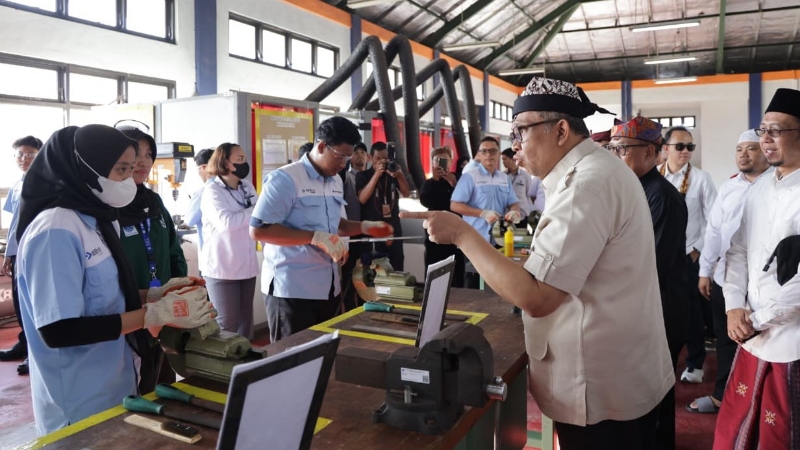
Afriansyah made the remarks while attending an event to strengthen vocational training synergies at the Banyuwangi Vocational Training and Productivity Center (BPVP) on Tuesday, September 22, 2026. During the event, the Deputy Minister of Manpower provided guidance to participants of the National Apprenticeship Program (MagangHub) and 84 participants in a training program in Japan under the cooperation framework with IM Japan.
Japan is one of the destination countries for the placement of Indonesian workers. Therefore, Afriansyah urged prospective apprenticeship participants and future Indonesian migrant workers to make comprehensive preparations while they are still undergoing training in Indonesia.
"Foreign-language proficiency is important, especially for young people who are interested in working abroad, including in Japan," Afriansyah said at the vocational training synergy-strengthening event at BPVP Banyuwangi on Tuesday, September 22, 2026.
Afriansyah said participants planning to undertake training in Japan cannot rely solely on their desire to work overseas. Before departing, they must possess adequate knowledge, practical skills, technical competencies, and language proficiency.
These qualifications will help participants adapt to different work processes, cultural characteristics, and living conditions. Language proficiency is also essential because participants must be able to communicate effectively and interact with people and their professional environment in Japan during their training.
Through its vocational training programs, the Indonesian government continues to improve the qualifications of prospective workers so they possess competencies that meet industry requirements. At the same time, the initiative forms part of efforts to improve the preparation of Indonesian workers for employment opportunities both domestically and internationally.
Afriansyah described Banyuwangi as one of the regions with a relatively high number of workers placed overseas. This situation makes strengthening vocational training at the regional level particularly important so that people who intend to work abroad receive adequate preparation before entering the placement process.
The training focuses not only on improving technical skills. Participants must also understand placement procedures, be familiar with working conditions in their destination countries, and possess communication skills that can support them in carrying out their duties.
With better preparation, prospective migrant workers are expected to navigate the placement process more safely and possess competencies that correspond to the requirements of their future employment.
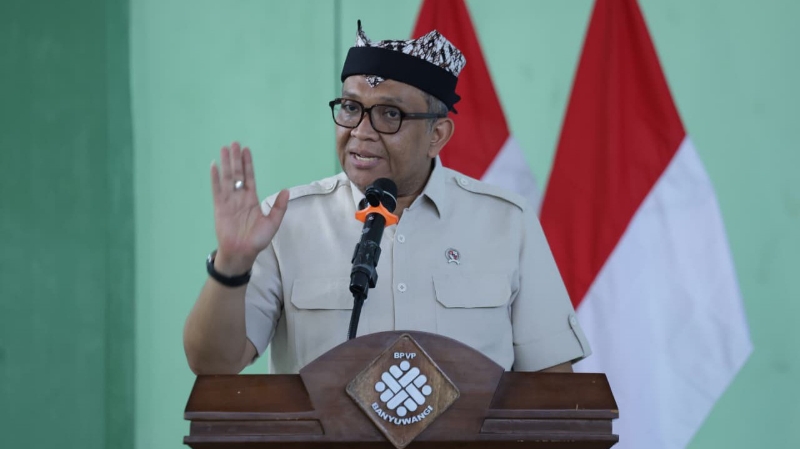
Alongside the need to strengthen competencies, Afriansyah warned the public against taking unnecessary risks when seeking employment abroad. He urged prospective workers not to easily trust offers promising high salaries without providing clear information about the recruitment and placement process.
The public must ensure that every stage of overseas employment placement is conducted through official channels and in accordance with applicable regulations. This is important to prevent people from becoming victims of fraud, human trafficking, or labor-related problems during their stay abroad.
"Never work abroad if there is no cooperation with the Indonesian government," he emphasized.
The message is particularly important for people seeking employment opportunities overseas. Beyond the level of income offered, prospective workers should verify the legality of the company, the specific nature of the job, the destination country, the recruitment mechanism, and the protection measures available to them.
The government also encourages the public to use vocational training institutions and official placement agencies so that preparation and departure can be carried out in accordance with applicable procedures. In this way, overseas employment opportunities can be pursued without neglecting competence, safety, and worker protection.
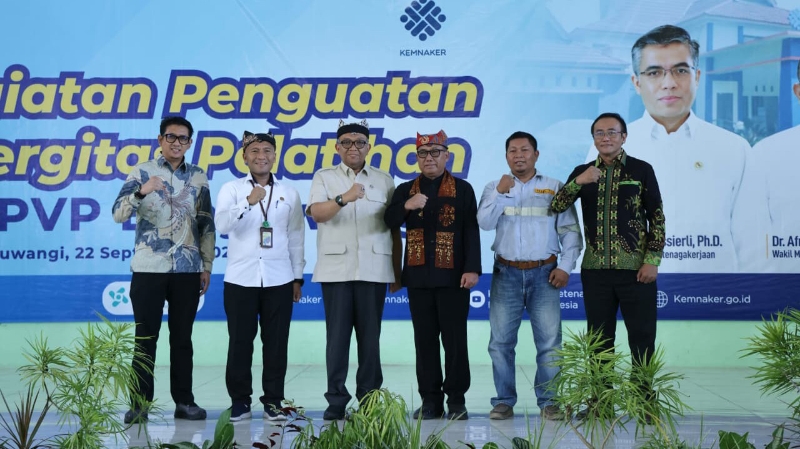
As part of the event at BPVP Banyuwangi, the government also officially launched National Vocational Training (PVN) Batch 4 and the September 2026 Non-Batch Training program. A total of 238 people are participating in 13 different training programs.
Of this total, 48 participants are enrolled in three PVN Batch 4 programs. Another 190 participants are taking part in 10 Non-Batch training programs covering various areas of competence.
The three PVN Batch 4 programs cover coffee beverage preparation, fish processing, and CNC lathe operation. The programs provide participants with opportunities to develop skills that can support their preparation for entering the workforce.
The Non-Batch programs include agriculture, hospitality, fashion design, office administration, digital content, food processing, automotive technology, and welding. The diversity of the programs demonstrates that vocational training addresses different competency requirements across various employment sectors.
In addition to launching the training programs, BPVP Banyuwangi also strengthened cooperation with several strategic partners through the signing of a Letter of Intent and Memorandum of Understanding (MoU) as part of integrated thematic vocational training.
The cooperation forms part of efforts to strengthen the connection between training institutions and the world of work. The involvement of strategic partners is expected to help ensure that training content continues to correspond with industry requirements and developments in the labor market.
The series of activities continued with the appointment of the board of the Forum for Communication between Training Institutions and Regional Industry (FKLPID) of Banyuwangi Regency by Deputy Minister of Manpower Afriansyah Noor.
The forum is intended to improve communication and coordination between training institutions and industry in the region. This synergy is expected to strengthen the connection between labor demand and the supply of qualified human resources through vocational training.
Strengthening vocational training in Banyuwangi is also part of efforts to prepare workers who possess not only technical skills but also the ability to adapt to changing workplace requirements. For prospective workers seeking opportunities in the international labor market, foreign-language proficiency and an understanding of working conditions in the destination country are essential components of comprehensive preparation.
By combining vocational training, competency development, foreign-language proficiency, and access to official employment placement channels, people can have a stronger foundation for pursuing employment and training opportunities, including opportunities in Japan. (IDNC)
REPORTER: Ahmad Zulfikar | EDITOR: Fik Sagala





 /home/u7391150/public_html/indatanews.com/theme/function.php on line 28