Friday, 02 October 2026
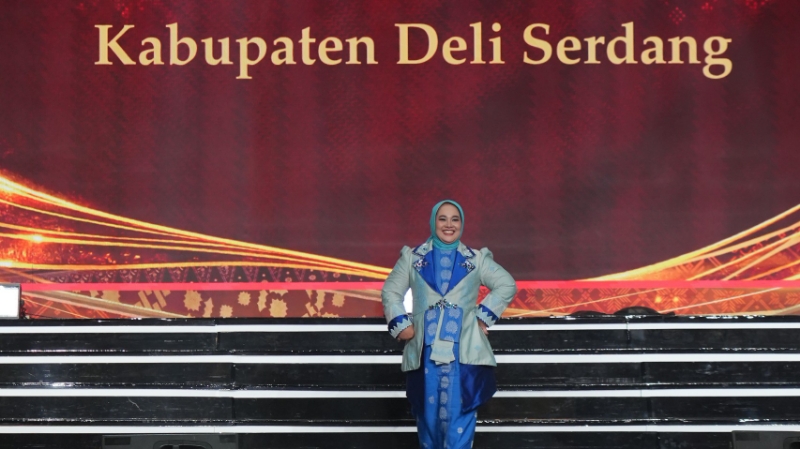
JAKARTA | INDATANEWS.COM - Woven fabric from Deli Serdang was showcased on Monday, 28 September 2026, at the Regional Traditional Attire and Textile (Wastra) Parade featuring the chairpersons of Dekranasda at the regency and city levels as part of Kriyanusa 2026 in Jakarta. Chairwoman of the Deli Serdang Regency Dekranasda, Jelita Asri Ludin Tambunan, wore a garment made from woven fabric produced by Raki Tenun Deli Serdang during the parade.
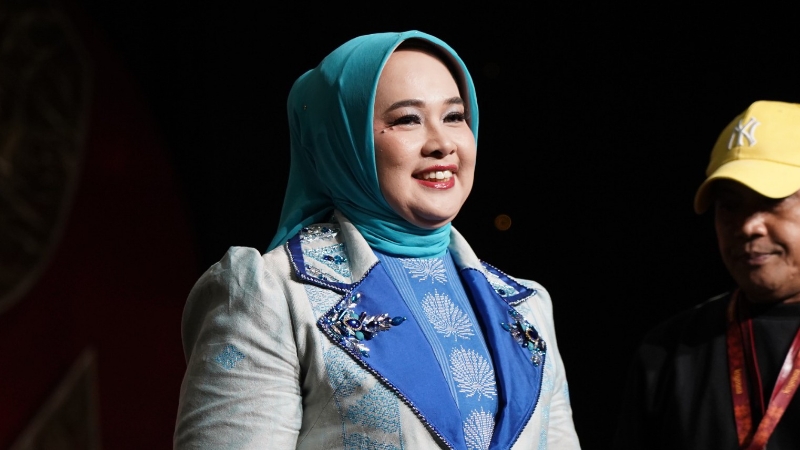
Jelita appeared in a blue and turquoise outfit that combined the richness of traditional Wastra with modern fashion design elements. Halime, a designer from Deli Serdang who previously showcased her work at Indonesia Fashion Week 2026, designed the outfit using fabric produced by Raki Tenun Deli Serdang.The appearance was part of efforts to promote the potential of regional handicraft products through the fashion stage and national-level events. The presentation of Deli Serdang woven fabric at the parade also provided local Wastra producers with an opportunity to introduce their work to a wider audience.
The combination of the woven fabric with Halime's design gave Deli Serdang Wastra a more modern and fresh appearance. The design retained the character of traditional woven fabric while presenting it in a form that follows the development of contemporary fashion.
The combination of traditional elements and modern designs demonstrates that regional woven fabrics can continue to evolve and reach different segments of society. The development of new designs also provides traditional textiles with greater opportunities to be showcased at various fashion events at both regional and national levels.For Deli Serdang, the presentation of its woven fabric at Kriyanusa 2026 was part of efforts to introduce the region's rich handicraft heritage to a wider audience. Wastra products have not only aesthetic value but also represent the creativity of artisans and the cultural identity that continues to develop within society.
Jelita expressed her appreciation to those involved in presenting the work. She said she was proud to wear the garment while also showcasing a work from her home region at the event."I would like to thank Ibu Iwa Raki Tenun and Ibu Halime for their extraordinary work. I am proud to wear a work from Deli Serdang and present it at this event," Jelita said.
The combination demonstrates that Wastra development does not end with the production of fabric. Designers' creativity in transforming the material into garments also plays an important role in expanding the potential uses of regional woven fabrics.
Halime is a designer from Deli Serdang who previously presented her work at Indonesia Fashion Week 2026. The experience forms part of her creative journey in developing regional fabrics and incorporating them into more contemporary designs.The use of blue and turquoise tones gave the garment worn by Jelita a distinctive character. The design also demonstrated how woven fabrics can be developed into different forms without losing the traditional value associated with the material and its production process.
The development of Wastra designs is becoming increasingly important as the fashion industry continues to evolve. Traditional fabrics need room for adaptation and innovation so they can maintain their appeal amid emerging fashion trends.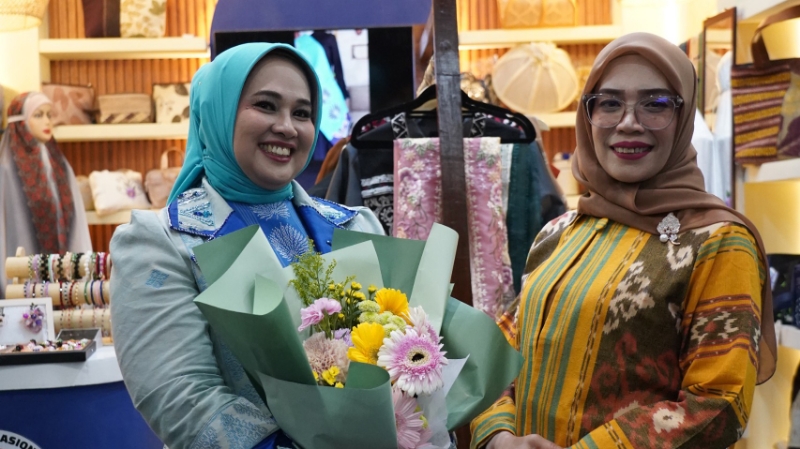
Participation in the Regional Traditional Attire and Textile Parade at Kriyanusa 2026 gave Deli Serdang Wastra an opportunity to be showcased alongside works from various regions across Indonesia. The event can contribute to promoting regional handicraft products while also introducing the creativity of artisans and designers from Deli Serdang.
The regional traditional attire parade also brought together diverse Wastra characteristics from numerous parts of Indonesia. Each region presented its own distinctive features in terms of materials, motifs, colors, production techniques and clothing designs. In this context, the presentation of Deli Serdang woven fabric highlighted part of the region's rich handicraft heritage.Jelita's appearance also served as a sign of support for stakeholders in the regional handicraft and fashion industries. Such support can encourage collaboration among artisans, designers, regional governments and other stakeholders to further develop local products.
Beyond their cultural value, the development of Wastra also offers economic opportunities for communities. As a woven fabric becomes more widely recognized, the product may have greater opportunities to reach new consumers and more diverse markets.Through Kriyanusa 2026, Deli Serdang woven fabric once again had an opportunity to demonstrate its potential on the national stage. The use of Raki Tenun Deli Serdang's work in a design by Halime also demonstrated that traditional cultural heritage can continue to evolve through new creative approaches.
The parade was also attended by Tri Tito Karnavian, Deputy Chairwoman of the National Dekranas. Deli Serdang Deputy Regent Lom Lom Suwondo and Deputy Chairwoman of the Deli Serdang Dekranasda, Asniar Lom Lom Suwondo, were also present and followed the presentation.The presence of Deli Serdang leaders and Dekranasda members underscored their support for efforts to promote regional handicraft products through national-level events. The presentation of Deli Serdang woven fabric at Kriyanusa 2026 thus became another important moment in promoting regional Wastra and creative works.
By combining traditional woven fabrics with modern fashion designs, Deli Serdang demonstrates that regional Wastra continues to have opportunities for development. Cultural identity remains an important element, while innovative designs open new opportunities for woven fabrics to gain wider recognition and be used on various occasions. (IDNC)REPORTER: Edi Saputra | EDITOR: Fik Sagala




 /home/u7391150/public_html/indatanews.com/theme/function.php on line 28