Friday, 02 October 2026
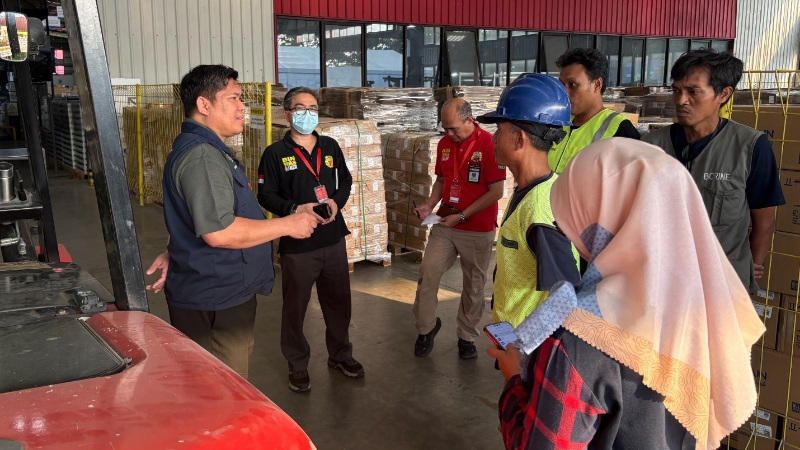
JAWA TENGAH | INDATANEWS.COM - Indonesia's Ministry of Manpower (Kementerian Ketenagakerjaan/Kemnaker) is strengthening supervision of the implementation of labor standards as well as occupational safety and health (K3) in industrial areas. The measure was carried out through special inspections of nine companies operating in the Kendal Industrial Park (KIK) and Batang Industrial Park in Jawa Tengah.
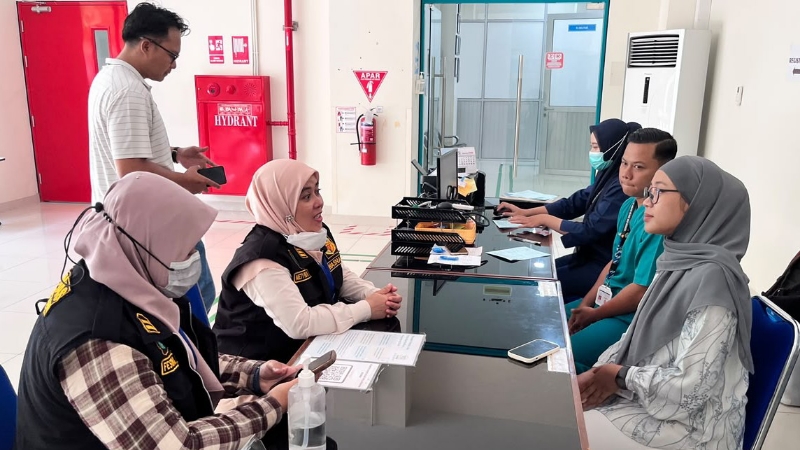
The Directorate General of Labor Standards Supervision and Occupational Safety and Health (Binwasnaker and K3) at the Ministry of Manpower inspected six companies in the Kendal Industrial Park and three companies in the Batang Industrial Park. The inspections covered the conformity of employment-related documents, the implementation of labor and K3 regulations, as well as actual conditions in the workplace.
The inspections are part of the Ministry of Manpower's efforts to ensure that the growth of industrial areas is accompanied by the protection of workers' rights. The government is also emphasizing the creation of a safe and healthy working environment that complies with applicable laws and regulations.
Director General of the Directorate General of Labor Standards Supervision and Occupational Safety and Health at the Ministry of Manpower, Ismail Pakaya, said the development of industrial areas must be accompanied by stronger protection of workers' rights. In his view, increasing investment and job creation must go hand in hand with the fulfillment of workers' rights.
"Investment and job creation must be accompanied by the fulfillment of workers' rights as well as the creation of a safe and healthy working environment," Ismail said on Wednesday, September 30, 2026, according to a press release from the Ministry of Manpower's Public Relations Office.
The inspection results showed that most companies had already fulfilled a number of basic workers' rights. The Ministry of Manpower found that most of the companies inspected had met requirements concerning employment documents, membership in BPJS Ketenagakerjaan and BPJS Kesehatan, as well as mandatory labor-related reporting.
However, the supervision also identified several issues that companies still need to address. Particular attention was given to the proper calculation of overtime pay and compliance with obligations related to the employment of foreign workers (TKA).
Accurate calculation of overtime pay is an important part of protecting workers' rights. Companies must ensure that the entire calculation and payment process for overtime compensation complies with applicable regulations to prevent underpayment and potential problems in employment relations.
In addition, companies employing foreign workers must fulfill the relevant legal obligations. Compliance with these provisions is part of labor standards supervision and is intended to ensure that the employment of foreign workers is carried out in accordance with regulations.
In the area of labor administration, the Ministry of Manpower also assessed the completeness and conformity of documents as part of the inspection. The assessment did not only examine whether the documents were available, but also whether they were consistent with applicable regulations and actual conditions in the workplace.
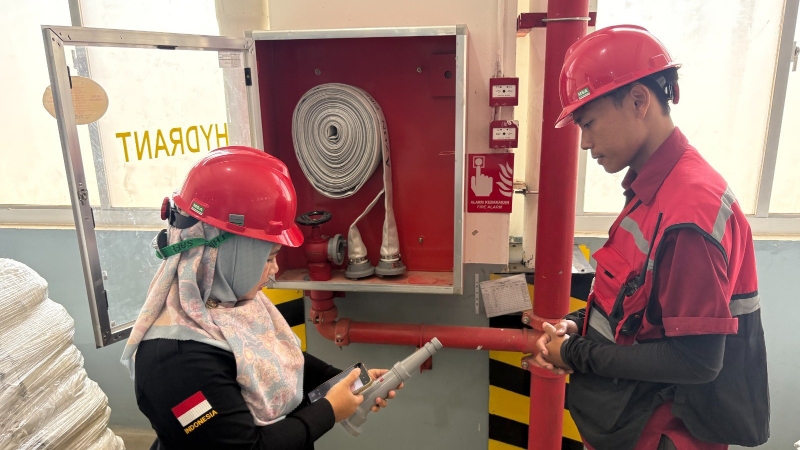
In terms of K3 standards, companies generally provide workers with personal protective equipment (PPE) and install safety signs in production areas. The provision of such equipment is one of the measures taken by companies to reduce potential risks of workplace accidents in industrial environments.
However, the Ministry of Manpower continues to call for improvements in several areas of K3 protection. Regular inspection and testing of facilities and equipment are among the areas that need to be strengthened. Companies must also ensure that K3 personnel have the competencies required for their respective duties and the risks present in the workplace.
The readiness of emergency facilities and infrastructure was also a focus of the inspections. Companies must ensure that emergency equipment and facilities function properly when situations arise that could endanger workers or disrupt operational activities.
Ismail emphasized that labor supervision does not end with the documentation of findings. The Ministry of Manpower is also calling on companies to make concrete and sustainable improvements for every violation of applicable regulations identified during the inspection.
"For violations that are identified, the labor inspector will issue an inspection notice so that the company's management takes appropriate corrective measures in accordance with applicable laws and regulations," he said.
The inspection notice serves as an instrument for labor inspectors to encourage company management to address identified deficiencies. Companies are required to follow up on the findings in accordance with applicable regulations.
The special inspection of the nine companies was conducted based on Minister of Manpower Regulation No. 11 of 2026 concerning labor inspection procedures. The Ministry of Manpower applies a risk-based approach in carrying out its supervisory activities.
Under this approach, factors including hazard maps, potential risks, and the level of companies' compliance with applicable regulations are taken into consideration. This enables supervision to focus on areas that pose higher risks to workers and the continuity of industrial operations.
The Ministry of Manpower views supervision as part of efforts to build an employment ecosystem that keeps pace with investment development. The growth of industrial areas requires not only increased production capacity, but also compliance with labor standards and occupational safety and health standards.
Ismail emphasized that workers play an important role in the sustainability of industrial activities. Therefore, protecting workers is an inseparable part of the development of industrial areas in Jawa Tengah.
"We want to ensure that industrial areas in Jawa Tengah grow not only in terms of investment and production, but also in terms of compliance with labor regulations. Workers must be protected through labor standards as well as K3 standards because they are an important factor in the sustainability of industrial activities," Ismail said.
Through the inspections and strengthened supervision, the Ministry of Manpower is urging companies to improve all areas that do not yet comply with applicable regulations. The government also emphasizes the importance of continuous monitoring so that compliance with labor standards does not end with a one-time inspection, but becomes part of everyday workplace practices.
Strengthening labor standards and K3 standards in industrial areas is expected to contribute to the creation of a safe and healthy working environment while strengthening the protection of workers' rights. The measure is also part of efforts to maintain a balance between investment growth, corporate productivity, and worker protection. (IDNC)
REPORTER: Ahmad Zulfikar | EDITOR: Fik Sagala





 /home/u7391150/public_html/indatanews.com/theme/function.php on line 28