Sunday, 13 September 2026
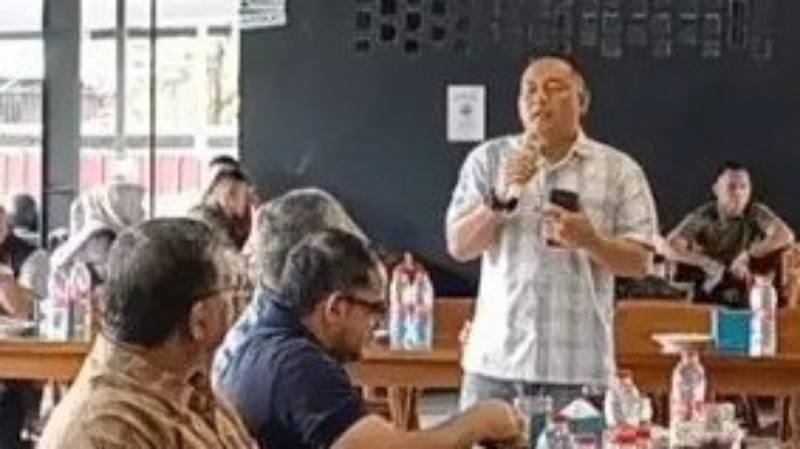
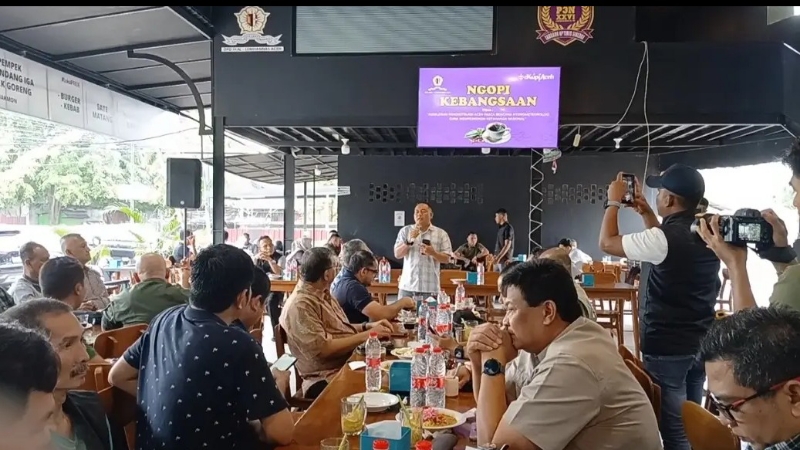
BANDA ACEH | INDATANEWS.COM - The Alumni Association of the Indonesian National Resilience Institute (IKAL Lemhannas) Aceh is urging the acceleration of rehabilitation and reconstruction following hydrometeorological disasters that affected several parts of Aceh in 2025. The issue was discussed during a forum titled "Ngopi Kebangsaan," organized by the DPD IKAL Lemhannas Aceh in Banda Aceh on Saturday, September 12, 2026.
The forum, themed "Accelerating Aceh's Recovery Following Hydrometeorological Disasters," brought together various stakeholders to discuss the numerous challenges that continue to hamper the recovery process. According to IKAL Lemhannas Aceh, cross-sectoral cooperation is a crucial factor in ensuring that rehabilitation and reconstruction programs are implemented more quickly, effectively, and in accordance with the needs of affected communities.Chairman of the DPD IKAL Lemhannas Aceh, Prof. Dr. Syahrizal Abbas, MA, said the forum was specifically designed to gather input from various institutions and stakeholders, ranging from the Aceh provincial government and central government agencies to the military, police, and prosecutors. The various proposals will subsequently be compiled into recommendations that can be used by the regional government as a basis for policy decisions concerning disaster management and reconstruction.
"The DPD IKAL will always work with the relevant stakeholders. The Aceh Government is, of course, the leading actor in the recovery process," Syahrizal told journalists from Aceh ZTV News.According to Syahrizal, the involvement of various institutions in the recovery process is needed not only to accelerate the reconstruction of damaged infrastructure. Such cooperation is also important to ensure that recovery programs address the needs of the community and have a clear policy direction.
Syahrizal said the DPD IKAL Lemhannas Aceh did not intend for the discussion to serve merely as a forum for exchanging views. The organization plans to follow up on the meeting's outcomes through several concrete measures. These include initiating an agreement or Memorandum of Understanding (MoU) with technical agencies directly involved in rehabilitation and reconstruction efforts.
The move is intended to strengthen coordination among institutions while creating room for more measurable cooperation in addressing the various post-disaster challenges. IKAL Lemhannas Aceh also believes the government needs support from various stakeholders to ensure that the recovery process is effectively implemented across all affected areas.Beyond coordination, Syahrizal emphasized the importance of transparent public information. In his view, communities must be regularly informed about developments in recovery programs so they can monitor how far the government has progressed in implementing its rehabilitation and reconstruction agenda.
"Our task is to build a bridge between the community and policymakers in order to prevent information gaps," he added.Syahrizal further said transparency could strengthen public participation in monitoring program implementation. With information made available continuously, people can follow the progress achieved, identify existing obstacles, and understand developments in reconstruction efforts in disaster-affected areas.
"The post-disaster emergency situation presents major challenges to implementation, causing some measures to be delayed or leaving gaps," Imran said.
The Satgas PRR is currently monitoring the recovery process in 18 districts and cities across Aceh affected by the disaster. The team conducts regular evaluations to ensure that programs are being implemented according to plan. This includes monitoring the use of funds as well as progress in the construction and repair of various essential infrastructure facilities.Several infrastructure sectors are a particular focus. The repair of bridges, river management, restoration of health facilities, and construction and repair of schools are key components of the rehabilitation and reconstruction agenda. This infrastructure serves an immediate function for community activities while also helping restore essential public services in affected areas.
In addition to infrastructure, the government is also focusing on the restoration of agricultural land. Damage to the agricultural sector caused by disasters can affect food supplies and the economic conditions of communities. For this reason, restoring agricultural land is among the priorities aimed at maintaining food supply stability and helping reduce regional inflation.Imran said the Satgas PRR was also strengthening the role of regional coordination centers to improve cooperation and support the integration of a unified database. These centers serve as a platform for the government to receive feedback, monitor program progress, and address public complaints regarding the implementation of post-disaster measures.
Strengthening the coordination system and integrating data are considered important because disaster management involves numerous institutions, each with its own duties and responsibilities. Integrated data can help the government more accurately assess needs and determine priorities for measures in each affected area."We hope that all recovery targets outlined in the master plan can be successfully achieved by the end of the rehabilitation phase," Imran said.
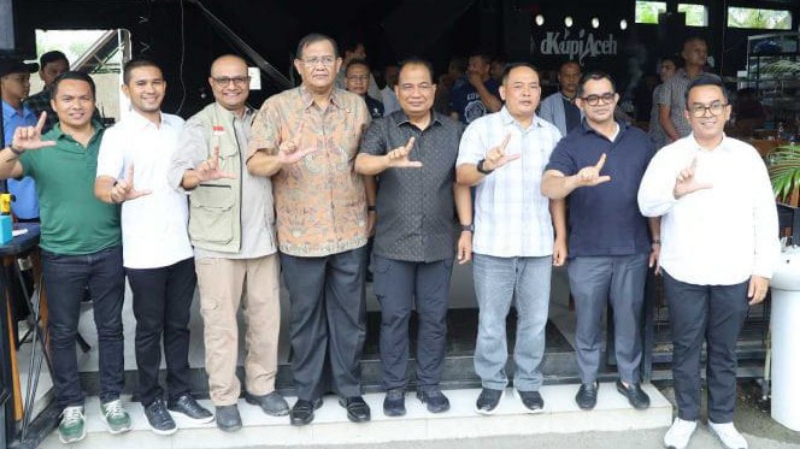
The DPD IKAL Lemhannas Aceh plans to establish "Ngopi Kebangsaan" as a regular agenda for addressing various strategic issues in the region. Through the forum, IKAL Lemhannas Aceh seeks to create a space for dialogue where the government, state institutions, security forces, academics, and community representatives can come together to discuss solutions to issues requiring coordinated action.
In the context of disaster management, the organizers intend for the forum to go beyond the presentation of ideas. The resulting recommendations are expected to become part of IKAL Lemhannas Aceh's efforts to provide input to the regional government while encouraging concrete steps to accelerate rehabilitation and reconstruction.Accelerating recovery is of great importance because the impact of disasters extends beyond physical damage, affecting economic activities, public services, the agricultural sector, and the social lives of communities. Reconstruction therefore requires continuous coordination and ongoing monitoring of the targets established by the government.
By bringing together input from various stakeholders, IKAL Lemhannas Aceh hopes the recovery process can become more transparent, measurable, and responsive to community needs. The Aceh Government, as the leading actor, is expected to continue strengthening cooperation with relevant institutions so that technical obstacles on the ground can be addressed quickly and rehabilitation and reconstruction targets can be achieved according to plan. (IDNC)REPORTER: Adli Safwan | EDITOR: Fik Sagala





 /home/u7391150/public_html/indatanews.com/theme/function.php on line 28