Friday, 04 September 2026

MEDAN | INDATANEWS.COM - The North Sumatra provincial government is strengthening its preparedness amid the continued threat of hydrometeorological disasters caused by heavy rainfall and drought in several areas. North Sumatra Governor Bobby Nasution has issued an early warning directive while calling on all relevant stakeholders to intensify risk mitigation and preparedness measures against various potential disasters.
The Head of the North Sumatra Regional Disaster Management Agency (BPBD), Tuahta Ramajaya Saragih, said that based on the disaster risk map compiled by the National Disaster Management Agency (BNPB), North Sumatra faces 14 different types of potential disasters.Of the various hazards, extreme weather events have been the most frequently occurring type of disaster across North Sumatra throughout 2026 so far. They were followed by landslides, floods, and forest and land fires as the other predominant disaster events in the province.
Tuahta explained the situation during a press briefing organized by the North Sumatra Provincial Communication and Information Office in the lobby of the Dekranasda Building at the North Sumatra Governor's Office, Jalan Pangeran Diponegoro No. 30, Medan, on Friday, September 4, 2026."Our evaluation for the period from January 1 to September 4, 2026, shows that extreme weather events were the most frequent, with 127 incidents, including storms and drought. They were followed by landslides with 86 incidents, floods with 73 incidents, and forest and land fires with 46 incidents," Tuahta said.
The data highlights the high level of disaster risk that both the government and the public must be prepared to face. In particular, changing weather conditions can trigger hydrometeorological disasters within a relatively short period.Tuahta said the directive serves as a guideline for all relevant stakeholders to improve risk mitigation and disaster preparedness measures. The provincial government is paying particular attention to the threat of forest and land fires in several high-risk areas.
The areas under close monitoring include Samosir, Padang Lawas, Simalungun, and Labuhanbatu. The North Sumatra BPBD continues to strengthen monitoring efforts and ensure the readiness of personnel and equipment in these areas.By the end of August 2026, forest and land fires in North Sumatra had burned 273.87 hectares, affecting 14 regencies and cities across the province. In response, the North Sumatra BPBD has intensified fire monitoring and response efforts, particularly in areas with a high risk of fires.
"Although North Sumatra ranks eighth or ninth nationally in terms of forest and land fires, that does not mean we can afford to be complacent. We have already stationed personnel and additional equipment in Samosir to support the local BPBD," he said.According to Tuahta, North Sumatra's position in the national forest and land fire statistics should not lead the provincial government to reduce its level of vigilance. The North Sumatra BPBD continues to maintain personnel and equipment on standby to support local governments facing emergency situations.

The BPBD's operational equipment is also being expanded so that response teams can act more quickly during emergencies. These measures are part of the government's efforts to ensure that the resources required for disaster response are already available during the initial stages of an incident.
Tuahta emphasized that the North Sumatra BPBD is ready to support regency and city governments in dealing with disasters. The support includes evacuating residents, providing logistical assistance, and disbursing funds from the unexpected expenditure fund, provided that the respective local government has officially declared the disaster an emergency.Preparedness is not limited to response measures after a disaster occurs. The North Sumatra BPBD is also strengthening pre-disaster measures through public awareness campaigns, capacity building, and the preparation of various planning and preparedness documents.
These measures are particularly important because the 14 potential disaster hazards in North Sumatra have different characteristics and require different approaches to disaster management. The government therefore needs to prepare various response scenarios that can serve as guidelines when a region is affected by an emergency.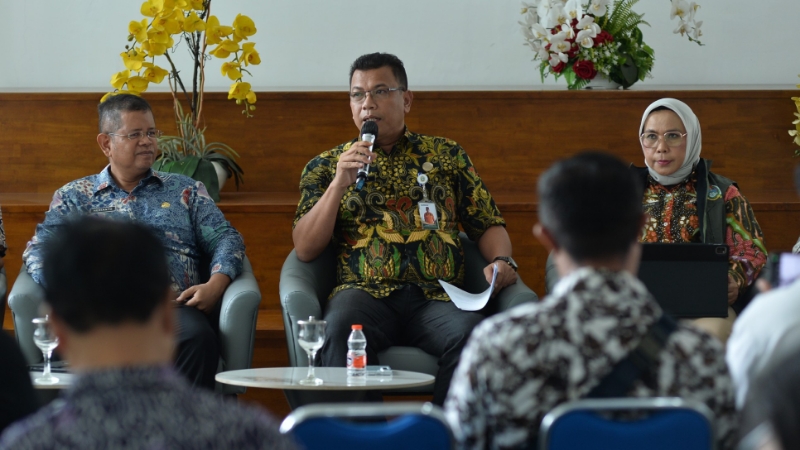
As part of efforts to strengthen pre-disaster preparedness, the North Sumatra BPBD is conducting communication, information, and public education activities for students and communities. The objective is to improve public understanding of potential disasters, evacuation procedures, and the appropriate actions to take during an emergency.
In addition to public education, the North Sumatra BPBD is preparing several strategic documents as a foundation for disaster management planning. These include the disaster risk assessment, disaster management plan, and emergency or contingency plans."We are preparing a Disaster Risk Assessment (KRB), Disaster Management Plan (RPB), and Contingency Plans (Renkon). The contingency plans for forest and land fires and earthquakes are already underway. We are currently preparing a contingency plan for floods," Tuahta said.
The preparation of a flood contingency plan is another step taken by the North Sumatra BPBD to strengthen preparedness against the threat of hydrometeorological disasters caused by heavy rainfall. The document is expected to help the government and relevant stakeholders respond to floods in a more targeted and coordinated manner.The North Sumatra BPBD also provides public education sessions at its offices for organizations and community groups seeking information about evacuation procedures and disaster preparedness. The public can make use of this facility to improve their knowledge and skills in dealing with emergency situations.
Amid the increasing number of extreme weather events, landslides, floods, and forest and land fires recorded in 2026, the North Sumatra provincial government is calling on all stakeholders not to rely solely on measures taken after a disaster occurs. Stronger risk mitigation, public education, personnel readiness, adequate equipment, and the preparation of contingency plans are essential components in reducing disaster risks and impacts across North Sumatra. (IDNC)REPORTER: Ahmad Zulfikar | EDITOR: Fik Sagala






 /home/u7391150/public_html/indatanews.com/theme/function.php on line 28