Tuesday, 27 October 2026
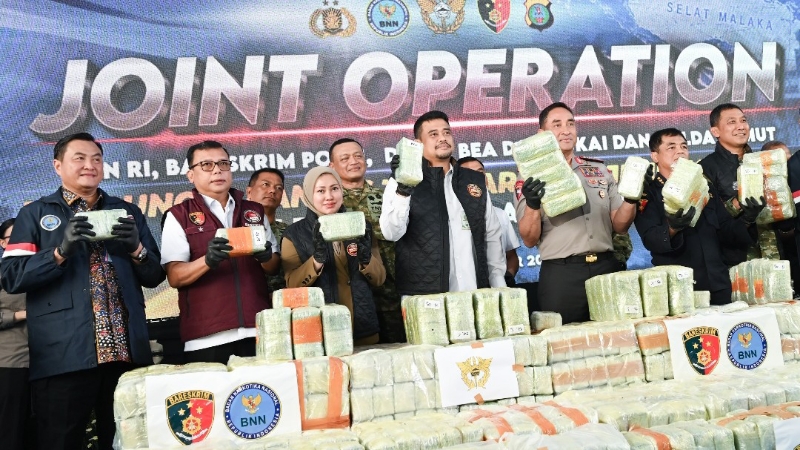
MEDAN | INDATANEWS.COM - North Sumatra Governor Bobby Nasution has praised the success of a joint operation conducted by the Indonesian National Police (Polri) and several other agencies, which resulted in the seizure of suspected smuggled ketamine weighing approximately 1.16 tonnes in the waters of the Strait of Malacca. The discovery is expected to pave the way for further investigations into international smuggling networks and help curb the trafficking of narcotics into Indonesia.
Bobby expressed his appreciation during a press conference on Friday, 23 October 2026, at the Bandar Deli Passenger Terminal on Jalan Pelabuhan Lama I in Belawan, Medan. The event was also attended by National Police Chief General Suyudi Ario Seto, law enforcement officials, regional government representatives and various community groups.
On the occasion, Bobby told the National Police Chief that North Sumatra faced significant challenges from drug trafficking and substance abuse. He expressed hope that the seizure of such a large quantity of drugs would encourage the authorities to strengthen their efforts against the narcotics trade on a sustained basis. Particular attention, he said, needed to be paid to sea routes bordering the territorial waters of other countries.
"With your permission, Mr National Police Chief, we would like to point out that, among Indonesia's 38 provinces, North Sumatra ranks first in terms of the spread of drugs. We hope the uncovering of this case will mark a sustained step towards restricting the operations of drug-smuggling networks, particularly along sea routes bordering other countries," Bobby said.
Bobby highlighted Belawan as one of the areas requiring particular attention in efforts to curb drug trafficking. The strategic location of the port area and North Sumatra's sea routes requires consistent monitoring and close cooperation between the relevant authorities.
In his view, the National Police Chief's presence in Belawan could strengthen coordination among the Regional Leadership Coordination Forum (Forkopimda), the Indonesian National Armed Forces (TNI), the police, regional government and the public. Such cooperation is essential to preventing smuggling, uncovering distribution networks and curbing substance abuse within the community.
"The presence of the National Police Chief here in Belawan comes at exactly the right time and gives us additional encouragement to continue working towards a drug-free North Sumatra," he said.
Bobby stressed that tackling drugs could not be left solely to law enforcement agencies. The government, families, educational institutions, community leaders and various organisations also had a role to play in creating an environment that protected the public from the dangers of narcotics.
This was particularly important to protect the younger generation, maintain public safety and support Indonesia's vision of becoming a more economically and socially developed nation by 2045. Therefore, the discovery of serious cases such as the suspected ketamine smuggling operation in the Strait of Malacca must be followed by continuous prevention and monitoring efforts.
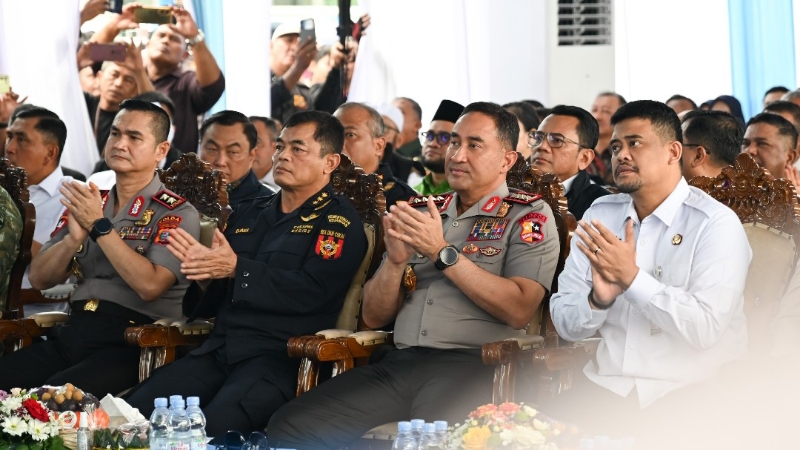
National Police Chief General Suyudi Ario Seto underlined the importance of inter-agency cooperation in combating cross-border crime, particularly drug smuggling by sea. All participating institutions, he said, needed to pool their capabilities and intelligence to prevent smuggling networks from bringing prohibited substances into Indonesia undetected.
The seizure of approximately 1.16 tonnes of ketamine resulted from a joint operation involving the Indonesian National Police, the National Narcotics Agency (BNN), the Directorate General of Customs and Excise, and units of the Indonesian National Armed Forces. The operation drew on intelligence analysis and the monitoring of vessel movements, which had indicated suspicious activities in the Strait of Malacca.
"No institution can work alone. We must continue to work together as one to uncover the crimes committed by those seeking to bring prohibited goods into Indonesia," the National Police Chief emphasised.
Suyudi also addressed the high levels of drug abuse in North Sumatra, warning that the situation required collective action. This included strengthening prevention programmes, taking firm action against distribution networks and raising public awareness of the dangers of narcotics.
Beyond law enforcement, anti-drug efforts must also include public education and improved monitoring of emerging forms of abuse involving dangerous substances. In the National Police Chief's view, active participation by regional administrations and the public was essential to ensure that legal enforcement and prevention worked hand in hand.
The National Police Chief also praised the North Sumatra provincial government's support for drug prevention initiatives. Particular attention was given to the ban introduced by the governor on the use of electronic cigarettes in government employees' offices. Suyudi regarded the measure as one component of efforts to prevent the possible misuse of dangerous substances.
He also warned the public about the suspected misuse of electronic cigarettes to consume narcotics in liquid form. Monitoring and public education therefore needed to be intensified so that people could better understand the risks associated with consuming dangerous substances through various devices available on the market.
Director General of Customs and Excise Lieutenant General (Retd) Djaka Budhi Utama said the case had been uncovered through close cooperation and continuous intelligence analysis among law enforcement agencies. This collaboration had helped expose suspected international drug-smuggling networks operating in Indonesian waters, particularly in the Strait of Malacca.
"This success is a source of recognition and pride for all the security agencies involved. The cooperation has produced excellent results. We cannot work alone, because working together enables us to achieve better outcomes," he said.
Djaka reaffirmed his agency's commitment to continuing to support efforts to combat drug trafficking throughout Indonesia. Customs would strengthen controls along cross-border routes, both in maritime areas and at land borders, to prevent prohibited goods from entering the country.
In his view, effective border surveillance required continuous information-sharing and close coordination between the relevant authorities. This was particularly important in countering smuggling networks that exploit international transport routes to bring narcotics into Indonesia.
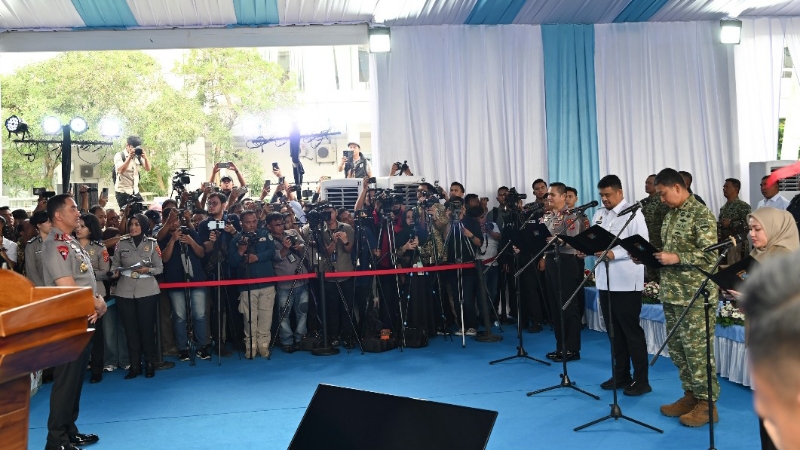
During the event, the North Sumatra provincial government and various community groups jointly declared their support for the "Say No to Drugs" movement. Participants also signed a joint pledge rejecting and pledging to combat substance abuse and illegal drug trafficking throughout the province.
The event was also attended by regents and mayors from across North Sumatra, representatives of the North Sumatra Regional Police, religious leaders and representatives of anti-drug organisations.
The declaration underscored the importance of public involvement in supporting law enforcement. Regional government, security agencies and the public are expected to maintain their cooperation to ensure that prevention, surveillance and efforts to combat drug trafficking continue over the long term.
The discovery of the suspected smuggling of 1.16 tonnes of ketamine in the Strait of Malacca highlights the vital role of maritime surveillance and cross-border cooperation in tackling drug-related crime. The operation must be followed by further investigations into the networks involved, tighter border controls and comprehensive public education to reduce the risk of substance abuse. (IDNC)
REPORTER: Ahmad Zulfikar | EDITOR: Fik Sagala