Saturday, 31 October 2026
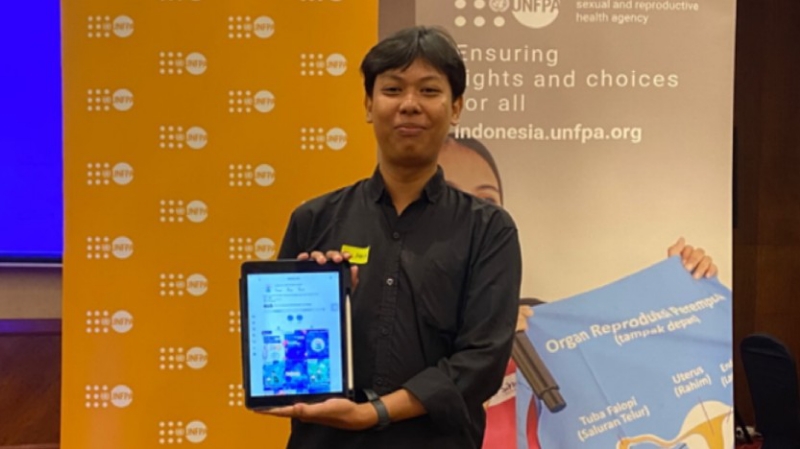
MEDAN | INDATANEWS.COM - Gender equality is not solely the responsibility of women. Men also play an important role in promoting equal rights and preventing violence and discrimination against women. This is the principle upheld by Salman Al Farici, a graduate of the Social Anthropology programme at the University of North Sumatra (USU), who has consistently championed gender equality through various social initiatives.
Salman has observed that women are still frequently objectified in everyday life. Social perceptions that limit women's abilities simply because of their gender also continue to affect their opportunities to develop and contribute across different fields.Motivated by these experiences, Salman decided not merely to talk about gender equality but to take an active role in raising public awareness. In his view, efforts to achieve equality do not have to begin with a large-scale movement. Change can start within one's immediate surroundings, including university campuses and everyday interactions.
Salman began taking a deeper interest in women's issues while studying at USU. As a Social Anthropology student, he actively participated in various voluntary projects across different fields, which exposed him to a wide range of social challenges.
His interest in gender equality grew particularly through his involvement in a project under USU's Compulsory Curriculum Course (Mata Kuliah Wajib Kurikulum/MKWK). Through this project, he explored the fifth goal of the United Nations Sustainable Development Goals (SDGs), namely Gender Equality.These experiences gave Salman a broader understanding of gender-based inequalities. He subsequently had the opportunity to volunteer in Jakarta with UN Women, the United Nations Entity for Gender Equality and the Empowerment of Women.
At the time, UN Women offered young people the opportunity to participate as Youth Advocates. The programme formed part of a campaign to prevent gender-based violence, launched in conjunction with the International Day for the Elimination of Violence Against Women through the 16for16 campaign.For Salman, this opportunity became an important experience, allowing him to participate directly in a movement dedicated to protecting and advancing women's rights.

These activities led Salman to establish Boneka Kita, a social movement focused on preventing sexual violence.
Through this initiative, he made a practical contribution to raising awareness among young people about the importance of protecting women. His aim was not only to improve understanding of sexual violence but also to encourage young people to take part in prevention efforts.Although Salman is no longer directly involved in managing the project, Boneka Kita was successfully implemented and continues to operate at State Islamic Senior High School (Madrasah Aliyah Negeri/MAN) 2 Deli Serdang.
His involvement with UN Women also transformed his personal outlook and understanding. Salman explained that he had developed a greater appreciation for women, particularly after learning about the various challenges they face, including discriminatory treatment and objectification in everyday life.This change went beyond his personal perspective. He also sought to put the principles of gender equality into practice within his immediate surroundings, particularly during his academic activities at university.
Salman began with small but meaningful steps, ensuring that women had sufficient space and opportunities to participate in academic activities. He applied this principle when forming student working groups and organising research teams.
"My small initiative is to ensure that at least one woman is represented in every student working group. Even in research projects, I want a woman to be involved as a supervising lecturer. It is simply about making it clear that women have a place too," he emphasised.According to Salman, women's participation in various activities is important in demonstrating that they possess equal abilities and have the same right to be involved. Gender equality should not remain merely a subject of discussion but must also be reflected in concrete actions.
He also highlighted the experiences of his female fellow students, who continue to face restrictions on their professional opportunities because of gender-based prejudice.He observed that some women still find it difficult to apply their abilities in accordance with their professional qualifications. Such barriers stem from social assumptions that women cannot undertake physically demanding work or should not work until the evening.
These attitudes demonstrate how gender stereotypes continue to influence women's opportunities to develop their abilities and make independent decisions about their lives.This situation has strengthened Salman's determination to continue advocating gender equality. He stressed that such efforts should not be about defending men or women as opposing groups. Instead, the priority must be to ensure that both enjoy equal rights and opportunities in every aspect of life.
Salman also views men and women as two groups that are inseparably connected in society. Mutual respect, therefore, is an essential foundation for building a more equal society."Men and women will always live side by side. It is about not putting each other down. That is exactly what we want to achieve through this issue. It may sound very clichéd, but how can we respect God and ourselves if we do not respect the very source of life itself – women? Children are born to women and breastfed by women. Sometimes, there are mothers who are willing to work hard and make great sacrifices for their children," he concluded.
Through his academic journey, volunteering experience and the establishment of social initiatives, Salman demonstrates that men can play an important role in raising awareness of gender equality. Such efforts can begin with simple actions, including giving women greater opportunities, recognising their abilities and challenging discriminatory attitudes.For Salman, gender equality is not merely a demand or a subject for discussion, but a shared responsibility to build a society in which everyone is treated with respect and given equal opportunities. (IDNC)
REPORTER: Ahmad Zulfikar | EDITOR: Fik Sagala