Saturday, 24 October 2026
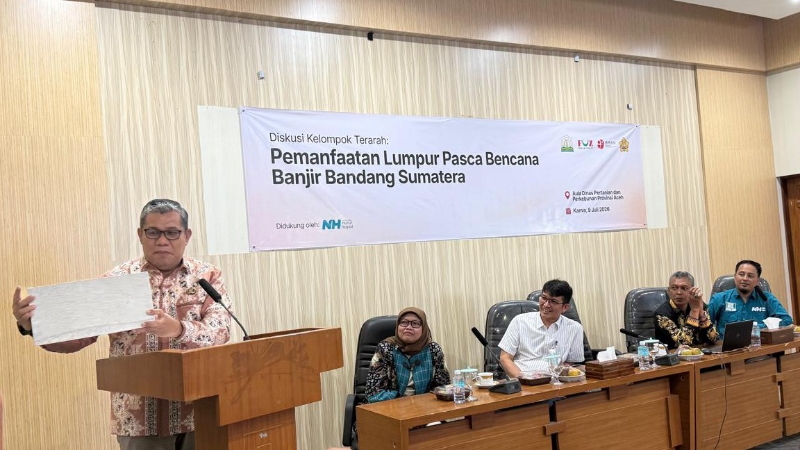
BANDA ACEH | INDATANEWS.COM - Aceh Governor Muzakir Manaf, widely known as Mualem, has expressed his support for an innovation developed by a research team at Universitas Syiah Kuala (USK), which processes mud and sand from sediment deposits left by hydrometeorological disasters into lightweight bricks known as Aceh Brick. The innovation is seen as an opportunity to transform materials that have previously posed environmental problems into building materials with practical and economic value.
"Very positive. The Aceh Government fully supports this. Governor Mualem strongly hopes that USK's research will provide concrete benefits for Aceh," Aceh Government spokesperson Nurlis Effendi said in Banda Aceh on Thursday, August 13, 2026.According to Nurlis, the governor's attention to the innovation is primarily driven by Aceh Brick's potential to accelerate recovery in areas affected by hydrometeorological disasters. The Aceh Government views the use of sediment materials as construction materials as a way to address environmental problems while also supporting the need for reconstruction and rehabilitation.
"The Aceh Government sees this innovation as being in line with the need to accelerate post-disaster recovery in Aceh," Nurlis said.The meeting focused on the use of mud and sand from sediment deposits caused by hydrometeorological disasters as raw materials for Aceh Brick lightweight bricks. The Aceh Government wants this innovation to contribute to accelerating rehabilitation and reconstruction after disasters, particularly in areas where infrastructure work needs to be carried out quickly.
The meeting was chaired by Teuku Robby Izra, Assistant for Economic and Development Affairs at the Aceh Government Secretariat. He stressed that the use of materials generated by disasters must be based on adequate technical studies to ensure that the resulting products comply with applicable construction regulations."The key point is to use mud and sand from sediment deposits caused by hydrometeorological disasters as raw materials for Aceh Brick lightweight bricks in order to accelerate post-disaster rehabilitation and reconstruction," Teuku Robby Izra said.
The meeting was also attended by the USK research team led by lightweight concrete expert Prof. Dr. Ir. Abdullah. He explained that lightweight bricks offer advantages because of their lower weight and could be used by both the government and communities in infrastructure construction in hard-to-reach areas.Abdullah said the lighter weight of the material would also make transportation to remote regions easier. This opens opportunities for the use of Aceh Brick in various infrastructure projects, including irrigation networks and other supporting facilities.
"The use of mud and sand also has the potential to protect ecosystems because it can reduce the need to extract natural clay as a raw material for brick production," the USK professor said.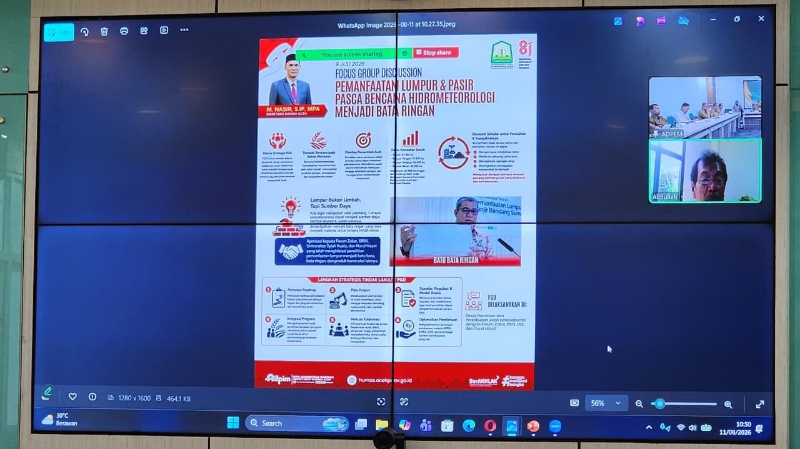
The head of the Balai Jasa Konstruksi Wilayah Aceh, the regional construction supervision and training agency in Aceh, Indra Suhada, welcomed the idea of processing mud and sand from sediment deposits into Aceh Brick. In his view, the product has the potential to become an alternative construction material for infrastructure projects as part of rehabilitation and reconstruction efforts in Aceh.
"This product has the potential to be developed as an alternative construction material for infrastructure development as part of rehabilitation and reconstruction in Aceh, provided that technical requirements and applicable standards are met," Indra said.Indra explained that Balai Jakon was ready to provide support through consultations and pilot projects. The agency is also preparing training programs for community groups so they can produce lightweight bricks while complying with applicable technical requirements.
The support is aimed not only at developing the product but also at creating opportunities to strengthen affected communities. Local residents could eventually become involved in processing the material, producing the lightweight bricks and using them in construction projects.At the same time, the Aceh Government emphasized the importance of testing before materials derived from disaster sediments are used in construction work. Teuku Robby explained that sediments can have different characteristics from one region to another, requiring the team to conduct a comprehensive assessment.
"Each location has sediments with different characteristics. Therefore, an assessment must be carried out to ensure that the material being used meets the required technical standards," he said.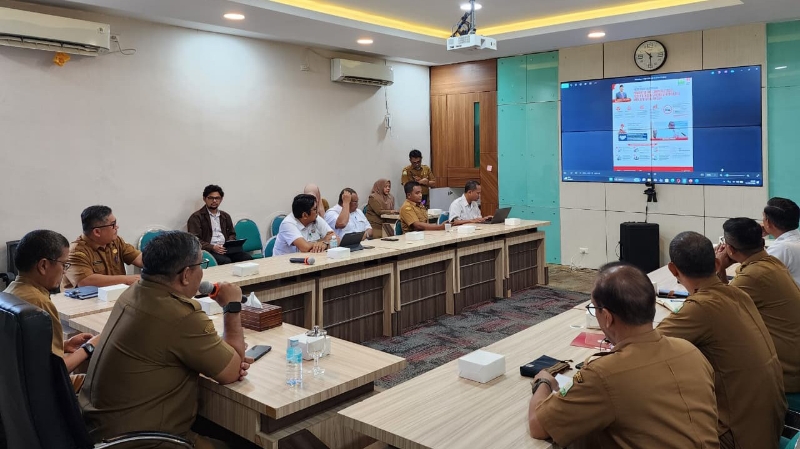
Teuku Robby said USK and Balai Jakon would explore opportunities for cooperation as well as knowledge and technology transfer in the production of lightweight bricks. The cooperation is expected to produce a production model that can be implemented by local communities, particularly groups in disaster-affected areas.
The Aceh Government is also preparing several follow-up measures. Relevant teams will conduct technical assessments and explore potential partnerships, develop production models for community groups, and organize consultation and training programs for affected residents.In addition, a pilot site is to be established and the use of Aceh Brick as a construction material for rehabilitation and reconstruction projects will be assessed. The Aceh Government is also opening the possibility of including Aceh Brick in the rehabilitation and reconstruction program for the 2026–2028 period.
The Aceh Government sees several strategic advantages in developing Aceh Brick. The use of sediment materials could accelerate the removal of mud and sand following disasters while simultaneously providing an alternative construction material for rebuilding damaged infrastructure.The innovation also has the potential to create jobs and new sources of income for people in affected areas. Through this approach, recovery would not focus solely on removing materials generated by disasters but would also be directed toward sustainably strengthening the local economy.
Despite the positive prospects, the Aceh Government will not use Aceh Brick on a large scale in government construction projects until the product meets all required standards. The development team must conduct quality testing and field trials, comply with technical standards and demonstrate the product's performance to ensure its safety and suitability for use.This step is important because the characteristics of mud and sand from different disaster-affected areas may vary. The government must ensure that materials introduced into the production process meet the quality requirements and applicable standards for construction projects.
Teuku Robby emphasized that the government wants the innovation to provide direct benefits to the community while also contributing to accelerating Aceh's recovery."We want to turn material that previously became a disaster-related problem into a solution. The mud is removed and processed into building material, the community gains employment opportunities, and the resulting product can then be used to accelerate Aceh's recovery," Robby said. (IDNC)
REPORTER: Adli Safwan | EDITOR: Fik Sagala