Saturday, 24 October 2026
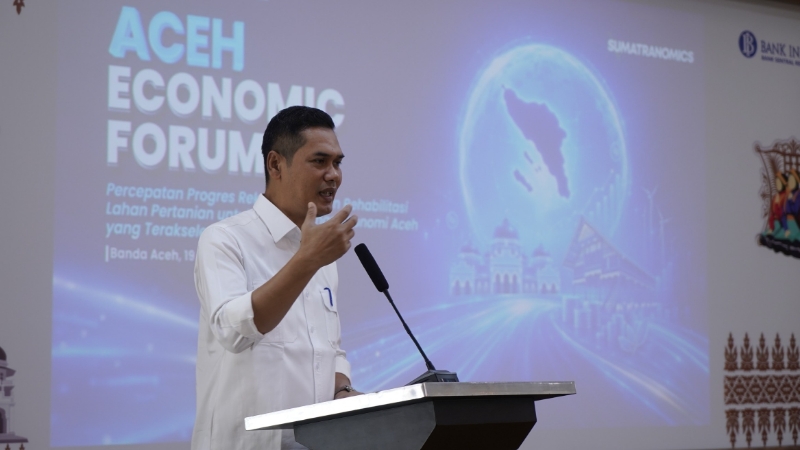
BANDA ACEH | INDATANEWS.COM - The Aceh provincial government is accelerating the rehabilitation and reconstruction of agricultural land as a key step toward speeding up post-disaster recovery while restoring economic growth for the community. The measure was among the central issues discussed at the Aceh Economic Forum in August 2026 in Banda Aceh.
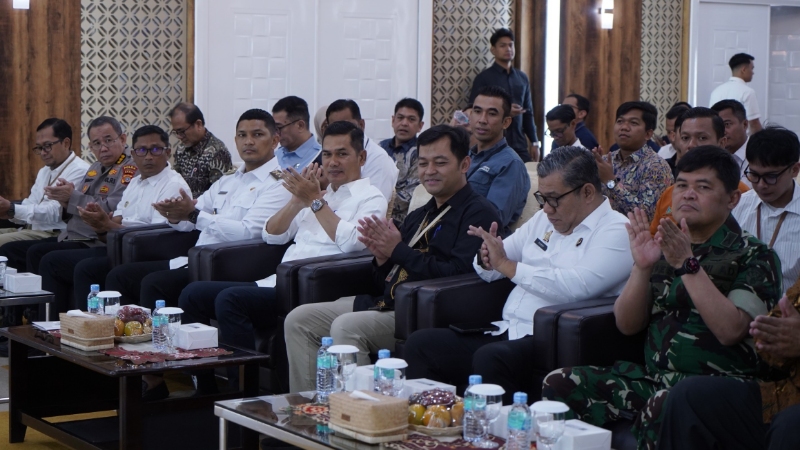
Aceh Provincial Government Secretary M. Nasir, S.IP, M.PA, made the statement on Wednesday, August 19, 2026, while attending the Aceh Economic Forum at the Teuku Umar Auditorium at the Bank Indonesia Representative Office for Aceh Province in Banda Aceh. The forum brought together representatives of the Aceh provincial government, local governments, Bank Indonesia, and other relevant stakeholders to strengthen coordination in the recovery of the agricultural sector.Also attending the event were Banda Aceh Deputy Mayor Afdhal Khalilullah, the Head of the Economic Bureau of the Aceh Provincial Government Secretariat, as well as representatives of Bank Indonesia in Aceh, including Head of the BI Representative Office in Aceh Agus Chusaini and Deputy Head of the BI Representative Office in Aceh Hertha Bastiawan.
The forum carried the theme, "Accelerating Progress in the Reconstruction and Rehabilitation of Agricultural Land for Faster Economic Growth in Aceh." The theme placed the agricultural sector at the center of efforts to drive Aceh's economic recovery following hydrometeorological disasters.The government, together with various partners, continues to work on restoring the affected areas. Of the total affected land, approximately 40,852 hectares of rice fields and 40,418 hectares of plantation land are currently undergoing recovery.
The situation demonstrates that agricultural recovery requires joint action and close coordination. The government must not only restore the affected land but also ensure that farmers can resume cultivating their fields and sustainably produce agricultural commodities.The restoration of agricultural land is also closely linked to food security and the purchasing power of the population. Once agricultural land becomes productive again, farmers can resume their activities, economic activity in production areas can restart, and the supply of food can increase.
As of August 11, 2026, the Aceh government had utilized IDR 264.4 billion, or approximately 51.3 percent of the allocated funds. The government continues to accelerate program implementation so that the available budget can quickly deliver tangible benefits to communities affected by the disaster.
M. Nasir emphasized that agricultural land rehabilitation cannot be carried out in isolation. The government must also restore irrigation networks and various agricultural supporting infrastructure.According to him, adequate infrastructure is a crucial factor in ensuring that rehabilitated land can return to producing yields. Comprehensive restoration will also help farmers resume production without facing infrastructure-related obstacles that were likewise damaged by the disaster.
This step is also part of Aceh's economic recovery strategy. The agricultural sector is interconnected with numerous other economic activities, ranging from the provision of agricultural inputs to the distribution and trade of agricultural products, as well as consumer spending.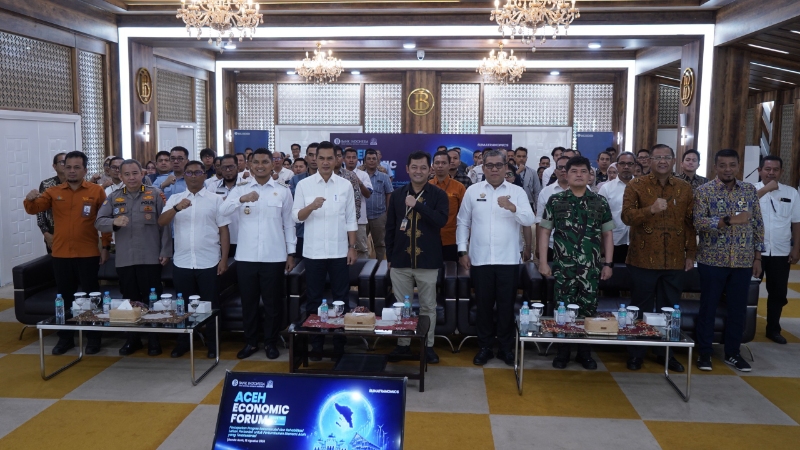
Amid the post-disaster recovery process, Aceh's economy continues to record positive growth. In the second quarter of 2026, Aceh's economy grew 4.86 percent year-on-year. In the first half of 2026, Aceh's economic growth reached 4.48 percent.
The development provides an important foundation for the government to further strengthen economic recovery through productive sectors, including agriculture. Accelerating the rehabilitation and reconstruction of agricultural land is intended not only to restore conditions to their pre-disaster state but also to create opportunities for higher productivity and strengthen the economic foundation of the population.Therefore, the Aceh Economic Forum provides an important opportunity to bring various stakeholders together and formulate more targeted measures. The Aceh government hopes discussions at the forum will produce concrete and coordinated programs capable of accelerating recovery on the ground.
M. Nasir said the Aceh government is ready to strengthen cooperation with the central government, Bank Indonesia, and all relevant stakeholders to support the rehabilitation and reconstruction process. Such cooperation is necessary to ensure that all forms of assistance and recovery programs are implemented effectively and directly benefit the community.The government also wants to ensure that the recovery process is not limited to repairing physical damage. Instead, recovery should be used as an opportunity to establish a stronger agricultural system and a more stable economic foundation capable of better withstanding future challenges.
"What we want to build is not only the restoration of what was damaged, but also a stronger, more productive, inclusive and resilient economic foundation for Aceh," the Provincial Government Secretary said.The statement reflects Aceh's approach to recovery, which goes beyond simply returning agricultural land to its pre-disaster condition. Instead, the government intends to use the rehabilitation and reconstruction process as a foundation for increasing agricultural productivity, strengthening the economic resilience of the population, and creating more sustainable growth.
Through accelerated agricultural land restoration, rehabilitation of irrigation systems, financial assistance, and stronger coordination among institutions, the government hopes the agricultural sector can once again become one of the main engines of Aceh's economy. At the same time, the measure is expected to accelerate the recovery of the livelihoods of communities affected by the disaster. (IDNC)REPORTER: Adli Safwan | EDITOR: Fik Sagala