Sunday, 13 September 2026
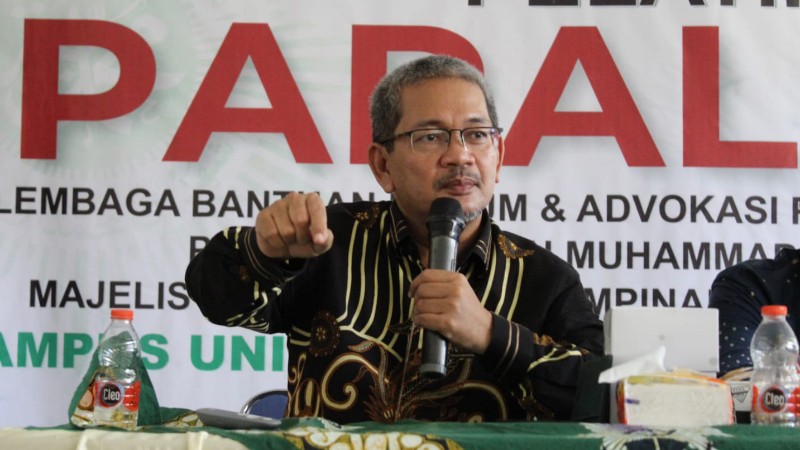
By Dr. Farid Wajdi, S.H., M.Hum
MEDAN | INDATANEWS.COM – The construction of the Mebidang Bus Rapid Transit (BRT) project, with an investment value of IDR 1.9 trillion, is being promoted as a symbol of urban transportation modernization. The vision is certainly promising: reducing traffic congestion, strengthening connectivity between Medan, Binjai, and Deli Serdang, while transforming public mobility through more efficient public transportation.However, in practice, the public is facing a paradoxical reality. A project intended to ease congestion has itself become a source of new traffic jams. This situation raises a fundamental question: Is development being guided by careful planning, or are construction targets being pursued without adequately considering the social costs imposed on the public?
Traffic congestion on several major roads in Medan is not a naturally occurring phenomenon. Rather, it is the logical consequence of reduced road capacity along transportation corridors that have long operated at or near their maximum limits. When portions of roadways are occupied by construction activities, the available traffic space inevitably decreases. The situation is further aggravated by inadequate traffic management measures, the absence of effective alternative routes, illegal parking, commercial activities encroaching onto roadways, and what appears to be less-than-optimal coordination among the responsible institutions.As a result, Jalan Gatot Subroto, the Pasar Sikambing area, Jalan Sisingamangaraja, and several other transportation hubs have become daily congestion hotspots, significantly affecting public productivity.
The actual losses extend far beyond long lines of vehicles. Traffic congestion represents a form of economic waste that often remains invisible in project reports. Every minute lost on the road translates into reduced productivity, higher fuel consumption, increased transportation costs, and lower efficiency in economic activities. Retailers lose customers because of reduced accessibility. Businesses face rising operational expenses. Service sectors suffer from delays. Over time, these factors create a costly economic structure that contradicts the very objectives of infrastructure development.
The social consequences are even more far-reaching. Persistent traffic congestion increases public stress levels, lengthens commuting times for workers and students, diminishes family quality of life, and reduces the attractiveness of urban living. When heavy rainfall leads to water accumulation near construction sites, the lack of adequate technical preparedness becomes even more apparent. Citizens therefore bear a double burden: traffic disruptions caused by construction and additional problems resulting from insufficient environmental management at project sites.Therefore, the government and all relevant stakeholders should immediately implement corrective measures. Traffic management strategies must be comprehensively reviewed using real-world data rather than relying solely on administrative approaches. Illegal parking should be strictly enforced. Alternative routes must be optimized. Drainage systems around construction sites should function reliably. In addition, transparent information regarding project progress is essential so that the public understands the expected duration of disruptions and the projected completion schedule.
Development undoubtedly requires sacrifices, but those sacrifices have limits. If citizens are continually asked to remain patient without seeing tangible improvements in implementation, patience will eventually turn into disappointment. Even more ironic is the fact that a project designed to solve traffic congestion has itself become a source of greater congestion. If this situation continues without serious evaluation, the Mebidang BRT project may become an expensive example of how development ambitions lose their purpose when the needs and comfort of citizens become secondary considerations. (IDNC)*Founder of Ethics of Care and Member of the Indonesian Judicial Commission (2015–2020).





 /home/u7391150/public_html/indatanews.com/theme/function.php on line 28