

Sunday, 12 July 2026
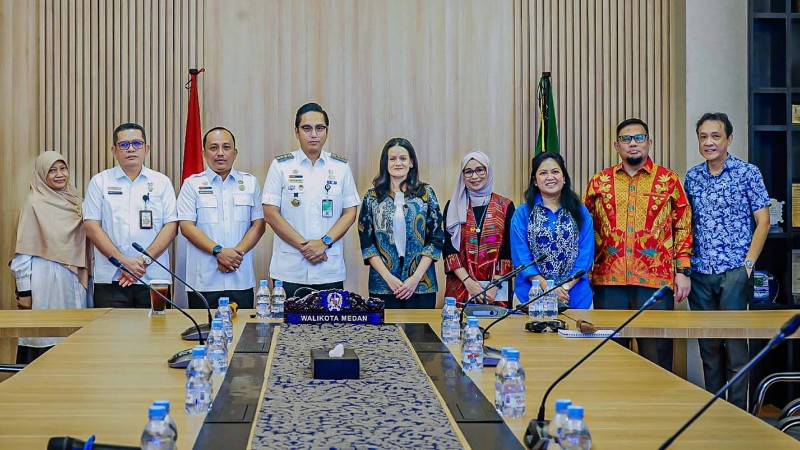
MEDAN | INDATANEWS.COM – The Mayor of Medan, Rico Waas, received a delegation from the United Nations Development Programme (UNDP) on Wednesday, May 13, 2026, at the official residence of the mayor. The meeting focused on potential strategic cooperation, particularly in sustainable waste management and a planned site visit to Medan's Waste-to-Energy Processing Facility (PSEL).
Rico Waas warmly welcomed UNDP Indonesia's cooperation initiatives, emphasizing that Medan holds strong potential in waste management innovation and digital public services. "There are many areas suitable for collaboration, especially in waste management and digital systems," he said.
Multicultural Strength and Economic Potential
Read Also:
The mayor highlighted Medan's identity as a multicultural metropolitan city enriched by the diversity of its communities. As Indonesia's fourth-largest city, Medan is home to various ethnic groups, including Malay, Batak, Chinese, and Indian communities, living in harmony.
Economic Growth Driven by SMEs and Culinary Sector
Rico Waas further noted that the city's economy continues to show positive growth, driven largely by investment inflows and the development of micro, small, and medium enterprises (MSMEs). The culinary industry and local products are increasingly being prepared for export markets.
"Medan has significant economic potential, particularly in the MSME and culinary sectors," he stated.
Read Also:
The city government is also developing historic and cultural districts such as Lapangan Merdeka Medan, Kesawan, and Warenhuis to strengthen the tourism sector.
Digitalization and Sustainable Urban Development
During the discussion, the mayor reaffirmed Medan's commitment to digitalizing healthcare services and improving workforce skills through practical training programs. The goal is to better align human resources with industrial needs.
He also introduced several key city landmarks, including Istana Maimun, the Great Mosque Al-Mashun, the historic Kota Lama Belawan district, and Belawan Port as a major industrial and trade hub in North Sumatra. In addition, the Deli, Babura, and Denai rivers were highlighted as important areas for future sustainable development projects.
Read Also:
UNDP Supports Green and Digital Transformation
UNDP Deputy Resident Representative in Indonesia, Sujala Pant, stated that the organization has a long-standing partnership with Indonesia and has now entered a new five-year program cycle, with strengthened collaboration at the regional government level.
Priority areas include waste management, circular economy initiatives, environmental protection, MSME development, and the utilization of strategic commodities such as palm oil, cocoa, and coffee.
Pant also emphasized that these programs align with the Indonesian government's national agenda and President Prabowo Subianto's "Asta Cita" vision, particularly regarding industrial downstreaming, economic growth, and net-zero emissions targets. She further introduced a UNDP digital system designed to track the distribution of vaccines and medicines across Indonesia. IDNC)
Read Also:
REPORTER: Teguh Panjaitan | EDITOR: Fik Sagala
Read Also:


 /home/u7391150/public_html/indatanews.com/theme/function.php on line 28