Thursday, 03 September 2026
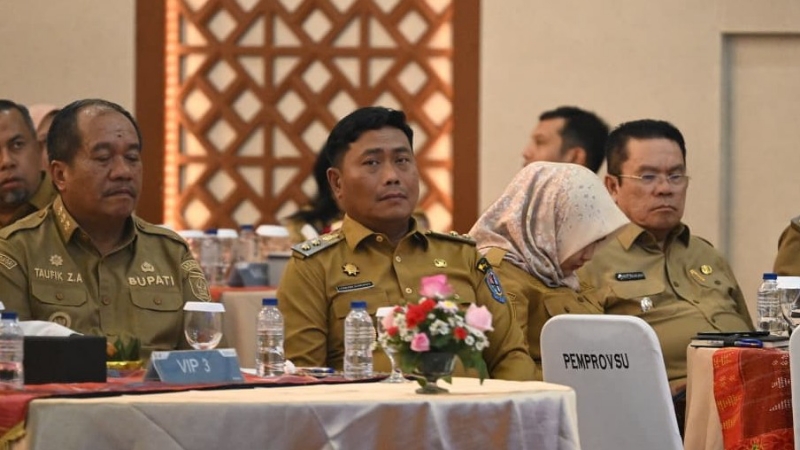
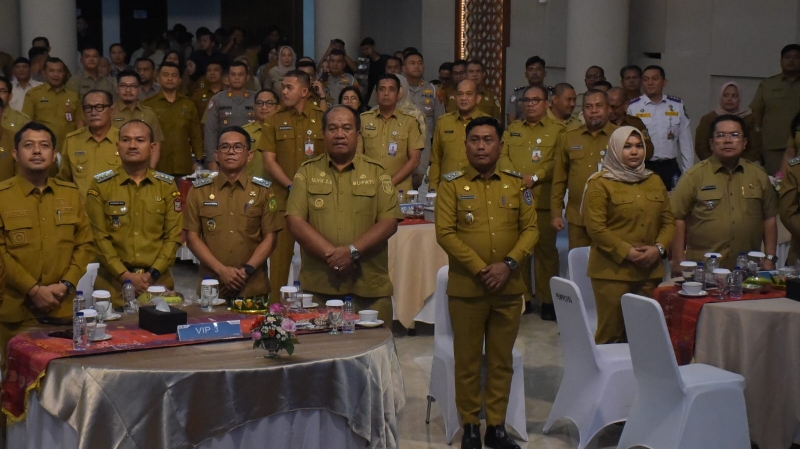
MEDAN | INDATANEWS.COM - The Deli Serdang Regency Government is continuing efforts to strengthen its regional fiscal capacity by optimizing locally generated revenue (Pendapatan Asli Daerah/PAD) and revenue from tax-sharing funds (Dana Bagi Hasil/DBH). The matter was discussed at a coordination meeting on optimizing locally generated revenue and the disbursement of provincial tax-sharing funds to regencies and cities across North Sumatra. The meeting was held on Monday, August 31, 2026, at the Raja Inal Siregar Hall at the North Sumatra Governor's Office in Medan.
Deli Serdang Deputy Regent Lom Lom Suwondo SS attended the coordination meeting alongside representatives of regency and city governments throughout North Sumatra. The forum focused on strategies to strengthen regional revenue and ensure the optimal disbursement of provincial tax-sharing funds so they can support development programs in each respective region.The coordination meeting also provided regional governments with an opportunity to align their efforts in identifying and developing revenue potential. The North Sumatra Provincial Government urged regencies and cities not to rely solely on existing revenue sources, but to broaden their tax bases and develop additional sources of income that can contribute to strengthening regional fiscal capacity.
North Sumatra Governor Muhammad Bobby Afif Nasution emphasized the importance of maximizing revenue from motor vehicle taxes and tax surcharges (Opsen). In his view, regional governments must continuously improve the management of these revenue sources so that existing tax potential can make a greater contribution to regional income.
Bobby said the implementation of the tax Opsen policy had had a positive impact on regional revenue. Under the policy, tax revenue can be allocated according to its origin or the location where the tax is collected.At the same time, he noted that disparities in revenue remain among regions. Areas with larger numbers of motor vehicles tend to generate higher revenue than regions with fewer vehicles.
"Regions with a large number of vehicles naturally generate higher revenue. Therefore, measures must be developed that promote a fairer distribution while also increasing the revenue potential of each region," Bobby said.The call is an important aspect of regional revenue management in North Sumatra. The provincial government, along with regency and city administrations, needs to further strengthen coordination so that increasing revenue is not focused solely on the amount collected, but also takes into account disparities in fiscal capacity among regions.
For Deli Serdang, increasing regional revenue is directly linked to strengthening the financial capacity of the regional government. Greater fiscal space will allow the administration to provide stronger support for development programs and improve the quality of public services for the community.
Based on the recap of provincial DBH disbursements in North Sumatra for 2026, Deli Serdang had received IDR 35.89 billion as of May 6, 2026. On August 3, 2026, the provincial government transferred an additional IDR 28.52 billion.
In addition, the provincial government planned another disbursement of IDR 10.24 billion on August 31, 2026. With the additional payment, the total DBH funds transferred to Deli Serdang amounted to IDR 74.65 billion.The DBH revenue provides additional fiscal space for the Deli Serdang Government to strengthen its financial capacity. The regional government can use this source of revenue, in accordance with applicable regulations, to support various development programs and public services.
Optimizing DBH funds goes hand in hand with efforts to increase locally generated revenue (PAD). The regional government must ensure that revenue potential from the tax sector and other sources is managed to the fullest extent possible in a transparent and sustainable manner.Against this backdrop, coordination between the provincial government and regency and city governments is of major importance. Stronger cooperation can help regions identify revenue potential, improve revenue management and find solutions to various obstacles in optimizing regional income.
Revenue sources that regional governments can further optimize include regional-owned enterprises (BUMD), regional public service agencies (BLUD), the utilization of regional assets, corporate social responsibility (CSR), the National Zakat Agency (BAZNAS), as well as various programs administered by ministries and government institutions.
Fatoni said regional governments needed to establish closer cooperation so that these potentials could contribute to regional revenue. Cooperation between the provincial government and regency and city administrations could also accelerate the identification and development of revenue sources that have not yet been optimally utilized."Cooperation between the provincial government and regency and city governments is the key to increasing regional revenue," Fatoni said.
For the Deli Serdang Government, strengthening PAD and optimizing DBH funds are important components in maintaining the regional government's capacity to finance development programs. By optimizing various revenue sources and strengthening cooperation between levels of government, there are greater opportunities to sustainably increase regional fiscal capacity.The coordination meeting also underscored the importance of a joint strategy in managing regional revenue across North Sumatra. Optimizing motor vehicle tax, managing tax Opsen, utilizing regional assets, strengthening regional-owned enterprises and public service agencies, and working with various stakeholders are among the measures that can broaden the revenue base.
Ultimately, increased regional revenue should strengthen development financing while improving the quality of public services. Regional governments must therefore ensure that every revenue potential that is developed is managed effectively and delivers tangible benefits to the public. (IDNC)REPORTER: Edi Saputra | EDITOR: Fik Sagala





 /home/u7391150/public_html/indatanews.com/theme/function.php on line 28