Sunday, 25 October 2026
MEDAN | INDATANEWS.COM - The North Sumatra Provincial Government (Pemprov Sumut) is accelerating the rehabilitation of water resources infrastructure (SDA) damaged by natural disasters in several areas. Working together with the BBWS Sumatera River Basin Authority, the provincial government is expediting damage repairs, controlling sediment deposits, reducing the risk of further flooding, and supporting the recovery of areas affected by the disasters.
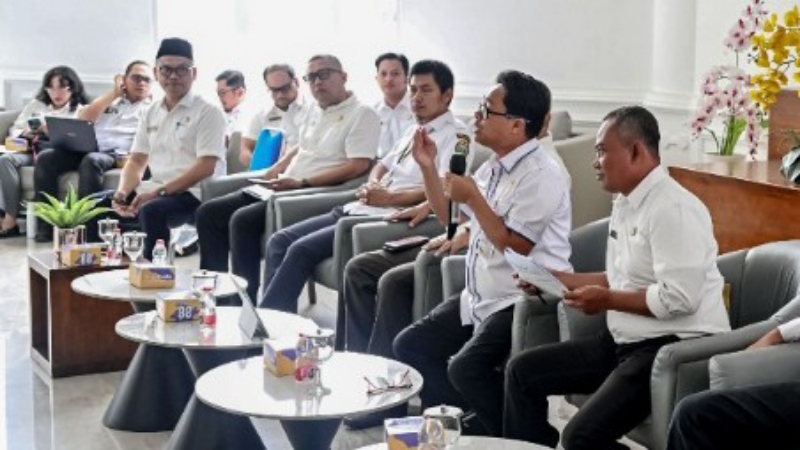
Acting Head of the North Sumatra Water Resources Agency, Gibson Panjaitan, said the government was adopting an integrated approach from upstream to downstream. Measures would be tailored to the specific characteristics of the damage in each area so that water management infrastructure could resume its functions and residents could be protected from further disaster risks as quickly as possible."We are working with the BBWS Sumatera River Basin Authority to repair infrastructure damaged by the disaster at several locations across North Sumatra," Gibson said during a press conference held by the North Sumatra Communication and Informatics Agency on Wednesday, August 26, 2026, in the lobby of the Dekranasda Building at the North Sumatra Governor's Office.
One of the areas receiving particular attention is the Aek Sigala-gala River in Tapanuli Tengah Regency. Measures there cover both upstream and downstream areas and are aimed at reducing flood risks while improving control over sediment carried by the river current.
Upstream, the BBWS Sumatera River Basin Authority is constructing a sabo dam on the Aek Sigala-gala River. The sediment-control structure is designed to trap material transported by the current, preventing large quantities of sediment from reaching downstream areas during heavy rainfall.Downstream, meanwhile, the North Sumatra Water Resources Agency is focusing on reinforcing riverbanks at several locations affected by flooding. The government expects the measures to improve riverbank stability and limit damage if water discharge rises sharply again.
"Downstream, the North Sumatra Water Resources Agency is reinforcing riverbanks at several flood-prone locations. The contracts have already been signed, and heavy construction equipment is also on site. Work will begin this week so that the damaged flood-control infrastructure can be completed quickly," he said.According to Gibson, the North Sumatra Water Resources Agency is implementing a total of 16 post-disaster recovery projects in 2026. Nine construction projects are already in the contracting stage, while seven other projects are still undergoing the tender process.
The projects are spread across several disaster-affected regencies, including Langkat, Tapanuli Tengah, Tapanuli Selatan, Tapanuli Utara, Batubara, and Mandailing Natal.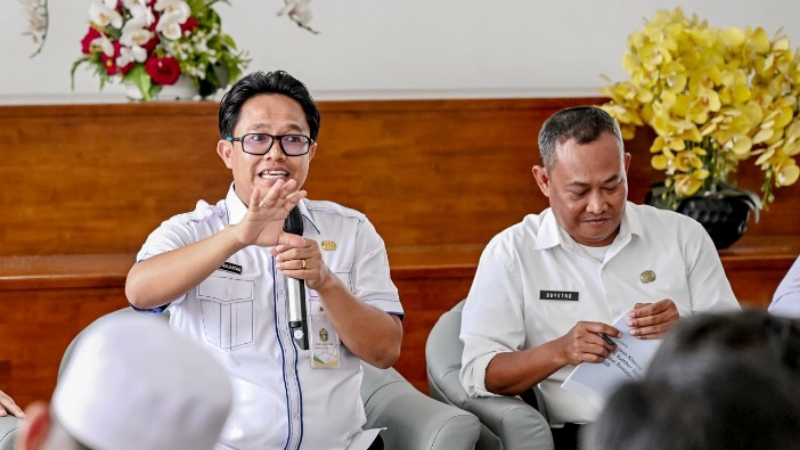
In addition to post-disaster recovery projects, the North Sumatra Water Resources Agency is allocating regional fiscal transfer (TKD) funds to rehabilitate various water resources infrastructure facilities in Tapanuli Tengah.
The government has allocated Rp25 billion to reinforce the banks of the Aek Panjaitan River. The funds are intended to strengthen the riverbanks against current pressure and reduce the risk of damage to surrounding areas.The agency is also allocating Rp1.5 billion to rehabilitate the irrigation canal in the Badiri Lopian Irrigation Area and Rp18 billion to rehabilitate the canal in the Mombang Boru Irrigation Area. Both projects are part of efforts to restore and improve the functioning of irrigation networks in affected areas.
For the Aek Badiri River, the government has allocated Rp30 billion for riverbank reinforcement. Another Rp30 billion has been earmarked for the rehabilitation of the dam on the Aek Sibundong River.In addition, the government has allocated Rp23 billion to rehabilitate the dam on the Aek Pintu Bosi River. The North Sumatra Water Resources Agency has also earmarked Rp20 billion to rehabilitate the dam on the Aek Siaili Tukka River and Rp50 billion to reinforce the banks of the Aek Sibuluan River.
The various projects demonstrate that post-disaster measures are not focused solely on restoring damaged structures. At the same time, the water management system is being strengthened so that infrastructure can better withstand potential increases in river discharge and minimize the risk of further disasters that could once again disrupt residents' daily lives.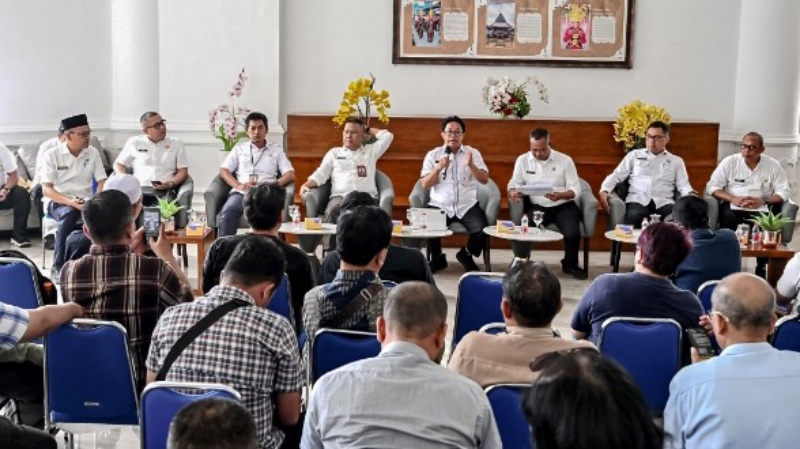
Alongside repairing infrastructure damaged by disasters, the North Sumatra Water Resources Agency is also preparing a program to expand irrigation networks. The initiative is intended to strengthen food security and increase agricultural productivity.
Gibson said the government continued to face the challenge of expanding agricultural areas that could be optimally supported by irrigation networks. Based on data on surface and swamp irrigation areas in North Sumatra, the currently productive area covers around 36,000 hectares. Meanwhile, the province's total potential irrigation area is estimated at around 113,000 hectares.To make better use of this potential, the North Sumatra Water Resources Agency will undertake work in 20 irrigation areas in 2026. The program aims to expand productive agricultural land by 5,050 hectares.
"This year, we will work on 20 irrigation areas to increase productive agricultural land in North Sumatra by 5,050 hectares. We hope the work can be completed by December 2026, allowing the productive agricultural area to increase from 36,000 hectares to 41,000 hectares next year," Gibson said.The government is targeting completion of all work by December 2026. If the target is achieved as planned, the productive agricultural area in North Sumatra could reach approximately 41,000 hectares in 2027.
The program also highlights the link between post-disaster recovery and the food security agenda. More reliable water resources infrastructure serves not only to control flooding and sediment, but also to ensure water supplies for agricultural land.By accelerating post-disaster infrastructure recovery and expanding irrigation networks, the North Sumatra Provincial Government aims to ensure that water infrastructure can once again fulfill its functions while providing long-term benefits to the community. Upstream measures, downstream riverbank and dam reinforcement, and irrigation network expansion form part of the government's strategy to build a more resilient water resources system in North Sumatra. (IDNC)
REPORTER: Ahmad Zulfikar | EDITOR: Fik Sagala