Sunday, 20 September 2026
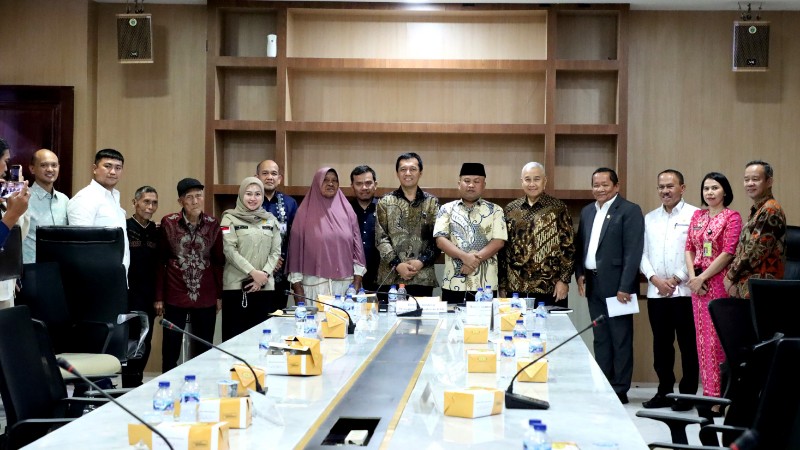
MEDAN | INDATANEWS.COM – A decades-long agrarian conflict between residents of Padang Halaban and PT Sinar Mas Agro Resources and Technology (SMART) Tbk has reached a major breakthrough, paving the way for the resolution of a land dispute that has persisted for more than half a century.
The North Sumatra Provincial Government, together with several state institutions, successfully facilitated an agreement that opens the path toward resolving a dispute involving 83.2627 hectares of land in Panigoran Village, Aek Kuo District, North Labuhanbatu Regency.
The agreement is considered a significant step toward ensuring legal certainty for local residents while maintaining a fair and sustainable investment climate. The provincial government reaffirmed its commitment to resolving agrarian conflicts through transparent, accountable, and justice-based mechanisms.
Multi-Stakeholder Meeting Delivers Breakthrough
The agreement was reached during a multi-stakeholder meeting held on June 4, 2026, at the Governor's Office of North Sumatra. The meeting was initiated by the Directorate General of Human Rights Services and Human Rights Compliance of Indonesia's Ministry of Human Rights.
Representatives from the House of Representatives' Commission XIII (DPR RI), the National Commission on Human Rights (Komnas HAM), the Ministry of Agrarian Affairs and Spatial Planning/National Land Agency (ATR/BPN), the North Sumatra Regional Legislative Council, the Ombudsman of the Republic of Indonesia, Military Command I/Bukit Barisan, the North Labuhanbatu Regency Government, regional leadership officials, and PT SMART participated in the discussions.
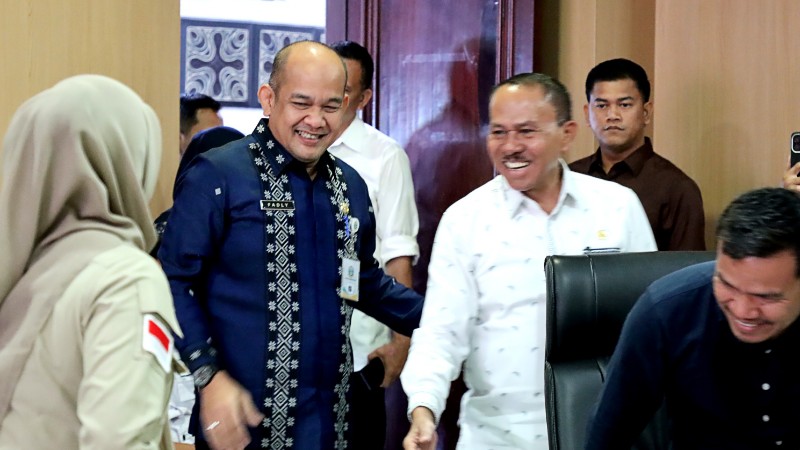
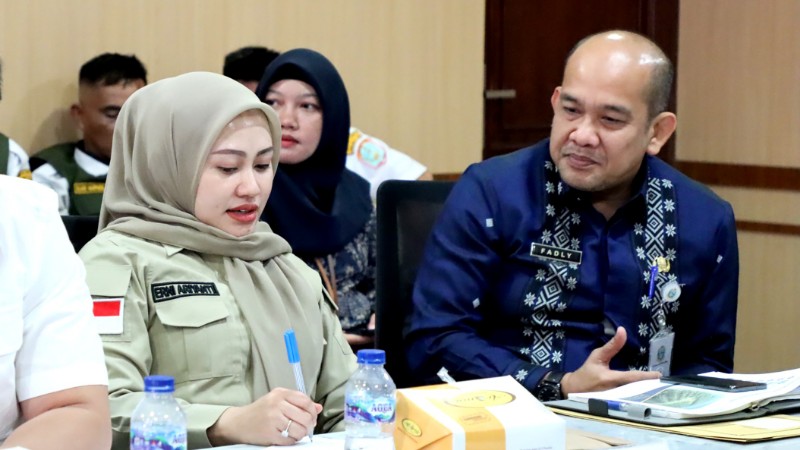
Achmad Fadly, Special Advisor to the Governor of North Sumatra for Legal Affairs, Politics, and Governance, emphasized that resolving the conflict forms part of the provincial government's commitment to providing legal certainty for all parties involved.
"The North Sumatra Provincial Government remains committed to a fair and transparent dispute resolution process, with legal certainty as the main priority. The outcomes of this meeting provide an important foundation for the next stages in accordance with existing legal procedures," Fadly said following the meeting.
He noted that agrarian disputes involve not only land ownership issues but also the livelihoods of people who have depended on the contested land for decades. Therefore, all parties sought a solution that would be acceptable to both the community and the company.
Disputed 83 Hectares Confirmed Outside PT SMART Concession
One of the most important outcomes of the meeting was the clarification of the legal status of the disputed land.
The Directorate General of Land Rights and Land Registration under the Ministry of Agrarian Affairs and Spatial Planning confirmed that the 83.2627-hectare area had been excluded from the Hak Guna Usaha (HGU) No. 1419/Labuhan Batu concession and had obtained enclave status.
The land also possesses its own Land Identification Number (NIB 1883). Information presented during the meeting indicated that the area is currently subject to an execution process and is not part of PT SMART's HGU concession area.
The legal clarification marks a critical turning point in a conflict that has endured for decades. By clearly establishing the land's legal status, authorities can now proceed with the next stages of settlement under applicable regulations.
All parties agreed that the dispute would be resolved through Indonesia's Agrarian Reform program, in accordance with Presidential Regulation No. 62 of 2023 on the Acceleration of Agrarian Reform.
The regulation allows the government to designate disputed land as Agrarian Reform Object Land (TORA), enabling land rights to be granted to eligible residents.
For the people of Padang Halaban, the agreement represents a significant milestone in their decades-long struggle for land rights.
Strict Oversight to Ensure Fair Implementation
Beyond agreeing on a settlement mechanism, stakeholders also committed to closely monitoring the implementation process.
Commission XIII of the House of Representatives, the Ministry of Human Rights, Komnas HAM, and the Ombudsman of the Republic of Indonesia will oversee and supervise the transfer of land rights to eligible residents.
The objective is to ensure transparency, accountability, and long-term legal certainty while preventing the emergence of new disputes that could delay the process.
The North Sumatra Provincial Government hopes the resolution will enable residents to resume economic activities on land that has long served as their primary source of livelihood.
Authorities also expect the agreement to strengthen social stability, improve relations among stakeholders, and support sustainable economic development in the region.
Residents Express Relief and Renewed Hope
For the residents of Padang Halaban, the agreement represents far more than an administrative settlement. It symbolizes renewed hope after years of uncertainty regarding the future of the land they cultivate.
Resident Kartini expressed gratitude following the meeting.
"Alhamdulillah, we are very grateful for today's meeting," she said.
Kartini cultivates approximately five rante of land, equivalent to around 2,000 square meters, where she grows cassava, bananas, and various crops to support her family.
For her, the land is not merely a piece of property but the foundation of her family's livelihood. The prolonged conflict, she said, had created years of anxiety and uncertainty.
According to local residents, they experienced various forms of intimidation related to the dispute between 2009 and 2026.
Another resident, Nasib, also welcomed the agreement, highlighting the importance of the land for local communities whose livelihoods largely depend on agriculture.
"I simply want to say thank you. Thank you for the land we have hoped for over so many years and which secures our livelihoods," he said.
According to the Agrarian Reform Consortium (KPA), the conflict between Padang Halaban residents and PT SMART dates back to 1972. Over more than five decades, the dispute involved repeated tensions, including intimidation and evictions.
The complexity and duration of the case made it one of North Sumatra's most significant agrarian conflicts. The agreement is now being viewed as an important precedent for the peaceful and equitable resolution of long-standing land disputes across Indonesia.
As implementation of the agrarian reform process moves forward, residents are placing their hopes in a transparent process that delivers the legal certainty they have sought for decades.
The successful breakthrough also demonstrates how collaboration among government institutions, businesses, and local communities can create sustainable solutions to protracted agrarian disputes. Through dialogue and legal clarity, a pathway has finally emerged to provide the people of Padang Halaban with new opportunities after more than 50 years of conflict. (IDNC)
REPORTER: Darmailawati | EDITOR: Fik Sagala





 /home/u7391150/public_html/indatanews.com/theme/function.php on line 28