Sunday, 25 October 2026
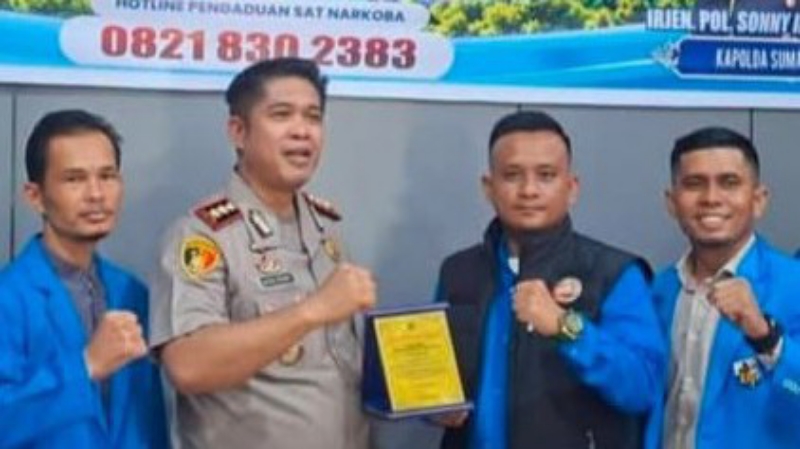
LABUHANBATU SELATAN | INDATANEWS.COM - Muhammad Yahya Harahap, chairman of the Labuhanbatu Selatan District Board of the Indonesian National Youth Committee (DPD KNPI), has praised the local police for their efforts to combat drug trafficking. He also reaffirmed his organisation's support for strengthening security and public order to protect young people and promote the region's sustainable development.
Yahya expressed his appreciation on Friday, 23 October 2026, in Sosopan, Kota Pinang District, Labuhanbatu Selatan Regency, North Sumatra. He said tackling illegal drug trafficking required the active involvement of all sections of society, particularly youth organisations, which maintained close links with younger generations.He stressed that drug-related problems should not be treated solely as law enforcement matters. Drug trafficking and misuse threatened young people's well-being, weakened family ties and could undermine the region's long-term development.
According to Yahya, police efforts to tackle narcotics must be supported by prevention, public education and wider community involvement. Law enforcement agencies could not address the problem effectively on their own if communities remained passive in the face of activities that threatened young people's future.
Youth organisations could play an important role by reaching different groups within society, particularly young people exposed to negative influences. Discussion forums, information sessions, social initiatives and anti-drug campaigns could help raise awareness of the dangers of drug misuse.The DPD KNPI Labuhanbatu Selatan expressed its readiness to strengthen cooperation with the local police to create a safer, more orderly and stable environment.
The partnership could include educational activities on the dangers of drugs, efforts to strengthen respect for the law, social programmes for young people and encouragement for residents to report suspected offences through official channels.Public participation is essential to help the police identify potential security risks in local communities at an early stage. Residents also need to understand the proper reporting procedures so that information can be assessed and followed up by the relevant authorities.
Through closer cooperation, KNPI and the police aim to reinforce the understanding that combating drugs is not the responsibility of security agencies alone. It is a shared social responsibility that requires the involvement of the wider community.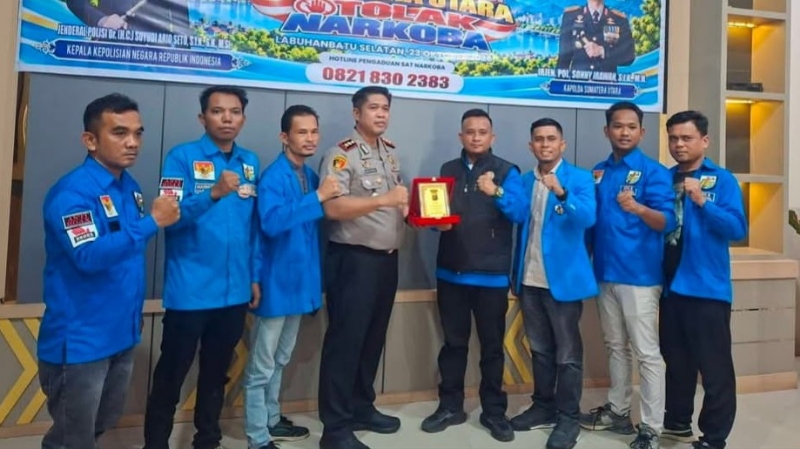
Yahya also emphasised that young people had a strategic role to play in the development of Labuhanbatu Selatan. Rather than standing by when social problems emerged, they should take part in finding solutions through practical activities that benefit the community.
Youth organisations have various ways to encourage positive change, including promoting good character and responsibility, providing practical skills, organising social projects and developing young people's creative potential. Such initiatives can channel youthful energy into productive activities while strengthening a sense of responsibility towards the surrounding community.These efforts are also important in expanding opportunities for personal and professional development. A supportive environment can help young people build their future, improve their competitiveness and avoid behaviour that could harm themselves or others.
Drug prevention requires the involvement of families, schools, religious leaders, community organisations and the regional administration. Each group has its own responsibilities, but together they can create an environment that protects young people from the dangers of drug trafficking and misuse.KNPI can contribute by developing programmes that reflect young people's everyday experiences and needs. These could include discussion sessions, sporting activities, vocational training and community projects. In this way, anti-drug messages can be translated into practical initiatives that deliver tangible benefits to young people and the wider community.
Beyond tackling drugs, Yahya regards security and public order as essential foundations for the development of Labuhanbatu Selatan. A safe environment allows residents to go about their daily lives, establish businesses, improve educational opportunities and participate in development projects.
Stable security conditions also help create a healthy social and economic environment. People need to feel safe to work, pursue economic activities, access public services and make the most of the region's potential without being undermined by crime.For this reason, the DPD KNPI Labuhanbatu Selatan's support for the local police extends beyond the fight against drugs. It also includes efforts to maintain security and public order over the long term. Achieving this requires sustained commitment, effective communication and mutual trust between residents and law enforcement agencies.
The organisation hopes to further strengthen relations and cooperation between young people and the police, with an emphasis on prevention, education, youth development and a humane approach, while maintaining firm law enforcement when offences are established.Yahya also encouraged residents to take a more active role in keeping their communities safe, accept greater responsibility for one another and report information about suspected offences through the appropriate lawful channels. Such participation would help communities respond more effectively to potential security threats.
Ultimately, combating drugs and maintaining public safety are shared responsibilities. Through close cooperation between the police, youth organisations, families and the wider community, Labuhanbatu Selatan can work towards a safer environment and nurture a healthy, capable younger generation that makes a meaningful contribution to regional development.The DPD KNPI Labuhanbatu Selatan's support for the local police highlights that the region's future depends not only on law enforcement, but also on social responsibility and active public participation in protecting future generations. (IDNC)
REPORTER: Jhon Fitra Sagala | EDITOR: Fik Sagala