Wednesday, 09 September 2026

MEDAN | INDATANEWS.COM - Legal aid organization Lembaga Bantuan Hukum (LBH) Medan has strongly criticized the appeal ruling issued by the Jakarta II High Military Court. The court overturned the additional punishment of dismissal from military service and reduced the prison sentences imposed on two soldiers in the acid attack case involving human rights activist and Deputy Coordinator of the Commission for Missing Persons and Victims of Violence (KontraS), Andrie Yunus. LBH Medan said the ruling undermines the victim's and the public's sense of justice and could set a troubling precedent for law enforcement.
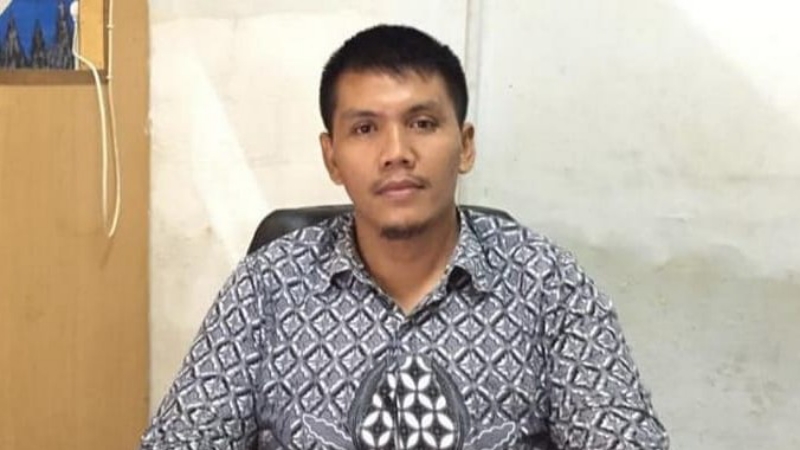
LBH Medan Director Irvan Saputra, S.H., M.H., said the II-08 Jakarta Military Court had previously convicted four Indonesian Military (TNI) personnel in Decision Number 70-K/PM II-08/AL/IV/2026, issued on June 10, 2026.
At the first-instance trial, the panel of judges sentenced Serda Edi Sudarko to three years in prison and Lettu Budhi Hariyanto Widhi Cahyono to two years and six months in prison. In addition to the prison sentences, the court ordered both soldiers to be dismissed from military service.
Meanwhile, Kapten Nandala Dwi Prasetya was sentenced to two years in prison, while Lettu Sami Lakka received a sentence of one year and six months.
The Jakarta II High Military Court subsequently amended the ruling through Appeal Decision Number 56-K/PMT-II/BDG/AL/VI/2026, issued on August 20, 2026. Edi Sudarko's prison sentence was reduced from three years to two years and six months, while Budhi Hariyanto's sentence was reduced from two years and six months to two years.
The appellate court also overturned the additional punishment of dismissal from military service imposed on both soldiers.
"Through Appeal Decision Number 56-K/PMT-II/BDG/AL/VI/2026 dated August 20, 2026, Serda Edi Sudarko's prison sentence was reduced to two years and six months, while Budhi Hariyanto's was reduced to two years. In addition, the additional punishment of dismissal from military service imposed on both defendants was overturned," Irvan said in an official statement on Tuesday, September 8, 2026.
According to Irvan, the appeal ruling is not merely about reducing the prison sentences and overturning the dismissal from military service. Rather, he said, the decision reflects a serious problem in law enforcement, particularly when criminal proceedings involve members of the TNI.
LBH Medan has questioned the legal considerations underlying the appellate court's decision to overturn the additional punishment of dismissal while simultaneously reducing the prison sentences of the two soldiers.
The legal aid organization also questioned whether the appeal ruling was consistent with the first-instance decision. At the first-instance trial, the panel of judges additionally ordered Edi Sudarko and Budhi Hariyanto to be dismissed from military service, although LBH Medan had already maintained that the ruling did not provide sufficient justice for Andrie Yunus and the public.
"It must be emphasized that the deliberate and planned actions of the perpetrators, which left a critical citizen who was working to improve the country with lifelong physical injuries, violated both the soldiers' oath and the Eight Obligations of the TNI, particularly the obligation not to harm or injure the people," Irvan stressed.
In Irvan's view, state officials proven to have committed criminal offenses must be held accountable for their actions on an equal basis. Membership in the TNI, he said, must not become grounds for receiving more lenient legal treatment.
LBH Medan linked the matter to the rule-of-law principle enshrined in Indonesia's 1945 Constitution. Irvan referred to Article 1 Paragraph 3 and Article 28D Paragraph 1 of the 1945 Constitution, which establish Indonesia as a state governed by law and guarantee fair legal certainty and equality before the law.
"This guarantee is also reinforced by Articles 3 and 4 of Law Number 39 of 1999 on Human Rights, which establish the principles of equality before the law as well as protection of the right to life and the right not to be subjected to torture," Irvan said.
Irvan also referred to Indonesia's obligations following its ratification of the International Covenant on Civil and Political Rights (ICCPR) through Law Number 12 of 2005.
In his view, Article 7 of the ICCPR prohibits torture and cruel, inhuman or degrading treatment. Article 14 of the ICCPR also guarantees every person the right to a fair hearing before a competent, independent and impartial tribunal.
Similar principles are contained in Articles 5, 7 and 8 of the Universal Declaration of Human Rights (UDHR). These provisions guarantee protection against cruel or degrading treatment, equality before the law, and effective legal protection through the courts.
On this basis, LBH Medan considers the overturning of the dismissal of Edi Sudarko and Budhi Hariyanto to be inconsistent with constitutional principles and legal provisions concerning equality before the law.
LBH Medan has called on the Military Prosecutor's Office to file a cassation appeal against the ruling. At the same time, the organization urged the Supreme Court to issue a decision that reflects the sense of justice of Andrie Yunus and the wider public.
Beyond the ruling in the Andrie Yunus case, LBH Medan also criticized the military justice system. The organization believes that Law Number 31 of 1997 on Military Courts and existing military justice practices potentially create room for impunity for TNI personnel.
"Therefore, from a legal perspective, LBH Medan has grounds to conclude that there is no justice within the military justice system. LBH also calls on the Judicial Commission of Indonesia to intervene, conduct an investigation and take firm action against the panel of judges of the Jakarta II High Military Court that ruled in this case," Irvan said.
Irvan emphasized that justice for Andrie Yunus should not be measured solely by how long the perpetrators serve their sentences or by whether they retain their status within the military institution. Justice must also ensure protection and redress for the victim and guarantee that the state is capable of preventing similar incidents in the future.
"Justice for Andrie Yunus is not about how long the perpetrators serve their sentences or whether they are dismissed from their institution. Rather, it is about ensuring that the victim receives protection and redress and that every citizen is guaranteed protection from becoming a victim of TNI personnel," Irvan said.
LBH Medan also called on the Constitutional Court to immediately decide on and grant all petitions for judicial review of the Military Courts Law. The petitions were previously filed by Eva Meliani Br. Pasaribu and Lenny Damanik, who are described as victims or family members of victims of crimes allegedly committed by TNI personnel.
LBH Medan further called on the government and the Indonesian House of Representatives (DPR RI) to follow up on the matter through judicial system reform. The legal aid organization urged that, in the future, TNI personnel who commit ordinary criminal offenses be prosecuted and tried in civilian courts rather than military courts.
"The government and DPR RI must also respond immediately. In the future, all TNI personnel who commit ordinary criminal offenses should be tried in civilian courts so that no more citizens become victims," Irvan said.
LBH Medan subsequently outlined several demands directed at the relevant institutions. First, LBH Medan called on the Supreme Court to ensure that oversight of the proceedings is conducted objectively, transparently and independently, resulting in a fair ruling for Andrie Yunus and the public.
Second, LBH Medan called on the Military Prosecutor's Office to file a cassation appeal against the ruling. Third, the organization urged the National Human Rights Commission (Komnas HAM) to conduct investigations and monitoring measures to ensure that the victim's rights to justice, protection and redress are guaranteed.
Fourth, LBH Medan called on the Minister of Defense, the TNI Commander-in-Chief and TNI institutions to ensure that there is no institutional protection for soldiers proven to have committed criminal offenses.
Fifth, LBH Medan called on the Constitutional Court to immediately decide on and grant all petitions for judicial review of the Military Courts Law.
Sixth, LBH Medan urged the DPR RI to summon the chairman of the Jakarta High Military Court to oversee the military justice system. The organization also called on the DPR RI to immediately revise the Military Courts Law and the TNI Law.
LBH Medan reaffirmed that law enforcement must apply equally to all citizens. The organization rejects any form of differential treatment for members of state institutions who have been proven to have committed criminal offenses.
LBH Medan concluded its statement by stressing that the law must not be strict toward civilians while being lenient toward members of state institutions. The organization also rejects any form of impunity afforded by virtue of wearing a uniform. (IDNC)
REPORTER: Darmailawati | EDITOR: Fik Sagala





 /home/u7391150/public_html/indatanews.com/theme/function.php on line 28