Wednesday, 09 September 2026
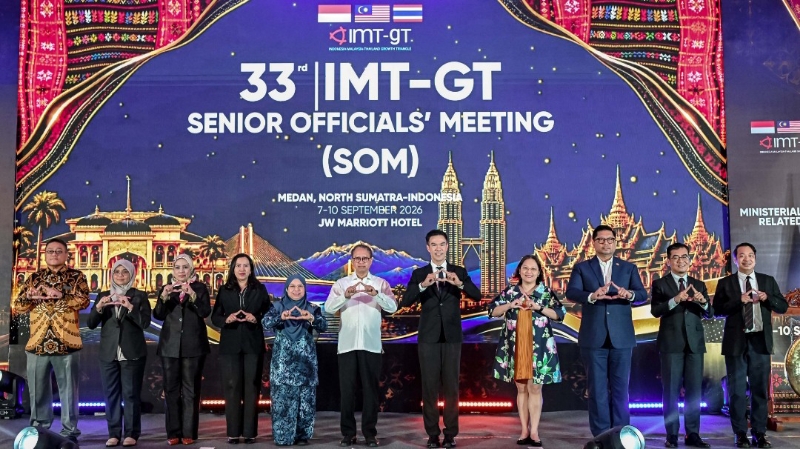
MEDAN | INDATANEWS.COM - Indonesia is strengthening North Sumatra's supply chain corridor as part of a strategy to improve connectivity and regional economic competitiveness. The province's strategic location along the Malacca Strait, according to the government, offers significant opportunities to expand North Sumatra's role in the regional trade network.
Edi Prio Pambudi, Deputy Coordinating Minister for Economic Cooperation and Investment at the Coordinating Ministry for Economic Affairs of the Republic of Indonesia, made the statement during his address at the 32nd Senior Official Meeting of the Indonesia-Malaysia-Thailand Growth Triangle (IMT-GT) on Tuesday, September 8, 2026, at the JW Marriott Hotel in Medan.The meeting is an important part of discussions aimed at deepening subregional economic cooperation among Indonesia, Malaysia and Thailand. The Indonesian government is pursuing a more integrated approach by involving regional governments in project planning while expanding distribution networks and supply chains.
"That is why Indonesia is pursuing a more integrated approach, planning projects jointly with regional governments and strengthening our supply chain corridor from North Sumatra," Edi said.According to Edi, strengthening North Sumatra's supply chain corridor is not solely about trade, but also about building more efficient regional connectivity. North Sumatra's geographical position, with direct access to the Malacca Strait, is an important asset for further expanding trade relations with countries across the region.
Edi emphasized that the 32nd IMT-GT meeting is not merely focused on discussions about improving regional connectivity. The forum also provides member countries with an opportunity to reshape their forms of cooperation in response to changes in the global economic and geopolitical landscape.
"This year's IMT-GT meeting is not only a discussion about connectivity. Rather, IMT-GT is a moment to reorganize this," he said.He explained that recent geopolitical developments have also influenced the direction of economic cooperation in the region. The situation is prompting ASEAN countries to strengthen their joint strategies to maintain stability while sustaining regional cooperation amid various global pressures.
"We understand that recent dynamic developments amid geopolitical tensions also require ASEAN to find its own ways to ensure that appropriate solutions can be secured," Edi said.Against this backdrop, Indonesia considers subregional cooperation through IMT-GT to be of strategic importance. Cooperation among regions can strengthen economic resilience, expand market access and facilitate the flow of goods and services among member countries.
Stronger connectivity is also expected to have a direct impact on the development of various priority sectors in North Sumatra. With improved infrastructure, logistics and maritime connections, the province has significant potential to increase its trade capacity and attract investment.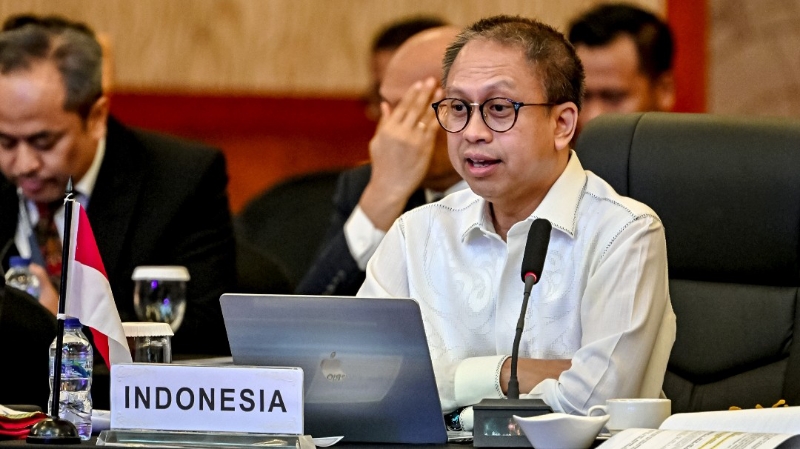
In addition to connectivity and trade, Edi highlighted the need to prepare subregional cooperation to address climate change, including the potential impacts of the El Niño weather phenomenon. According to him, such developments can affect supply chain stability, particularly in the food sector and the smooth movement of logistics.
Therefore, IMT-GT member countries need to strengthen cooperation to ensure the availability of essential commodities while maintaining distribution even amid climate-related pressures.Several key commodities and products are considered to have strong potential to enhance shared competitiveness. These include rubber, palm oil, fisheries products, high-quality horticultural products and the digital trade sector.
Indonesia is also promoting the development of downstream products and resource-based industries so that trade cooperation does not remain limited to exports of unprocessed commodities. Greater value creation is essential to generate broader economic benefits for the regions and the subregion as a whole."Indonesia is ready to expand palm oil chemicals, biomethane and energy, as well as tropical horticultural products, into wider markets, supported by modern packaging centers and robust cold-chain and sanitation systems," Edi said.
The development of modern packaging centers and cold-chain systems is an important part of strengthening supply chains for horticultural products and food. Such infrastructure can help maintain product quality during storage and transportation while providing access to larger markets.The move also responds to the region's need to establish a more efficient and resilient trading system. Integrating production, processing, packaging, logistics and marketing can increase value creation while strengthening the position of Indonesian flagship products in regional markets.
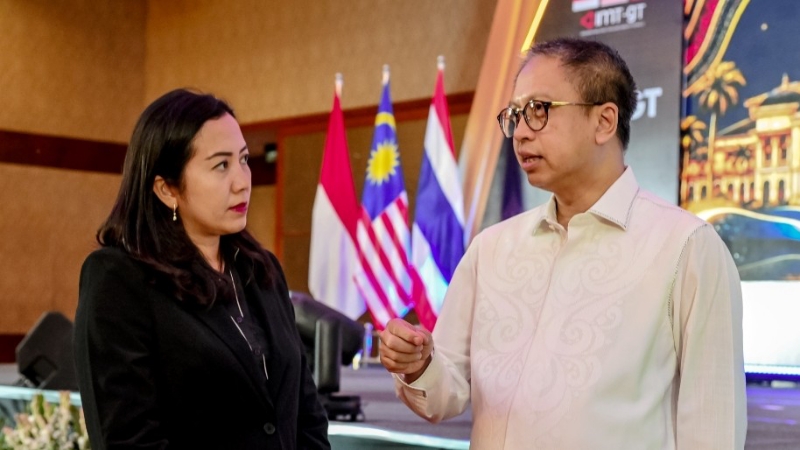
She highlighted planned marketing and media activities in the IMT-GT tourism sector, as well as a study aimed at promoting the IMT-GT region as a unified destination. The approach could enhance the region's appeal while encouraging cross-border tourist flows.
"Cross-border tourism remains an important economic driver. We are therefore promoting deeper subregional tourism cooperation, including the Java-Sumatra Growth Triangle, maritime connectivity and digital travel links, to position IMT-GT as an integrated and sustainable destination," Zunika said.According to Zunika, maritime connectivity and digital travel services are important elements in developing cross-border tourism. Greater integration could make it easier for travelers to access various destinations across IMT-GT member countries while promoting the region as a connected destination.
Strengthening the tourism sector can also generate a multiplier effect for local economies. Rising visitor numbers can stimulate business activity in accommodation, food and beverage, transportation, the creative economy and local trade.The 32nd Senior Official Meeting of IMT-GT is part of activities on the second day of the subregional cooperation forum in Medan. Following the meeting of senior government officials, the event series will continue with a Business Matching and Business Forum.
The forum is expected to provide businesses with opportunities to expand their networks, explore investment opportunities and establish cross-border business partnerships. The aim is to translate the strategic discussions of the Senior Official Meeting into concrete partnerships that can benefit businesses and communities across the IMT-GT region. (IDNC)REPORTER: Ahmad Zulfikar | EDITOR: Fik Sagala




 /home/u7391150/public_html/indatanews.com/theme/function.php on line 28