Wednesday, 16 September 2026
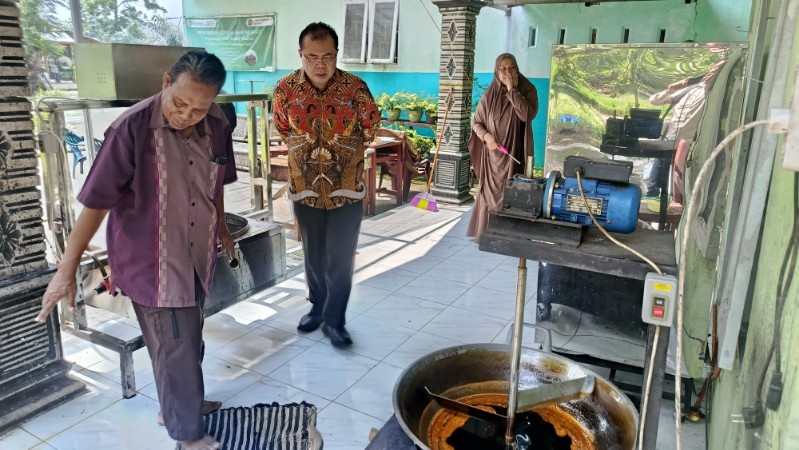
DELI SERDANG | INDATANEWS.COM – Prof. Dr. Hoiruddin Hasibuan, Special Adviser to Indonesia's Minister of Home Affairs for Security and Legal Affairs, visited a sugar palm agribusiness development project at Al Hidayah Islamic Boarding School (Pesantren) in Deli Serdang, North Sumatra, on Saturday, June 13, 2026.
The working visit highlighted ongoing efforts to strengthen Indonesia's food and energy security through the sustainable development of local resources.During the visit, Prof. Hoiruddin reviewed the progress of the sugar palm plantation and downstream processing initiatives being developed within the pesantren. The program is considered a model for productive economic empowerment, designed to provide long-term benefits for both educational institutions and surrounding communities.
Al Hidayah Pesantren is supported by Indonesia's elite counterterrorism unit Densus 88 and the National Counterterrorism Agency (BNPT). The institution was founded and is led by Ustadz Khairul Ghazali, who is now widely recognized as a peace ambassador actively involved in community development programs.The project is being developed across a five-hectare area dedicated to cultivating sugar palm (Arenga pinnata) through an integrated agribusiness system. The plantation is expected to become a strategic asset for economic independence, food security, and renewable energy development.
Prof. Hoiruddin commended the initiative, noting that Islamic educational institutions can play a broader role beyond religious education by contributing directly to community-based economic development.Through downstream processing, the pesantren is focusing not only on cultivation but also on producing higher-value products. This approach aligns with the government's efforts to strengthen the competitiveness of local products and expand the national economy through the utilization of domestic resources.
In addition, mature sugar palm trunks can produce high-quality starch used in various food products, including glass noodles, rice noodles, and traditional snacks.
The fruit of the sugar palm also holds significant commercial value. Kolang-kaling, a popular processed fruit product widely consumed in Indonesia, remains one of the country's sought-after agricultural commodities.The diverse range of products generated from sugar palm demonstrates its substantial potential to strengthen food security while increasing income opportunities for local communities. The industry also creates new economic value chains spanning cultivation, processing, distribution, and marketing.
The development of bioethanol is regarded as an important step toward reducing dependence on petroleum products and accelerating Indonesia's energy transition. A key advantage of sugar palm is that its use for energy production does not compete directly with food crops.
The plant also provides significant environmental benefits. Its deep root system helps prevent soil erosion, reduces the risk of landslides, and improves water retention capacity in the soil. As a result, sugar palm cultivation contributes not only to economic growth but also to long-term ecosystem preservation.At the conclusion of the visit, Prof. Hoiruddin expressed hope that the model developed at Al Hidayah could inspire similar initiatives at other Islamic boarding schools across Indonesia.
He emphasized that pesantren have the potential to become centers of community development—institutions that not only educate young people but also promote economic self-reliance, strengthen food security, and support renewable energy development.By integrating education, economic empowerment, and environmental stewardship, pesantren can play a significant role in building a more independent, competitive, and sustainable Indonesia. (IDNC)
REPORTER: Ahmad Zulfikar | EDITOR: Fik Sagala



 /home/u7391150/public_html/indatanews.com/theme/function.php on line 28