Friday, 18 September 2026
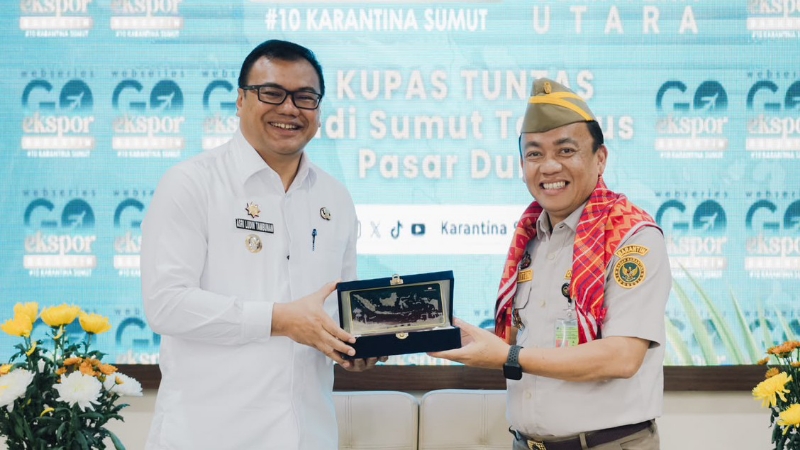
DELI SERDANG | INDATANEWS.COM - The Deli Serdang Regency Government is encouraging businesses to strengthen the development and downstream processing of lidi, as the export value of lidi from North Sumatra continues to rise significantly. As of early September 2026, the commodity's export value had reached Rp197.29 billion, well above the total export value of Rp108.42 billion recorded throughout 2025.
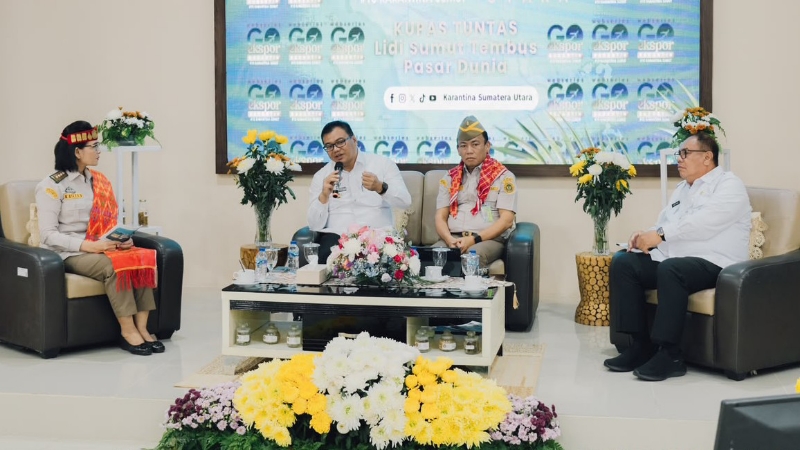
Deli Serdang Regent Asri Ludin Tambunan reaffirmed the support during his participation in the "Go Ekspor Barantin #10" web series organized by the North Sumatra Animal, Fish and Plant Quarantine Agency (Karantina Sumut) on Wednesday, September 16, 2026.According to Asri Ludin, the increase in lidi exports shows that a commodity previously regarded largely as a plantation by-product has significant economic potential. Therefore, the Deli Serdang Regency Government is encouraging businesses not to limit themselves to selling raw materials, but to develop processed products with greater added value.
Deli Serdang has significant potential for lidi raw materials. This potential comes, among other sources, from oil palm plantations covering a total area of 18,162.23 hectares across 22 subdistricts.
Based on this plantation area, the potential production of clean lidi is estimated at around 16,183 tons per year. Several areas are also considered centers of lidi production, particularly STM Hilir, Hamparan Perak, STM Hulu, and Bangun Purba subdistricts.In addition to oil palm, other raw materials come from coconut plantations covering a total area of 3,862.02 hectares. The availability of these raw materials provides an important foundation for expanding the lidi processing industry at the regional level.
Asri Ludin said he was surprised by the size of the emerging export market for lidi. In his view, Deli Serdang is contributing to the growth of lidi exports from North Sumatra."This news comes as a surprise to me. Lidi can develop into an exceptionally large export market. Deli Serdang is also among the areas contributing to it," he said.
The substantial potential, Asri Ludin said, needs to be developed jointly by the government and businesses so that it can generate broader economic benefits. The Deli Serdang Regency Government is therefore continuing to strengthen its support for businesses operating in the lidi sector.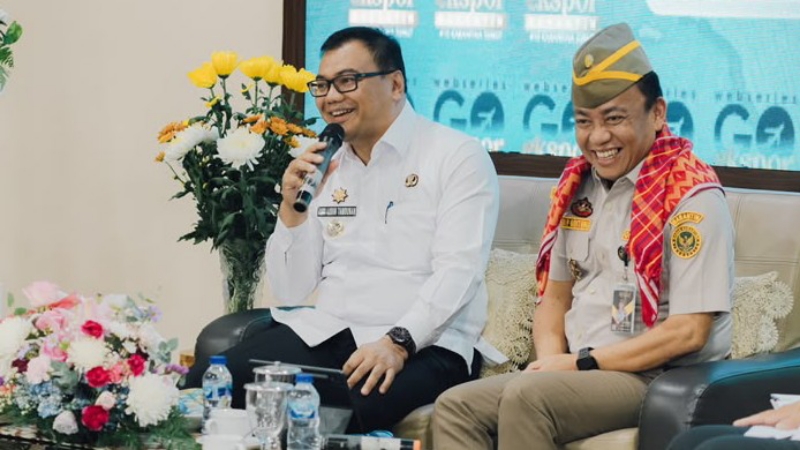
Through the Office of Cooperatives and Small and Medium Enterprises (Dinas Koperasi dan UKM), the Deli Serdang Regency Government has facilitated access to government-backed People's Business Credit (Kredit Usaha Rakyat/KUR) and financial literacy support for 445 lidi entrepreneurs from 17 subdistricts.
The financing support is part of the regional government's efforts to strengthen business capacity, particularly by increasing production capabilities and promoting sustainable business development.In addition to financing, the Deli Serdang Regency Government, through the Office of Industry and Trade (Dinas Perindustrian dan Perdagangan), is also supporting the downstream processing of lidi raw materials. This includes training in the production of woven lidi products, provision of production equipment, and marketing of processed products.
The regional government is using various exhibitions and public facilities as platforms to introduce lidi products to a wider audience. The move is intended to encourage businesses to produce products with higher economic value rather than simply selling lidi as a raw material.The development of downstream processing also creates opportunities for local communities to produce various handicraft products based on lidi. Better processing can place the raw material within a value chain that provides additional economic benefits to MSMEs and communities in production centers.
Pakistan is the largest market for lidi from North Sumatra. In 2025, shipments of lidi from North Sumatra to Pakistan totaled more than 24 million kilograms.
In addition to Pakistan, China, and Vietnam, lidi from North Sumatra is now also exported to a number of other countries. These export markets include Malaysia, Iran, Afghanistan, Thailand, Nepal, Mauritius, Uzbekistan, and Saudi Arabia.The development of these markets highlights the growing opportunities for North Sumatran lidi in the international market. At the same time, it gives regional businesses opportunities to improve production, quality, and processing capabilities in order to meet overseas demand.
Head of the North Sumatra Quarantine Agency N. Prayatno Ginting and Head of the Quarantine Human Resources Development Center Wisnu Wasisa Putra commended the Deli Serdang Regency Government's efforts to promote the development of the lidi commodity.The North Sumatra Quarantine Agency also reaffirmed its commitment to assisting businesses in meeting the phytosanitary requirements of their respective export destination countries. Compliance with these requirements is an important part of ensuring smooth international trade in agricultural and plant-based products.
"From waste to an export star. Oil palm lidi has now reached various overseas markets and is opening up new economic opportunities for people in the regions," Ginting said.According to the North Sumatra Quarantine Agency, Belawan Port is also the main export gateway, recording the highest number of certifications for this commodity. After Belawan Port, certification activities are also carried out through Tanjung Balai Asahan Port and Kualanamu Airport.
In light of these developments, the Deli Serdang Regent emphasized the importance of cooperation among the government, MSMEs, exporters, and other stakeholders. Such synergy is needed so that the increase in exports is reflected not only in trade value and volume, but also directly benefits the community."We do not make it difficult for anyone to conduct business. Let us work together and create synergy. This regency is large. I hope that the increase in exports will also have an impact on the economic conditions of the people," he said.
The Deli Serdang Regency Government hopes that strengthening the lidi sector will contribute to the creation of new economic activities in the region, from the supply of raw materials and processing to the production of handicrafts, trade, and exports.With its substantial raw material potential, financial support for MSMEs, skills development, provision of production equipment, and increasingly broad access to export markets, lidi has the potential to become one of the region's key products based on local resources.
Strengthening downstream processing is also an important step in ensuring that local communities do not remain solely raw material suppliers. By processing and developing their own products, businesses can generate greater added value while strengthening the competitiveness of lidi from Deli Serdang in both domestic and international markets. (IDNC)REPORTER: Edi Saputra | EDITOR: Fik Sagala





 /home/u7391150/public_html/indatanews.com/theme/function.php on line 28