Saturday, 19 September 2026

TANGERANG | INDATANEWS.COM - Indonesian Labor Minister Yassierli is calling for greater use of artificial intelligence (AI) in the workplace, while ensuring that people remain at the center of technological transformation. The government plans to harness AI strategically to increase productivity while continuing to develop the capabilities of the country's workforce.
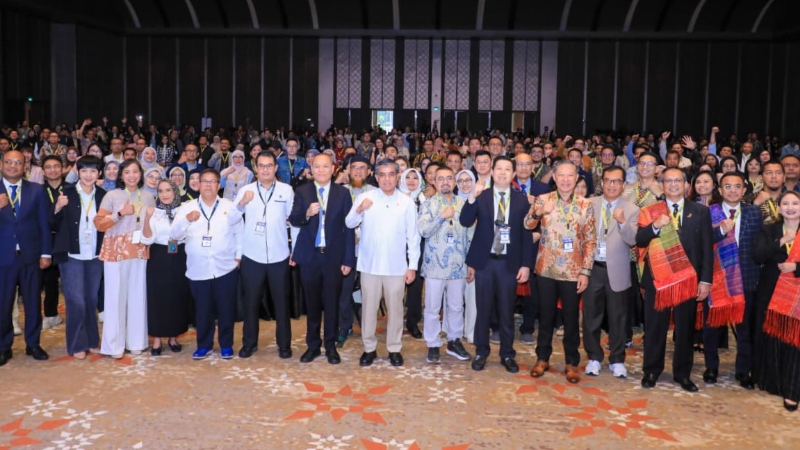
Yassierli made the remarks as a speaker at the Indonesia Human Capital and Beyond Summit 2026, held at the Nusantara International Convention Exhibition (NICE) PIK 2 in the Tangerang Regency area, Banten, on Tuesday, September 15, 2026.According to Yassierli, the growing adoption of AI is closely linked to productivity development across various economic sectors. Industries that have adopted AI more extensively, he said, are experiencing faster productivity growth than sectors where the use of such technologies remains relatively limited.
At the same time, Yassierli emphasized that greater AI adoption would not automatically lead companies to drastically reduce their workforce. Instead, the technology could create new opportunities for business development while increasing demand for certain specialized skills.For this reason, employees need to strengthen two capabilities simultaneously. In addition to possessing technical expertise relevant to their respective fields, workers should also understand how AI can be used to support their tasks and improve work outcomes.
Yassierli stressed that it is not enough for companies merely to hire AI specialists or use the technology solely as an operational tool. AI must instead be viewed as part of a broader transformation of work processes so that its potential benefits can be fully realized.
"The introduction of AI is not limited to hiring specialists or simply using AI as a digital assistant," Yassierli said.He explained that companies need to review and adjust their work processes once they begin implementing AI. If AI is used only as an operational assistant, productivity could increase by an average of around five percent.
A significantly higher productivity gain, however, could be achieved when companies redesign their workflows and Standard Operating Procedures (SOPs) while simultaneously developing the capabilities of their employees.According to Yassierli, such an approach could increase productivity by as much as 30 to 40 percent. This demonstrates that the impact of AI depends not only on the technological capabilities themselves, but also on how effectively companies reorganize their operations and prepare employees for change.
Digital transformation, therefore, needs to be accompanied by organizational transformation. Companies must ensure that employees understand changes in work processes, are familiar with the functions of the technologies being implemented, and possess the capabilities required to meet new demands.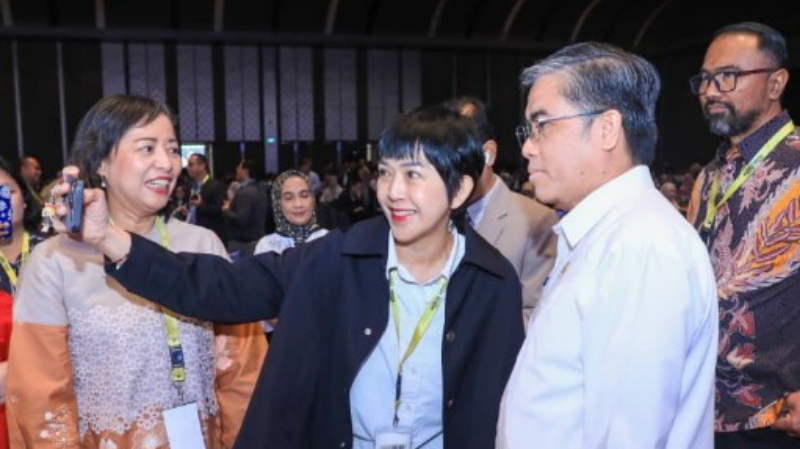
Yassierli also warned companies against assuming that purchasing or adopting new technologies would automatically guarantee business benefits. He cited a study by Boston Consulting Group (BCG) involving 1,250 companies. According to the study, 60 percent of AI frontrunners had yet to achieve significant business benefits from their AI initiatives.
In his view, this situation was partly attributable to shortcomings in developing strategies for AI adoption. Companies must first establish clear objectives before integrating AI into their business processes. At the same time, they need to ensure that the technology is genuinely aligned with the specific needs of their organizations."That is why technological transformation must be understood as part of a strategy to strengthen competitiveness and, at the same time, as part of the sustainable development of the world of work," he said.
A strategic approach is also important because technological change will alter the structure of jobs and the demand for particular skills. Employees who are able to adapt to new technologies may have opportunities to take on new tasks and roles. At the same time, companies need to prepare training and upskilling programs so that the transition does not create new skills gaps in the workplace.The Ministry of Manpower is therefore promoting an approach to AI that is not focused solely on improving efficiency, but also takes into account the human dimension of employment relations. The government aims to ensure that technological progress contributes to higher productivity without overlooking workers' rights and safety.
The second principle emphasizes the importance of employee participation in the process of introducing new technologies. Companies are expected to involve employees as well as worker or trade union representatives when planning and implementing changes related to AI adoption.
The third principle concerns human oversight of decisions supported or made by AI systems. Decisions that could affect rights, safety, and employment opportunities must remain subject to human supervision. This is intended to ensure that people retain control over important decisions in the workplace.The fourth principle is based on the concept of "No One Left Behind." The government is also placing particular emphasis on older workers, who should be included in vocational training and upskilling programs.
The Ministry of Manpower considers skills development a key component of the transition toward a workplace where AI is increasingly used. Employees need not only to develop a general understanding of the technology, but also to build capabilities that correspond to the changing requirements of their respective occupations.To promote responsible AI adoption, the Ministry of Manpower is preparing several concrete measures. Among them is a pilot project on AI-based productivity enhancement aimed at examining the practical application of the technology in the workplace.
The ministry is also developing official guidelines for the use of AI in the workplace. These guidelines are intended to provide various stakeholders with direction on the responsible use of the technology while taking workers' interests into account.In addition, the Ministry of Manpower is preparing a collaboration platform for companies to facilitate the exchange of knowledge and experience. Through this cooperation, companies will be able to learn from one another and share their experiences in implementing AI, including in the areas of skills development and work-process redesign.
These measures demonstrate that the government views AI adoption not merely as a technological initiative, but as part of efforts to increase productivity and advance the world of work. By strengthening employee capabilities, redesigning work processes, and ensuring human oversight, the government seeks to align AI adoption with economic demands and the interests of the national workforce. (IDNC)REPORTER: Ahmad Zulfikar | EDITOR: Fik Sagala






 /home/u7391150/public_html/indatanews.com/theme/function.php on line 28