Friday, 23 October 2026
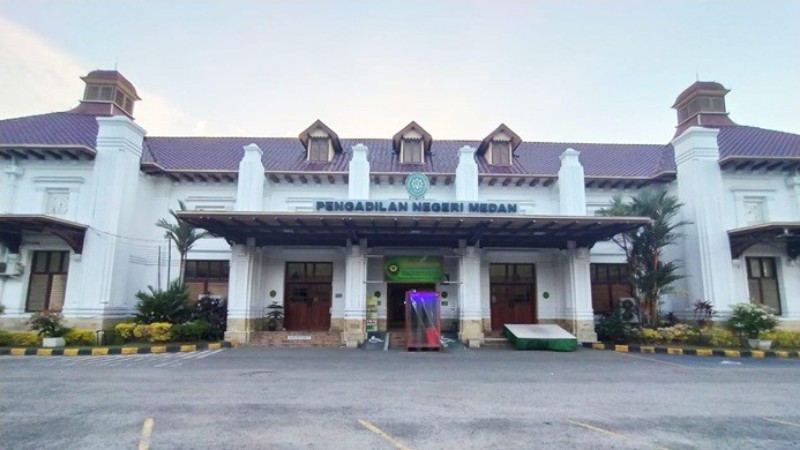
MEDAN | INDATANEWS.COM – North Sumatra Province, particularly the city of Medan, has once again drawn national attention. However, the spotlight is not focused on development achievements or progress in reducing poverty and crime, but on allegations of ethical violations within the judiciary that have shaken public trust in Indonesia's legal system.
Indonesia's Supreme Court Supervisory Body (Bawas MA) imposed disciplinary sanctions on 28 judicial officials on April 30, 2026, based on Announcement Number 2295/BP/PENG.KP.8.2/IV/2026.
Those sanctioned include 19 career judges, seven ad hoc judges, one court clerk, and one deputy court clerk from 11 courts and religious courts across Indonesia.
Read Also:
Among them were eight judges and one deputy court clerk from the Medan District Court Class IA Special. The sanctioned judges consist of four career judges and four ad hoc judges with the initials:
LBH Medan Calls It a Dark Chapter for Indonesian Judiciary
Director of LBH Medan, Irvan Saputra, S.H., M.H., described the sanctions as a "dark chapter" in the history of Indonesia's judiciary. According to the organization, this is the first time eight judges from the same court have simultaneously faced disciplinary sanctions.
Read Also:
"This situation reflects serious violations of the judicial code of ethics and conduct, particularly concerning the principles of justice, integrity, and professionalism," Irvan stated in an official statement on Wednesday, May 13, 2026.
LBH Medan argued that the judges violated several legal and ethical provisions, including Point 8 Letter C of the 2009 Joint Decree between the Chief Justice of the Supreme Court and the Chairperson of the Judicial Commission. The regulation emphasizes that judges must uphold justice for all parties and not focus solely on punishment.
The organization also pointed to alleged violations of Article 12 in conjunction with Article 18 Paragraph 4 of the 2012 Joint Regulation between the Supreme Court and the Judicial Commission, which highlights discipline, accountability, and integrity within the judiciary.

Read Also:
High Salaries Do Not Guarantee Integrity
Irvan Saputra also criticized the assumption that improved financial welfare automatically leads to greater judicial integrity. Despite relatively high judicial salaries, ethical violations and alleged criminal conduct continue to emerge in various regions across Indonesia.
"This phenomenon proves that the core issue is not salary levels, but weak supervision, inconsistent enforcement of sanctions, and poor internal accountability within the judiciary," he said.
Read Also:
In October 2024, the Solidarity of Indonesian Judges (SHI) and the Indonesian Judges Association (IKAHI) organized a five-day collective leave protest demanding a 142 percent increase in base salaries and judicial allowances, citing stagnant wages over the previous 12 years.
"Improved welfare alone does not automatically eliminate ethical violations within judicial institutions," Irvan stressed.
Calls for Transfers and Judicial Reform
LBH Medan urged the Indonesian Supreme Court and the Medan District Court to take firm action by transferring judges found guilty of ethical violations. The organization said such measures would not only serve as additional sanctions but also help restore public trust in the judiciary.
Read Also:
"A written warning alone is insufficient to create a deterrent effect. Some of the sanctioned judges are senior legal figures who should serve as role models," Irvan added.
The organization also criticized the Supreme Court Supervisory Body for being overly internal and reactive, allowing ethical violations to recur without effective preventive mechanisms.
LBH Medan further called on Indonesia's Judicial Commission to take a more active and preventive role in monitoring judges through early supervision, character development, and stronger ethics education.
According to LBH Medan, the alleged violations involving the eight judges and the deputy court clerk may also conflict with the 1945 Constitution, the Human Rights Law, the Judicial Power Law, and international human rights conventions. (IDNC)
Read Also:
REPORTER: Darmailawati | EDITOR: Fik Sagala
Read Also: