Friday, 18 September 2026

MEDAN | INDATANEWS.COM ~ The director of the Indonesian environmental organization Wahana Lingkungan Hidup Indonesia (Walhi) in North Sumatra, Rianda Purba, has criticized both central and regional governments for their ongoing failure to seriously protect the Batang Toru ecosystem. Spatial planning and environmental protection regulations remain largely unimplemented in practice.
"There are no strong legal regulations for spatial planning and environmental protection of the Batang Toru ecosystem. Provincial-level guidelines in North Sumatra exist mostly on paper and are not applied in reality," Rianda emphasized during a thematic discussion on "Spatial Planning in North Sumatra with a Focus on the Batang Toru Ecosystem: Disaster Preparedness and Sustainability," organized by the North Sumatra Regional Forestry Forum (FKD) on Wednesday, February 25, 2026.
Read Also:
Industrial Projects Escalate Disaster Threats
Rianda pointed out that industrial projects, including hydropower plants, continue to operate in vulnerable areas. He stressed that any state takeover should prioritize ecosystem restoration rather than renewed exploitation."If these projects continue as they are, only the surface changes—the practice remains the same," Rianda said.
He also highlighted that citizens can exercise their environmental rights through lawsuits.
Post-Disaster Planning and Population Relocation
Onrizal, an academic from the University of North Sumatra (USU), warned that post-disaster recovery cannot rely solely on physical repairs. According to current governor's estimates, damages in North Sumatra exceed 20 trillion rupiah, while recovery costs are expected to reach around 30 trillion rupiah."Without fundamental changes in spatial planning, public funds will continue to be spent annually to repair the same damages," Onrizal explained.
He emphasized the need for red-zone designation, integrated relocation, and regular maintenance of disaster infrastructure.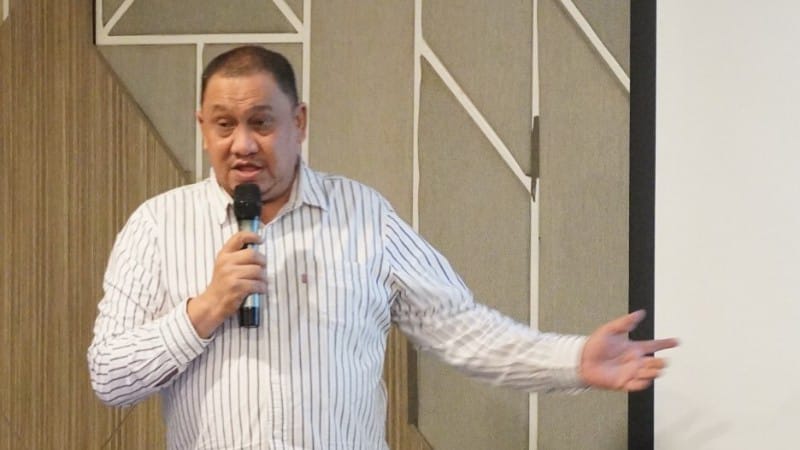
Disaster Risks Must Be Integrated into Spatial Planning
M. Yakub Ishadamy, director of the Yayasan Ekosistem Lestari (YEL), called for stronger integration of natural disaster risks into spatial planning. He cited extreme rainfall of 700 mm within two days in 2025 and movements along the Sumatran fault, which can trigger landslides even in intact forests.Yakub also criticized Government Regulation No. 13 of 2017, which removed criteria for vulnerable areas in spatial planning.
"The government must reassess the Batang Toru area based on slope protection, rainfall, and soil types, and provide funds for population relocation," he urged.The discussion aims to encourage the North Sumatra provincial government to revise the spatial plan (RTRW) to better manage risks, ensure the sustainability of the Batang Toru ecosystem, and safeguard local communities. (IDNC)
REPORTER: Darmailawati





 /home/u7391150/public_html/indatanews.com/theme/function.php on line 28