Monday, 02 November 2026
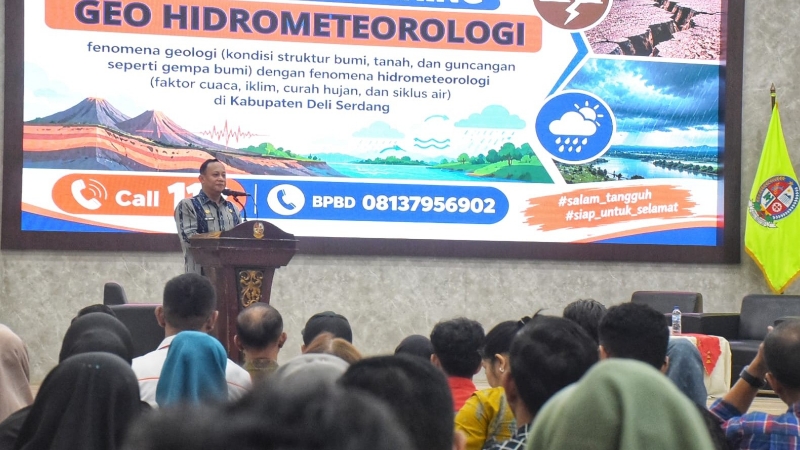
DELI SERDANG | INDATANEWS.COM - The Deli Serdang Regency Government plans to procure three Early Warning Systems (EWS) in 2027 to strengthen disaster mitigation and emergency preparedness in response to geohydrometeorological hazards. The systems are expected to help detect potential disasters at an early stage, particularly floods, landslides and strong winds. This will give residents more time to take protective measures and evacuate to safer locations.
The plan forms part of a broader strategy to strengthen disaster management. Government efforts will not be limited to responding during and after disasters. Instead, the focus will be on prevention, resilient infrastructure, the use of modern technology and improving public awareness of disaster risks.This commitment was reinforced through an In-House Training (IHT) session on geohydrometeorology. The training was officially opened by Deli Serdang Regional Secretary Dedi Maswardy on Friday, 30 October 2026, at the Cendana Hall on the second floor of the Deli Serdang Regency Administration Building.
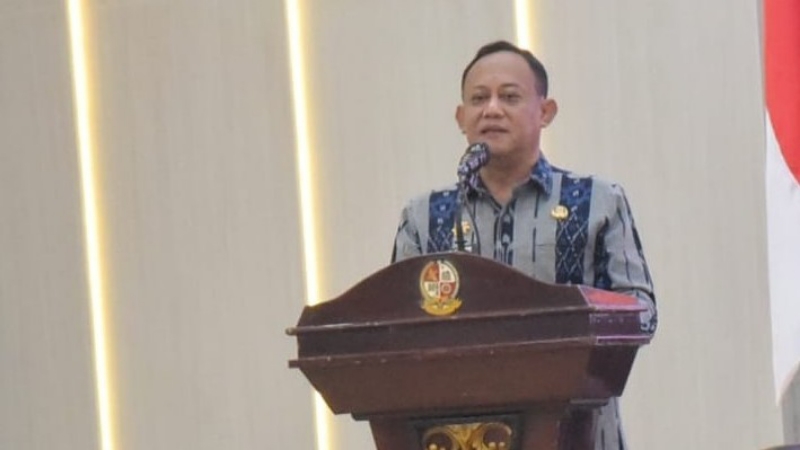
Dedi Maswardy emphasised that the regional government must regard disaster preparedness as an essential part of development planning and public services. In his view, preparedness should not begin only after a disaster has occurred. Instead, it must be established through forward planning and continuous preventive measures.
"We must prepare for disasters before they happen. This requires readiness across all areas of government, whether through infrastructure improvements, expanding knowledge or the use of early warning technology," he said.He explained that structural disaster mitigation could be implemented primarily by improving infrastructure directly related to disaster risk management. Priority measures included repairing drainage channels, dredging riverbeds and ensuring proper land development in areas vulnerable to water accumulation and flooding.
Furthermore, the regional government must strengthen its greening initiatives. These include planting trees along riverbanks and in residential areas. Such measures could help maintain environmental stability while reducing flood risks, particularly during periods of heavy rainfall.Dedi said the Deli Serdang Regent had instructed all government departments and agencies to undertake various infrastructure improvements to minimise the potential impact of disasters.
However, physical infrastructure development alone would not be sufficient to build a disaster-resilient community. Dedi therefore stressed the need to strengthen non-structural disaster mitigation as well. This includes public education, the sharing of technical knowledge and improving residents' understanding of disaster risks and the geographical characteristics of their respective areas.Participants in the training were expected not only to use their newly acquired knowledge to improve their own capabilities but also to share it with the public. Information must reach neighbourhoods and villages so that as many people as possible understand how to respond appropriately in emergency situations.
The procurement of early warning technology forms part of efforts to improve disaster risk monitoring and the dissemination of relevant information. Through these EWS units, the regional government hopes to identify early signs of potential disasters more quickly and alert residents before a hazard develops into a dangerous situation.
The speed of information delivery plays a crucial role in reducing casualties and property damage. Early warnings allow residents to prepare for evacuation, avoid hazardous areas and follow instructions issued by disaster management personnel.Dedi expressed hope that the introduction of modern technology would go hand in hand with improvements in government employees' capabilities and greater public awareness of disaster risks. In his view, early warning systems require effective coordination and rapid response mechanisms to ensure that information received by residents is immediately translated into practical protective measures.
"We must be prepared for potential disasters. Through activities such as this, we hope to minimise their impact, particularly by reducing casualties and the resulting damage," he said.The planned procurement of three EWS units also highlights the growing importance of technology-driven approaches to regional disaster risk management. However, the effectiveness of these systems will continue to depend on regular equipment maintenance, continuous monitoring, reliable communication channels and public understanding of the warnings issued.
Mukti explained that the training aimed to provide participants with a comprehensive understanding of geohydrometeorological phenomena while improving government personnel's ability to respond to various potential disasters.
The training also covered strengthening early warning systems, accelerating emergency responses and developing prevention strategies based on reliable data. With this knowledge, government departments and agencies are expected to be better equipped to initiate targeted and coordinated measures when disaster threats emerge.He described recent weather developments and increasing disaster risks as reasons for all relevant stakeholders to intensify their preparedness efforts. Cooperation between institutions must also function efficiently so that authorities can identify potential hazards, distribute information promptly and implement coordinated responses.
"We hope all participants will improve their technical understanding, sharpen their analytical skills and establish a common approach to developing early warning systems and disaster preparedness measures," he said.Through this training, the Deli Serdang BPBD aims to establish a shared understanding and consistent coordination procedures among regional government personnel. The involvement of district heads and representatives from various government organisations is also expected to extend disaster preparedness education into local communities and residential areas.
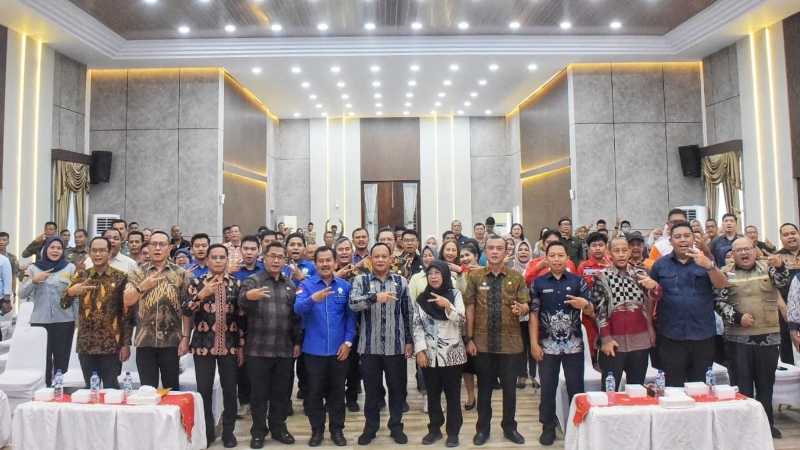
The event was also attended by the Head of the Class I Geophysical Station in Deli Serdang, Rasmid; Assistant for Government Affairs and Public Welfare at the Deli Serdang Regional Secretariat, Zainal Abidin Hutagalung; and several other regional government officials.Strengthening disaster preparedness through improved government capacity and the planned procurement of EWS units forms part of the Deli Serdang Regency Government's efforts to build greater resilience against disaster risks. The regional administration aims to integrate infrastructure improvements, early warning technology, cross-departmental coordination and public education to reduce potential disaster risks as early as possible. (IDNC)
REPORTER: Edi Saputra | EDITOR: Fik Sagala