Saturday, 10 October 2026
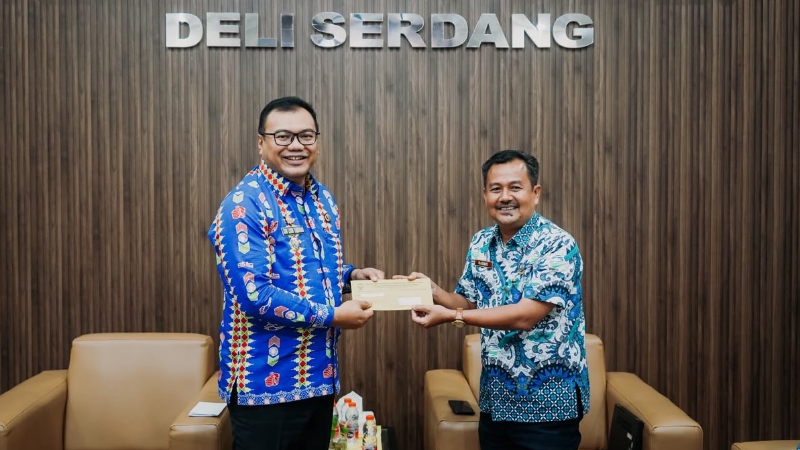
DELI SERDANG | INDATANEWS.COM - Indonesia's Meteorology, Climatology, and Geophysics Agency (BMKG), through its Class I Geophysics Station in Deli Serdang, handed over a Warning Receiver System (WRS) to the Deli Serdang Regency Administration on Thursday, October 8, 2026. The device is designed to enable faster access to earthquake information, tsunami early warnings, extreme weather alerts, climate information for agriculture and plantations, and data on hotspot monitoring. The initiative aims to strengthen disaster preparedness and improve public safety.
The technological support is expected to help the regency administration make timely and appropriate decisions when disasters threaten. Information provided by the BMKG can serve as a basis for improving preparedness, strengthening coordination among relevant agencies, and delivering early warnings to people living in vulnerable areas.Deli Serdang Regent Asri Ludin Tambunan welcomed the support from the BMKG. He emphasized that access to disaster-related information plays a crucial role in identifying potential threats, including floods, landslides, and tornadoes, at an early stage and preparing appropriate response measures.
"Disaster preparedness is necessary to help us adapt to nature and its conditions. The government is obligated to inform the public whenever potential hazards threaten the areas where they live," he said.According to Asri Ludin, the government must not limit its role to responding only after a disaster has occurred. Instead, it must establish preventive measures in advance and ensure that residents receive information about potential hazards in their surrounding environment.
Asri Ludin expressed his appreciation to the BMKG, particularly the Class I Geophysics Station in Deli Serdang, for providing the WRS device. He expressed hope that the assistance would mark the beginning of closer cooperation between the regency administration and the BMKG in developing a more effective disaster preparedness system.
He noted that rapid access to information must be accompanied by the authorities' ability to translate warnings into concrete action. The regency administration must ensure that disaster information reaches the relevant agencies and affected communities. This is essential to enable residents to prepare appropriate protective measures in a timely manner based on the specific threats they face.The Deli Serdang Regency Administration has also installed Early Warning Systems (EWS) at several locations, particularly to provide flood warnings. These installations form part of the region's efforts to improve vigilance and protect residents, especially those living in areas frequently affected by inundation and flooding.
To ensure that the systems meet actual needs, Asri Ludin also called on the BMKG to inspect the EWS installations already in place. A joint assessment could help identify areas requiring improvement and enhance the effectiveness of the early warning systems."We hope to work together with the Geophysics Station to evaluate the early warning systems currently available to us. This will help ensure that the existing facilities genuinely support disaster management," he said.
Such cooperation is essential because early warning systems depend on more than technological equipment alone. They also require personnel who are ready to respond, coordination among government agencies, and clear procedures for disseminating information. With these elements in place, the regency administration can strengthen protective measures before a disaster causes more extensive damage.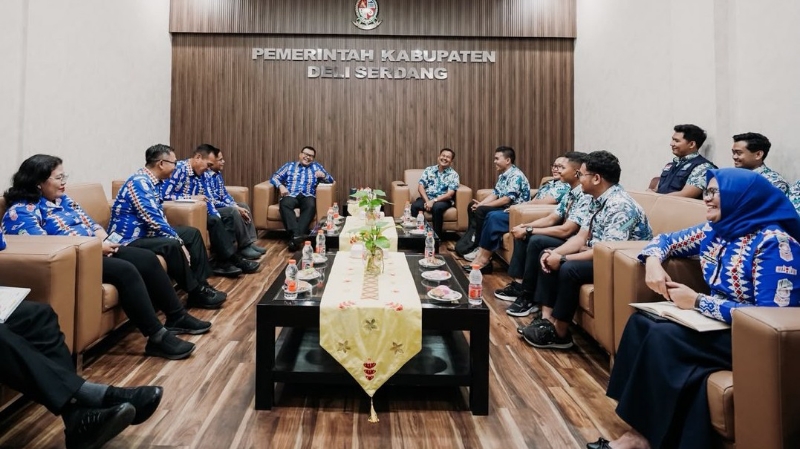
Rasmid, head of the Class I Geophysics Station in Deli Serdang, explained that the WRS is a dissemination device that enables regional authorities to receive disaster-related information from the BMKG quickly.
The information available through the device extends beyond earthquakes and tsunami early warnings. The BMKG also provides information on extreme weather events, climate conditions affecting agriculture and plantations, and hotspot monitoring results. These data can also help raise awareness of potential forest and land fires."Our information covers not only earthquakes and tsunamis but also extreme weather events, climate data for agriculture and plantations, and hotspot monitoring. This information can support disaster preparedness and serve as a basis for decision-making," Rasmid said.
Access to these updates can support various functions of the regency administration. Alerts about extreme weather events, for example, can help strengthen preparedness for hydrometeorological hazards. Climate information can also help agricultural businesses and plantation operators take weather conditions into account when making operational decisions.Hotspot monitoring provides additional indications that can help authorities remain alert to potential forest and land fires. The regency administration can use this information as a basis for coordinating with relevant agencies to monitor affected areas and initiate further action according to the circumstances.
However, operating the WRS must go hand in hand with the regency administration's ability to respond to incoming information. Rapid receipt of alerts must be supported by effective communication procedures to ensure that warnings reach emergency response teams and the public in a timely manner.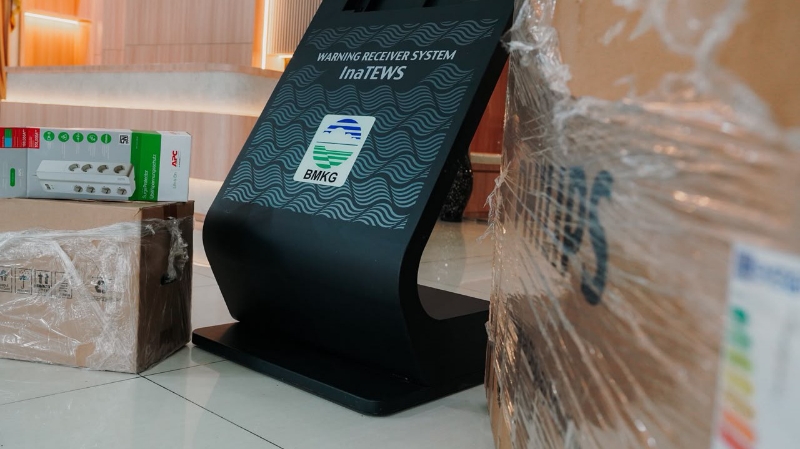
In addition to the WRS functions, Rasmid encouraged the Deli Serdang Regency Administration to use microzonation studies to obtain a more detailed assessment of hazards in specific areas. Such studies could play an important role in construction planning, particularly when developing new residential areas.
Information about local conditions and the level of risk in a particular area can help the government incorporate safety considerations at the earliest stages of planning. By identifying potential hazards in advance, construction projects can be better adapted to environmental conditions, while disaster risk reduction measures can be planned more precisely.Microzonation studies can also support land-use decisions. The regency administration can use their findings alongside other technical information when planning regional development, infrastructure construction, and settlement layouts.
These efforts are important in light of the demands of sustainable regional development. The expansion of new areas should not be guided solely by economic growth and spatial development but must also take public safety into account. Early identification of potential hazards allows the government to develop protective measures tailored to the specific conditions of each area.The meeting and WRS handover were also attended by representatives of the Class I Geophysics Station in Deli Serdang, the Assistant for Government Affairs and Public Welfare, the Regional Disaster Management Agency (BPBD), and the Regional Development Planning, Research and Development Agency (Bappedalitbang).
Also present were the head of the Water Resources, Highways and Construction Agency (SDABMBK), the head of the Communication and Informatics, Statistics and Electronic Security Agency (Kominfo Stan), and the head of the Government Affairs Division at the Deli Serdang Regency Secretariat.The participation of various government agencies underscored the importance of cross-sector cooperation in disaster management. BMKG information must be integrated with regional planning, infrastructure preparedness, the readiness of relevant personnel, and the dissemination of warnings to the public.
Through the WRS handover and the prospect of closer cooperation, the BMKG and the Deli Serdang Regency Administration aim to further strengthen preparedness for various potential disasters. Fast and accurate access to information, combined with coordinated follow-up action, is essential to protecting residents and reducing disaster risks across the region. (IDNC)REPORTER: Edi Saputra | EDITOR: Fik Sagala





 /home/u7391150/public_html/indatanews.com/theme/function.php on line 28