Thursday, 17 September 2026
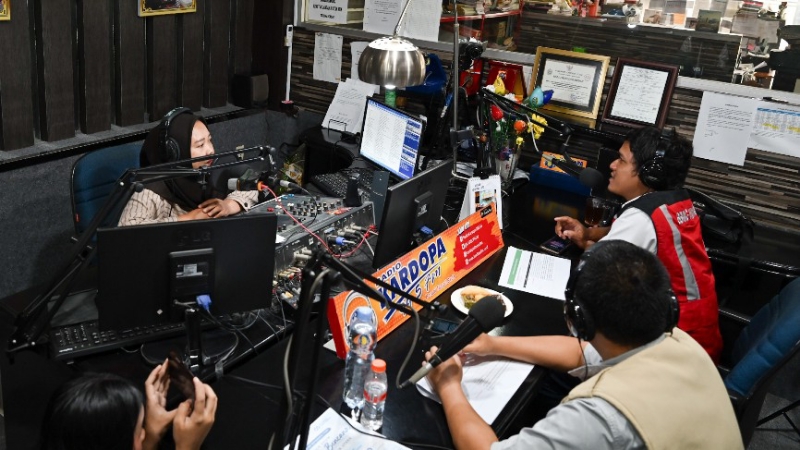
MEDAN | INDATANEWS.COM - The North Sumatra Provincial Government has urged the public to increase vigilance against various potential disasters in several parts of the province. Residents are being encouraged to understand the disaster risks in their respective surroundings and take early preparedness and evacuation measures to minimize potential property damage and loss of life.
The call was delivered on Tuesday, September 15, 2026, by Afdoli, a technical advisor on disaster management policy. He represented the head of the North Sumatra Regional Disaster Management Agency (BPBD) and appeared as a guest on a talk show hosted by Kardopa Radio on Jalan Iskandar Muda in Medan.
The program, jointly organized by the North Sumatra Provincial Office of Communications and Informatics and Kardopa Radio, carried the theme "Sumut Siaga Bencana, Kenali Risikonya, Siap Mitigasinya" - "North Sumatra Prepared for Disasters: Know the Risks, Be Ready to Mitigate Them."
Afdoli said residents need to understand the various hazards that may occur across North Sumatra. Such knowledge, he said, is an important foundation for enabling people to make quick and appropriate decisions during emergencies.
"Disaster hazards that people need to be aware of include earthquakes, volcanic activity from Mount Sinabung, and forest and land fires (Karhutla), which are characterized by the emergence of fire hotspots. There are also hydrometeorological disasters such as floods, landslides, extreme weather and strong winds," Afdoli said.
Afdoli explained that simply knowing the types of disasters that could occur is not enough. Residents must also understand the characteristics of the areas where they live, work and carry out their daily activities so that potential hazards can be identified at an early stage.
To strengthen disaster preparedness among the public, the National Disaster Management Agency (BNPB) has launched a nationwide community-based disaster risk reduction movement known as "Keluarga Tangguh Bencana," or Katana. The program is designed to empower families and communities to develop knowledge and skills for independently managing disaster risks.
Through Katana, people are expected to be able to reduce disaster risks while accelerating recovery following a disaster. Preparedness at the family level is particularly important because people are situated within their respective environments and may be the first to experience the impact of a disaster.
The government is also continuing disaster management information and education programs in schools. The aim is to build knowledge and preparedness from an early age so that disaster awareness does not emerge only after an event has already occurred.
According to Afdoli, the public also needs access to information that is timely, accurate and easy to understand. Reliable information helps residents recognize early warnings, assess conditions in their surroundings and determine what measures should be taken before, during and after a disaster.
He said early preparation can help reduce property damage and casualties. Therefore, residents should use official information about potential disasters as a basis for taking protective and evacuation measures.
The public is also urged not to ignore information about weather conditions, volcanic activity, possible flooding and other disaster hazards. Early warnings must be followed immediately by appropriate actions based on conditions in the affected area.
"Early warnings should not merely be read, but also understood. When we travel or plan to go somewhere, we should use official information channels to obtain weather information," he said.
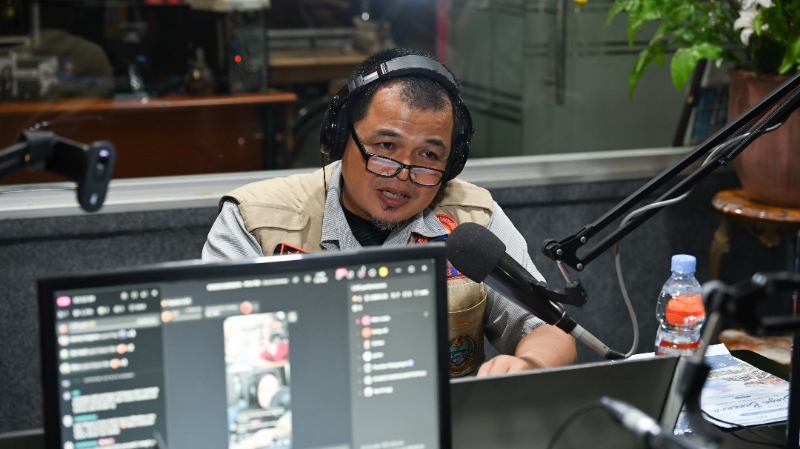
Meanwhile, Budi Prasetyo, a meteorological and geophysical observer with the BMKG Regional Office I Medan, representing the agency's head, emphasized the importance of public understanding of disaster hazards associated with weather conditions and North Sumatra's geographical characteristics.
Budi said residents need to pay particular attention to hydrometeorological hazards such as floods, flash floods and landslides. These hazards can increase when high rainfall occurs in certain periods across North Sumatra.
Heavy rainfall can increase water levels in rivers and drainage systems, potentially triggering floods. In areas with steep slopes and unstable soil conditions, heavy rain can also increase the risk of landslides.
Therefore, residents in vulnerable areas should closely monitor weather developments and early warnings. At the same time, they should be able to recognize changes in their surroundings that may indicate an increasing risk of disaster.
In addition to hydrometeorological hazards, Budi reminded the public to continue taking geophysical disasters, particularly earthquakes, seriously. North Sumatra's geographical position in an area affected by tectonic activity along the island of Sumatra makes earthquake preparedness an important part of disaster risk reduction.
Such preparedness is particularly important for people living in coastal areas. A strong earthquake with an epicenter offshore can potentially trigger a tsunami. Residents must therefore know the evacuation routes and safe locations in their respective areas.
"People in coastal areas must also be prepared for earthquakes because strong undersea earthquakes may potentially be followed by a tsunami. In addition, coastal residents must be aware of possible flooding caused by high tides and high waves," he explained.

High waves and dangerous sea conditions must also receive particular attention from people living in coastal areas, especially fishermen. Weather information and early warnings can serve as an important basis for making decisions before people undertake activities at sea.
When the BMKG issues warnings about high waves or dangerous sea conditions, the public is urged not to go out to sea. Fishermen should follow information and safety recommendations issued by the relevant authorities to reduce the risk of accidents at sea.
Budi emphasized that the public needs to improve its understanding of every early warning it receives. Such information should not merely be acknowledged but must be translated into concrete action according to the level of risk involved.
"We remind the public not only to read weather information and early warnings, but also to understand their implications and the actions that need to be taken based on them," he said.
The North Sumatra Provincial Government, together with relevant agencies, continues to strengthen disaster preparedness among the public. Education, better understanding of risks, access to official information and the ability to act quickly are essential components in building a resilient society capable of dealing with disasters.
By identifying risks at an early stage, residents are expected not only to reduce the impact of disasters but also to make preparedness measures an integral part of everyday life. This preparation is a shared responsibility involving the government, the public, schools, communities and all other stakeholders. (IDNC)
REPORTER: Ahmad Zulfikar | EDITOR: Fik Sagala





 /home/u7391150/public_html/indatanews.com/theme/function.php on line 28