Friday, 04 September 2026
JAMBI | INDATANEWS.COM - Forest and land fires (Karhutla) in several regions, including Jambi, Riau and Kalimantan, are raising growing concerns over public health. Dense smoke from the fires contains various hazardous particles and pollutants that can trigger respiratory problems, eye irritation and headaches, while also worsening existing lung conditions.
As the dry season begins, the increasing drought in several areas is raising the risk of forest and land fires. Smoke generated by Karhutla not only reduces visibility and disrupts people's activities, but also increases the risk of health problems when people are exposed to it for prolonged periods.Health problems that can arise from exposure to wildfire smoke include coughing, runny nose, fever, shortness of breath, burning eyes, an irritated throat, headaches and general weakness. Under certain conditions, smoke exposure can also aggravate asthma and increase the risk of heart and lung diseases.
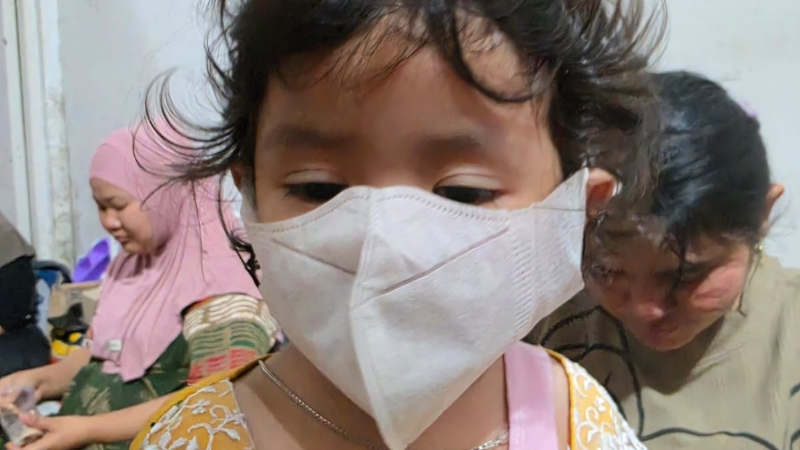
Lia, a resident of the Rajawali neighborhood in Jambi, said the smoke from forest and land fires has begun affecting her child's health. According to her, the child has developed a cough and runny nose, which she associates with exposure to the smoke.
"My child has already developed a cough and runny nose because of the smoke. The child is currently receiving outpatient treatment and wears a mask at home," Lia said.The situation highlights the importance of remaining vigilant when air quality deteriorates due to wildfire smoke. Children are among the groups most vulnerable to smoke exposure because their respiratory systems and organs are still growing and developing.
Exposure to Karhutla smoke can also weaken the body's resistance and make people more susceptible to health problems. In addition to coughing and a runny nose, people may experience shortness of breath, asthma attacks and acute respiratory infections (ISPA).Eye irritation is also a common consequence of smoke exposure. The eyes may burn and become red, while the nose may water or run and the throat may feel irritated.
In addition to respiratory problems, people may experience headaches and dizziness. High concentrations of smoke can also cause fatigue and general weakness, affecting people's ability to carry out daily activities.Smoke from forest and land fires is far more than ordinary smoke. It can contain fine particulate matter such as PM2.5, carbon monoxide and various other hazardous pollutants. These extremely small particles can penetrate deep into the respiratory tract and, under certain conditions, affect the health of the body as a whole.
For this reason, people need to understand the health risks posed by forest and land fires and should not underestimate situations in which the air becomes heavily polluted by smoke.Public willingness to refrain from using fire to clear land is also an important part of prevention efforts. Burning land may initially appear to some people to be a practical method of clearing an area. However, once a fire spreads and produces large amounts of smoke, it can cause significant harm to the wider community.
Beyond threatening human health, forest and land fires also destroy the habitats of numerous animal species. Fires can devastate areas that provide animals with shelter and food, thereby damaging entire ecosystems.Prevention efforts must go hand in hand with the suppression of existing fires. The swift and coordinated response by the TNI and Polri in fighting Karhutla at several fire hotspots across the country deserves recognition. Nevertheless, prevention remains crucial to ensure that such fires do not continue to recur.
"Prevention is better than fighting fires."Doors and windows should also be kept closed to prevent smoke from entering homes as much as possible. Air purifiers can be used. Alternatively, a damp cloth can be placed over ventilation openings to help reduce the entry of dust and particles from outside.
Adequate fluid intake is also important to support the body. People are encouraged to drink enough water and limit outdoor activities as long as dense smoke remains over their residential areas.People should also refrain from burning waste near their homes. Such activity can further increase air pollution and worsen environmental conditions when the air is already contaminated by Karhutla smoke.
For people who must travel by vehicle, reduced visibility caused by smoke requires extra caution. Motorists should turn on their vehicle lights so they can be more easily seen by other road users.The choice of face mask should be adjusted to the level of exposure. If spending time outdoors is unavoidable and the air is heavily polluted by smoke, N95 masks or double medical masks can be used.
Health protection measures must be implemented alongside Karhutla prevention efforts. The public is urged not to clear land by burning and to immediately report any potential fire hotspots in their surroundings to the relevant authorities.Messages promoting clean air are also an important part of preparations for the dry season and the associated risk of forest and land fires.
"Clean air is our right, clean air for a healthy Jambi. Stop Karhutla!"Anyone who discovers a fire hotspot should immediately report it to the relevant authorities so emergency personnel can respond as quickly as possible. Early reporting can help prevent the fire from spreading further and limit its impact on the environment and public health.
With greater public awareness, an end to land clearing through burning and a rapid response by emergency personnel on the ground, the threat posed by Karhutla is expected to be contained. Protecting forests and land is not only essential for preserving the environment, but is also an important part of protecting the health and safety of the public. (IDNC)REPORTER: Dalil Harahap | EDITOR: Fik Sagala





 /home/u7391150/public_html/indatanews.com/theme/function.php on line 28