Friday, 04 September 2026
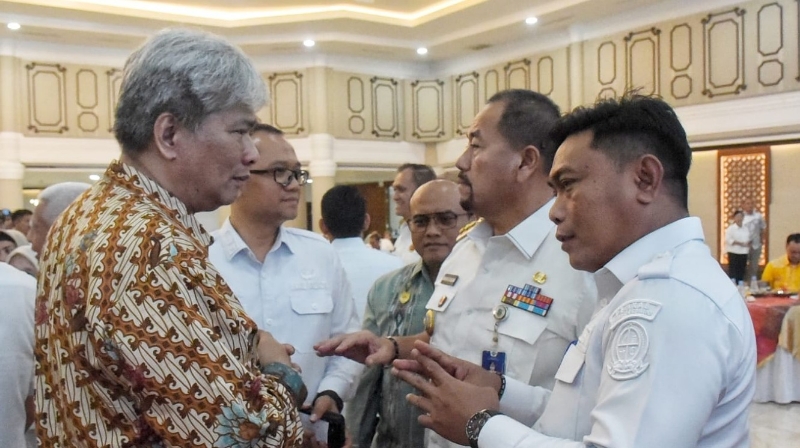
MEDAN | INDATANEWS.COM - The Deli Serdang Regency Government has reaffirmed its commitment to accelerating the implementation of agrarian reform. The initiative aims to provide legal certainty over land and land ownership while improving public welfare. The Deli Serdang Government is also ready to strengthen coordination with the central government, the North Sumatra Provincial Government, as well as the Ministry of Agrarian Affairs and Spatial Planning and the National Land Agency (ATR/BPN), in addressing various issues related to land affairs.
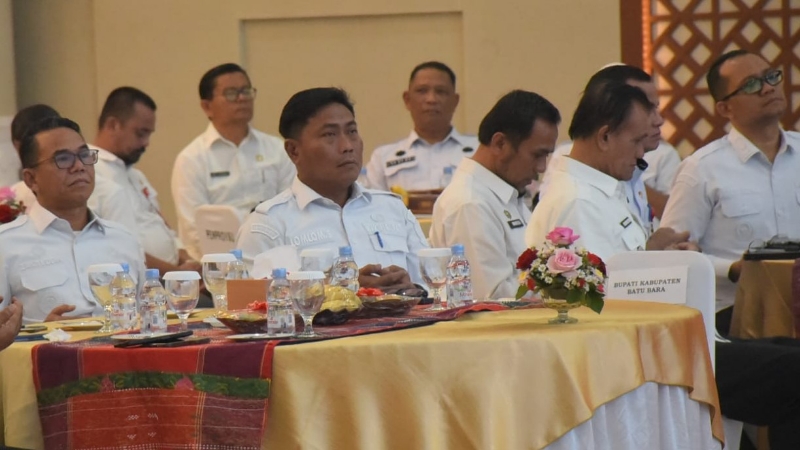
The commitment was expressed by Deli Serdang Deputy Regent Lom Lom Suwondo after attending the first 2026 coordination meeting of the Agrarian Reform Task Force (GTRA) of North Sumatra Province at the Raja Inal Siregar Hall, North Sumatra Governor's Office, Medan, on Wednesday, September 2, 2026."The Deli Serdang Government remains committed to accelerating the implementation of agrarian reform to provide legal certainty over land while at the same time improving the welfare of the people," Lom Lom said.
According to Lom Lom, legal certainty over land is an important factor in giving people a sense of security. At the same time, such certainty can provide greater opportunities for communities to increase their productivity and expand economic activities.For this reason, the Deli Serdang Government is seeking to strengthen cross-sectoral coordination so that various land administration issues can be addressed more effectively. Cooperation with the central government, the North Sumatra Provincial Government, and ATR/BPN is an important part of accelerating the resolution of existing problems while ensuring that agrarian reform delivers direct benefits to the public.
North Sumatra Deputy Governor H. Surya, while delivering the remarks of North Sumatra Governor Muhammad Bobby Afif Nasution, emphasized that the government must view agrarian reform in a broader context. In his view, agrarian reform is not limited to the issuance of land certificates, but also involves restructuring land possession, ownership, use, and utilization.
This restructuring must generate tangible benefits for the people. The government must also ensure that land management contributes to improving welfare and creates greater economic opportunities."Agrarian reform is not only about issuing land certificates, but also about creating justice and providing greater economic opportunities for the people," he said.
This perspective makes agrarian reform not merely a land policy measure, but also an instrument for reducing inequality and strengthening the local economy. Through better-organized land management, communities are expected to gain improved access to opportunities to develop businesses and increase productivity.The Director of Land Reform at the Directorate General of Agrarian Planning of the Ministry of ATR/BPN, Rudi Rubijaya, explained that the government implements agrarian reform through two main approaches: asset restructuring and access restructuring.
Asset restructuring includes asset legalization, land redistribution, the resolution of agrarian conflicts, as well as the clarification of land use and control within forest areas. Access restructuring, meanwhile, focuses on strengthening people's economic conditions through institutional development, access to capital, business development, and increased land productivity."The ultimate goal is to improve public welfare, reduce inequalities in land ownership, resolve agrarian conflicts, create jobs, and ensure environmental sustainability," Rudi said.
The optimal utilization of TORA land is an important component in accelerating the implementation of agrarian reform. Regional governments have a strategic role, particularly in identifying existing land potential, coordinating with relevant authorities, and ensuring that land is utilized in accordance with applicable regulations and community needs.
Through this approach, agrarian reform is not intended merely to resolve administrative problems in land management. Rather, the program is also expected to strengthen economic access for beneficiary communities, allowing land ownership or control to be accompanied by increased productivity.The Head of the North Sumatra Regional Office of ATR/BPN, Nugraha, said at the coordination meeting that GTRA holds a strategic position in coordinating agrarian reform at the regional level. GTRA is responsible for coordinating the provision of TORA land, asset and access restructuring, as well as resolving various agrarian conflicts.
This role is becoming increasingly important as the implementation of agrarian reform involves numerous stakeholders and requires cross-sectoral coordination. Regional governments, ATR/BPN, the central government, and other stakeholders must formulate joint measures to ensure that the objectives of agrarian reform can be achieved.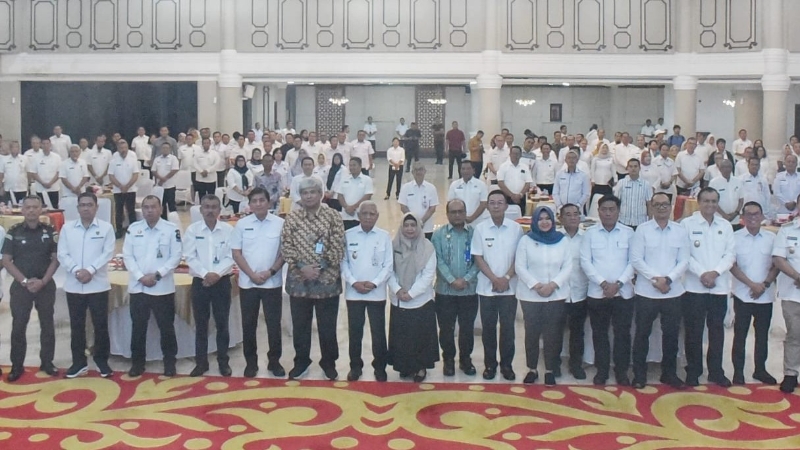
The matter is part of the challenges involved in restructuring land-related issues and requires comprehensive coordination and resolution. The regional government and relevant authorities must ensure that every process complies with legal provisions while also taking the interests of the public into account.
In addition to asset-related issues, the North Sumatra GTRA's 2026 access restructuring program is also expected to cover 12 regencies, including Deli Serdang. The program aims to strengthen public access to various forms of support that can help increase productivity and develop economic activities.Access restructuring is particularly important because legal certainty over land ownership must go hand in hand with opportunities for communities to develop their economic potential. Without support in accessing capital, strengthening institutions, developing businesses, and improving skills, legal certainty over land alone may not generate optimal economic benefits.
The Deli Serdang Government therefore views inter-institutional cooperation as one of the key factors in accelerating agrarian reform. Close coordination among the central government, the North Sumatra Provincial Government, regency and city governments, ATR/BPN, and other stakeholders is expected to produce more effective measures in restructuring assets and access.Through stronger collaboration, agrarian reform in North Sumatra is expected not only to provide legal certainty over land ownership but also to generate broader economic benefits. For the public, the program is expected to create new business opportunities, increase land productivity, reduce inequalities in land ownership, and contribute sustainably to improving public welfare. (IDNC)
REPORTER: Edi Saputra | EDITOR: Fik Sagala





 /home/u7391150/public_html/indatanews.com/theme/function.php on line 28