Thursday, 03 September 2026

MEDAN | INDATANEWS.COM - North Sumatra Deputy Governor Surya has stressed that the implementation of agrarian reform in North Sumatra must have a tangible impact on economic development and public welfare. In his view, the government must not regard agrarian reform merely as a way to resolve land issues and provide legal certainty over land ownership.
Surya made the statement on Wednesday, September 2, 2026, while opening the first coordination meeting of the 2026 North Sumatra Provincial Agrarian Reform Task Force (Gugus Tugas Reforma Agraria/GTRA) at the Raja Inal Siregar Hall, North Sumatra Governor's Office, Jalan Diponegoro No. 30, Medan.The meeting was attended by, among others, Rudi Rubijaya, Director of Land Reform at the Directorate General of Agrarian Planning of the Ministry of Agrarian Affairs and Spatial Planning/National Land Agency (ATR/BPN); Nugraha, Head of the North Sumatra Regional Office of the National Land Agency; Acting North Sumatra Provincial Secretary Timor Tumanggor; representatives of the Regional Leadership Coordination Forum; and heads of local governments.
Surya said agrarian reform must not only promote justice but also create economic opportunities for the people who benefit from the program. Therefore, the restructuring of asset ownership in the form of land ownership must be accompanied by improved access to economic opportunities. This would enable people to use the assets productively and increase their income.According to Surya, the purpose of agrarian reform must not end with the issuance of land certificates. The government must ensure that the reorganized land generates economic value and contributes to improving people's living standards. The policy is in line with Presidential Regulation No. 62 of 2023 on the Acceleration of Agrarian Reform Implementation.
"As a manifestation of the provincial government's commitment, we established an Agrarian Reform Task Force through a Governor's Decree. This gives us a more integrated coordination forum for asset restructuring, resolving agrarian conflicts, and developing economic access for beneficiaries," the deputy governor said.He said strengthening the economic capacity of communities is an essential component for ensuring that agrarian reform produces sustainable results. The regional government must work together with relevant ministries and institutions to develop measures that combine legal certainty over assets with concrete business opportunities.
During implementation, people can be supported through the strengthening of cooperatives, development of micro, small and medium enterprises (MSMEs), economic assistance, business mentoring, and access to financing. These various forms of support are necessary to ensure that reorganized land does not remain merely an asset, but becomes a source of productivity and family income."Under this restructuring, people must receive support through the strengthening of cooperatives, the development of MSMEs, economic assistance, business mentoring, and access to financing. In this way, the benefits of agrarian reform must ultimately contribute to family welfare and regional economic growth," Surya said.
Surya also emphasized the importance of providing comprehensive information to the public and all stakeholders regarding new policies. In his view, transparent dissemination of information can reduce misunderstandings in the implementation of agrarian reform, particularly when the government restructures assets and resolves land-related problems in various regions.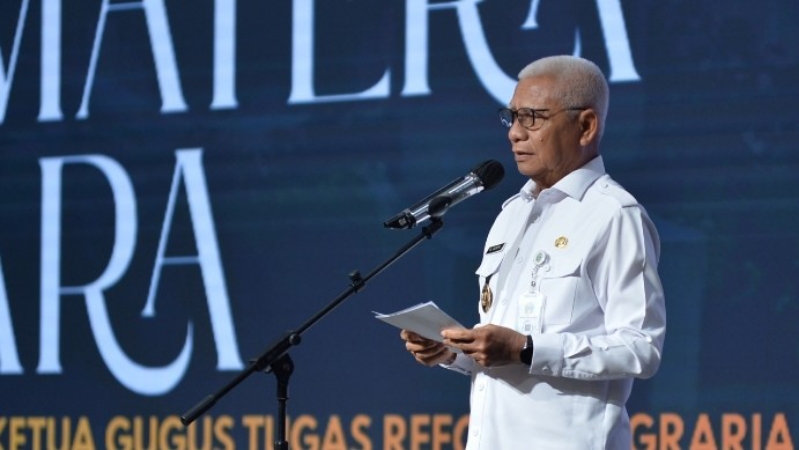
At the same time, Surya acknowledged that North Sumatra continues to face various challenges in land administration. These include overlapping land control, ownership disputes, and the need to reconcile data collected by different government agencies.
He called on all stakeholders to address these issues carefully and transparently, based on accurate data. The government must also ensure that every resolution process provides both legal certainty and a sense of justice for the public.The complexity of agrarian issues, Surya said, makes it impossible for the government to handle these challenges alone. Conflict resolution and asset restructuring require inter-agency cooperation so that policy decisions are based on reliable data and do not create new problems in the future.
Surya expressed his appreciation to all parties that have already created synergies in implementing agrarian reform in North Sumatra. In his view, the GTRA can serve as a forum for strengthening coordination among the provincial government, district and city governments, the National Land Agency, relevant ministries and institutions, and other stakeholders."This coordination meeting is an important first step toward establishing a common direction, strengthening coordination, and ensuring that every planned program can be effectively implemented down to the district and city levels," he said.
Through the coordination meeting, the North Sumatra Provincial Government hopes that all stakeholders across the province will have a common understanding and unified direction in implementing agrarian reform throughout 2026. The government is also urging every program to have clear targets and deliver direct benefits to the public.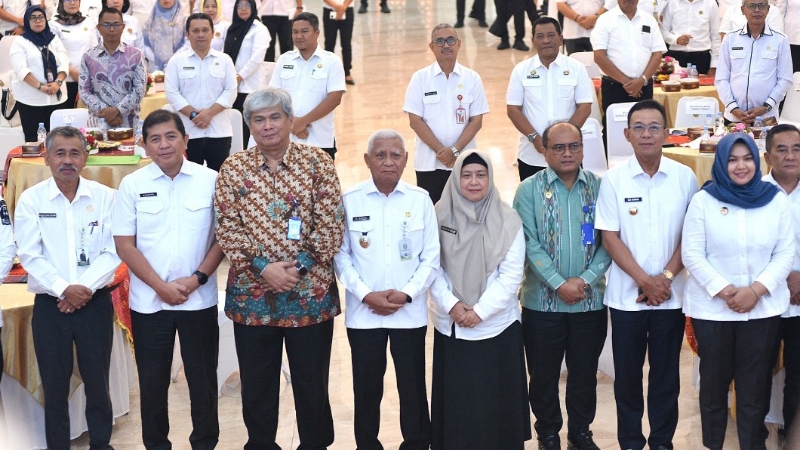
Meanwhile, Head of the North Sumatra Regional Office of the National Land Agency Nugraha reported on several preparatory steps taken by his office before the governor issued the decree establishing the North Sumatra Provincial GTRA. These included consultations, discussions on the formation of the team, preparation of a work plan, and identification of priority areas for agrarian reform implementation.
Nugraha explained that the North Sumatra Provincial GTRA team would subsequently conduct data collection and field assessments together to identify beneficiaries and agrarian reform objects. The activities are intended to support asset restructuring while also contributing to the resolution of agrarian conflicts that have emerged in several regions.In addition to data collection and field assessments, the North Sumatra Provincial GTRA team will prepare recommendations for the Minister of Agrarian Affairs and Spatial Planning/National Land Agency regarding the resolution of land disputes and agrarian conflicts in North Sumatra. These recommendations are an important part of the government's efforts to accelerate the resolution of agrarian problems in accordance with conditions on the ground.
The team will also prepare a list of beneficiaries of asset restructuring and an overview of problems encountered in the implementation of agrarian reform. The data will be recorded on a "by name, by address" basis, giving the government a more measurable database for identifying target groups and implementing measures to improve economic access."We will prepare a list of reform beneficiaries and measures to improve access based on the results of asset restructuring—by name and address—as well as a list of problems related to the implementation of agrarian reform in North Sumatra. At the end of the year, we will also hold a final coordination meeting to conclude the activities of the North Sumatra Provincial GTRA and prepare a report to be submitted to the Ministry of Agrarian Affairs and Spatial Planning/National Land Agency," he said.
These measures are intended to ensure that the implementation of agrarian reform in North Sumatra is not focused solely on resolving issues related to land control and ownership. The government also seeks to link asset restructuring with programs aimed at strengthening and developing people's economic opportunities.Cross-sectoral coordination is crucial to ensuring that the program achieves its objectives. The provincial government, district and city governments, the National Land Agency, and all other stakeholders are expected to consolidate their data, strengthen community assistance, and accelerate the resolution of agrarian conflicts.
This also reaffirms the direction of agrarian reform in North Sumatra, which should not stop at providing legal certainty over land ownership. The government wants to ensure that beneficiary communities can make optimal use of the assets they receive or control to expand their economic activities, strengthen family resilience, and ultimately drive regional economic growth. (IDNC)REPORTER: Ahmad Zulfikar | EDITOR: Fik Sagala






 /home/u7391150/public_html/indatanews.com/theme/function.php on line 28