Saturday, 03 October 2026
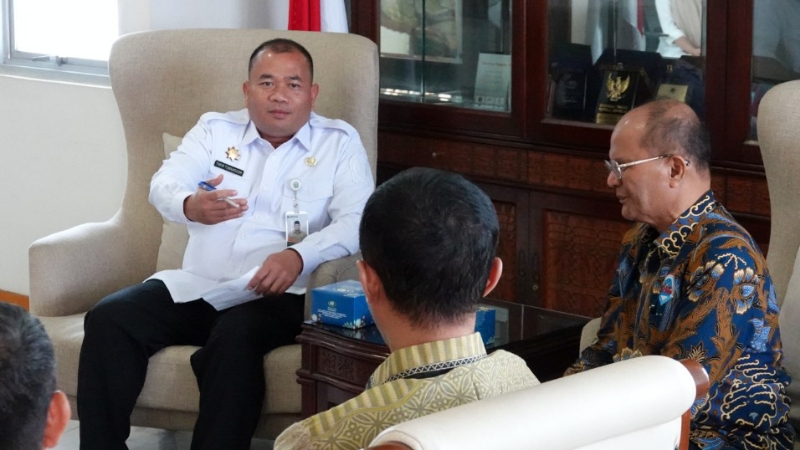
MEDAN | INDATANEWS.COM - Acting Regional Secretary of North Sumatra Province Timur Tumanggor has called on the North Sumatra chapter of the Indonesian Association of Private Higher Education Foundations (ABP-PTSI) to continuously improve the quality of higher education. The goal is to strengthen the competitiveness of private universities (PTS), enabling them to match state universities (PTN) in terms of both academic quality and institutional recognition.
According to Timur, the growing number of private universities in various regions represents an important foundation for expanding public access to higher education. This development provides prospective students from different regencies and cities across North Sumatra with more opportunities to pursue university studies without having to leave their home regions or move to larger cities such as Medan.
Timur made the remarks while receiving members of the North Sumatra ABP-PTSI regional board at his office at the North Sumatra Governor's Office, Jalan Diponegoro No. 30, Medan, on Wednesday, September 30, 2026.
The meeting was attended by North Sumatra ABP-PTSI Chairman Prof. Bahdin Nur Tanjung, accompanied by several other board members. The participants also represented the respective foundations that operate private universities affiliated with the association.
Discussions focused on the development of private universities in North Sumatra, measures to improve academic quality, strengthening institutional structures, and raising public awareness of the importance of pursuing quality higher education within their own regions.
Timur explained that North Sumatra now has a considerable number of private universities offering increasingly diverse academic programs. The distribution of higher education institutions across various regencies and cities provides the public with additional opportunities to pursue university education.
In his view, this development demonstrates that access to higher education in North Sumatra is no longer concentrated exclusively in Medan. People can now consider various universities across the province according to their needs, interests, and preferred fields of study.
Furthermore, several private universities in North Sumatra have already attracted students from other provinces. This indicates that regional higher education institutions have the potential to grow further and attract prospective students from beyond the provincial boundaries.
"Today, there are numerous private universities in many regions. Some of them even enroll students from other provinces outside North Sumatra. This means that the presence and quality of higher education in our region are continuing to improve," he said.
At the same time, Timur emphasized that the growth in the number of universities must be accompanied by improvements in educational quality. Each institution has its own characteristics and administrative structures in carrying out academic activities. Therefore, all stakeholders must work together to ensure that every university complies with the applicable quality standards.
In this regard, Timur expects ABP-PTSI to play a strategic role as a coordination platform and driving force in improving the quality of private universities across North Sumatra. The association should encourage its member institutions to raise academic standards while strengthening public confidence in private higher education.
"We hope that ABP-PTSI in North Sumatra can oversee and monitor this process. This will allow our students and school graduates in North Sumatra to have the opportunity to pursue higher education within the province as their first option. After all, private universities have now become highly developed and are on par with state universities," Timur Tumanggor said.
He also stressed that improving the quality of private universities would have a positive impact on achieving a more balanced distribution of educational services. In addition to creating more opportunities for higher education, the presence of quality universities in regional areas could also help develop skilled human resources in line with the specific development needs of each area.
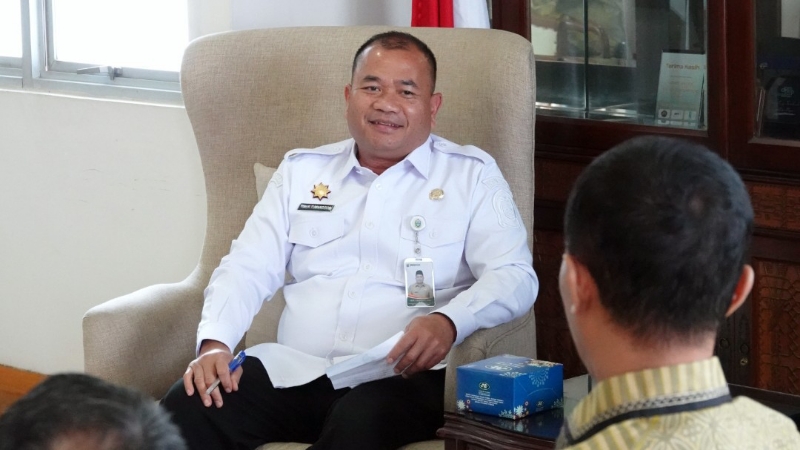
On the occasion, Timur also outlined the North Sumatra Provincial Government's commitment to expanding access to education through various policy initiatives introduced by Governor Bobby Nasution.
One such initiative is the provision of tuition-free education for students at senior high schools (SMA) and vocational high schools (SMK), particularly those affected by natural disasters. The program forms part of the regional government's efforts to ensure that students facing economic difficulties following disasters can continue their education.
Timur explained that the policy had already been implemented on the Nias Islands and in five other regencies and cities affected by hydrometeorological disasters in November 2025. In addition, the North Sumatra Provincial Government has provided tuition assistance to disaster survivors to enable them to continue their higher education.
In his view, support for the education sector should not be limited to ensuring access at the secondary school level. It must also encompass opportunities for people to continue their studies at universities.
Therefore, efforts to improve the quality of private universities must go hand in hand with government policies aimed at expanding access to education. Cooperation among the regional government, the association, foundation administrators, and university management is a crucial factor in building a more equitable education system.
The availability of quality private universities across different regions could also help reduce the financial burden on students and their families. This includes accommodation and transportation expenses that would otherwise arise when students have to move to other areas to pursue their studies. With a wider range of higher education options, prospective students can choose institutions that suit their financial circumstances and individual needs.
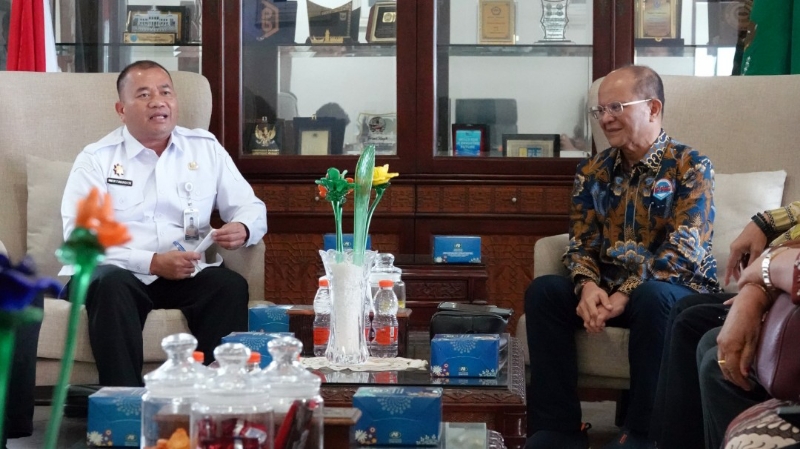
Meanwhile, North Sumatra ABP-PTSI Chairman Prof. Bahdin Nur Tanjung welcomed the provincial government's attention to the development of the education sector. He emphasized that government support provides an important foundation for further improving the quality of private universities.
Bahdin explained that the North Sumatra ABP-PTSI board for the 2026–2030 term would continue its efforts to strengthen the position and competitiveness of private universities. The objective is to ensure that all institutions affiliated with the association continuously improve their quality and provide educational services on a par with those offered by state universities.
In his view, people in North Sumatra should have the opportunity to obtain quality higher education within their own province. With the continued development of private universities, young people should no longer have to look outside their home regions to find institutions that can provide the education and academic qualifications they need.
"Therefore, as the newly elected board for the 2026–2030 term, we will continue our efforts to bring private universities in North Sumatra to the same level as state universities. This will mean that our younger generations will no longer have to move far away to pursue their studies. The academic processes are equivalent, from graduation certificates to accreditation," Prof. Bahdin Nur Tanjung concluded.
Bahdin also reaffirmed the new board's commitment to expanding cooperation among private universities and strengthening coordination with the regional government. Through this collaboration, institutions affiliated with the association are expected to improve their institutional quality, make greater contributions to developing skilled human resources, and strengthen public confidence in a sustainable manner.
In addition to discussing the development of higher education, Bahdin also invited North Sumatra Governor Bobby Nasution to attend the inauguration of the North Sumatra ABP-PTSI board for the 2026–2030 term. The event is scheduled to take place on October 8, 2026, in Lubukpakam, Deli Serdang Regency.
The inauguration is also expected to provide an opportunity to introduce the new board's key work program priorities and reaffirm the association's commitment to continuously improving the quality of private universities in North Sumatra.
Through cooperation between the provincial government and ABP-PTSI, the development of private universities is expected to receive more targeted support in the future. Improving educational quality, ensuring more equitable access to higher education, and strengthening graduate competitiveness are important prerequisites for developing skilled human resources in North Sumatra who can meet the demands of regional development and the challenges of the labor market. (IDNC)
REPORTER: Ahmad Zulfikar | EDITOR: Fik Sagala




 /home/u7391150/public_html/indatanews.com/theme/function.php on line 28