Wednesday, 30 September 2026
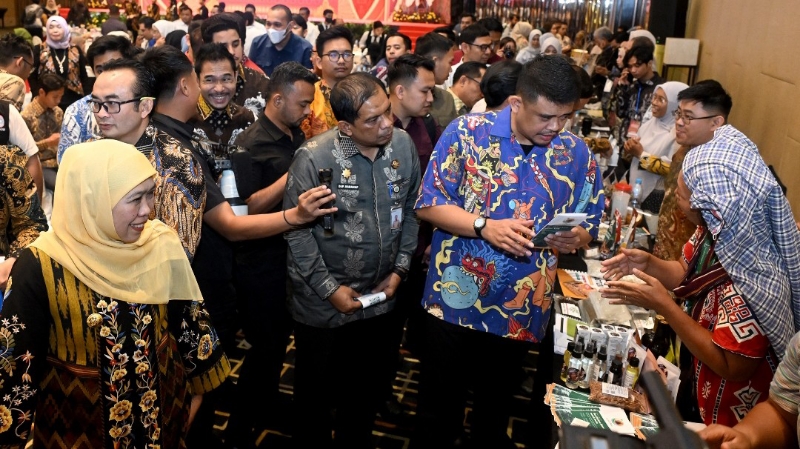
MEDAN | INDATANEWS.COM - North Sumatra Governor Muhammad Bobby Afif Nasution is pushing for stronger interregional trade cooperation between North Sumatra and East Java as part of efforts to address global economic pressures. Bobby said domestic economic potential, particularly that of micro, small and medium enterprises (MSMEs), needs greater attention to strengthen the regional economy while expanding market access for locally produced goods.
Bobby Nasution made the statement on Tuesday, September 29, 2026, while attending the East Java–North Sumatra Trade and Investment Mission, themed "Strengthening Connectivity Networks between East Java and North Sumatra," at the Grand Mercure Hotel ballroom in Medan.The event brought together regional governments and dozens of businesspeople from East Java and North Sumatra. East Java Governor Khofifah Indar Parawansa also attended. The event aimed to strengthen trade and investment relations as well as business networks between the two provinces.
Bobby Nasution welcomed Khofifah's attention to North Sumatra. He recalled her visit to the province when several areas were affected by hydrometeorological disasters in November 2025. At the time, Khofifah brought humanitarian assistance, while this time she came together with businesspeople to explore trade opportunities and economic cooperation."Welcome back, Madam Khofifah Indar Parawansa, Governor of East Java. Previously, you came here bringing assistance and expressing solidarity with North Sumatra, which had been affected by disaster. This time, however, you have come together with traders. This is an extraordinary breakthrough and contributes to stimulating the people's economy," Bobby Nasution said.
Bobby Nasution sees interregional trade cooperation as one possible approach to addressing economic challenges at the global level. In his view, continued pressure on the global economy is also affecting regional efforts to attract foreign investment.
Therefore, Bobby called on regional governments to optimize the strength of the domestic economy. He particularly highlighted MSMEs as an important sector because of their potential to stimulate economic activity while expanding market access for people's products."This is a particular challenge for us. Therefore, there is significant potential in the MSME sector today. North Sumatra is consequently trying to change its approach toward MSME entrepreneurs," Bobby Nasution explained.
Bobby also stressed that the trade and investment mission should not end with transactions concluded during the event. Meetings between entrepreneurs from East Java and North Sumatra should instead develop into long-term business cooperation.According to Bobby, expanding business networks will create new opportunities for MSMEs in both provinces to market their products in larger markets. At the same time, he urged the relevant regional authorities to consider the readiness of MSMEs before their products are introduced to interregional markets.
"The head of the Trade, Industry, Energy and Mineral Resources Office earlier mentioned the transaction figures as of 10 a.m. Western Indonesia Time. They had already reached Rp2.288 trillion. So, if I am giving a speech while activity is still continuing in the background, the transaction value could increase further. But this is a challenge for North Sumatra: How can we curate MSME entrepreneurs and ensure that they meet the required standards?" Bobby Nasution said. He also announced that North Sumatra would soon send its own trade and investment mission to East Java.Bobby considers the curation process an important part of MSME development. The government, among other things, needs to support entrepreneurs through selection processes, training, a better understanding of market requirements, and assistance in meeting product standards.
This process is not solely intended to increase entrepreneurs' profits. Trade missions can also serve as learning platforms, enabling MSME entrepreneurs to better understand the characteristics of different markets, establish business networks, and improve product quality.The approach to strengthening interregional trade is also consistent with the practice adopted by East Java during its previous trade missions with other regions. During East Java's trade missions with other areas in 2026, the provincial government sought to ensure that transactions were not viewed merely as figures, but translated into market expansion, stronger supply chains, investment and business partnerships.

"The point is to showcase our products through our trade missions. I have asked the head of the relevant agency to ensure that the trade balance increases and remains stable. If possible, the value of Rp2 trillion should rise to Rp4 trillion next time," Bobby Nasution said.
Bobby also reaffirmed plans to send a North Sumatra trade and investment mission to East Java in the near future. The move is intended to be part of efforts to establish two-way trade relations. Entrepreneurs from both provinces are expected not merely to act as buyers or sellers, but also to develop broader partnerships.By around 12:30 p.m. Western Indonesia Time, the transaction value of the East Java–North Sumatra Trade and Investment Mission had reached Rp2.5 trillion. Before the event ended, the governments and entrepreneurs from both provinces also signed several trade agreements involving government institutions, business organizations and companies.
The high transaction value indicates that further trade opportunities remain available for development between East Java and North Sumatra. Both regions have entrepreneurs and products with different characteristics that can complement one another through interregional trade.Strengthening trade connectivity is also an approach adopted by East Java to expand its economic networks with other provinces. During the East Java–North Kalimantan Trade Mission in September 2026, for example, the final transaction value reached approximately Rp2.5 trillion and involved various commodities from both regions.
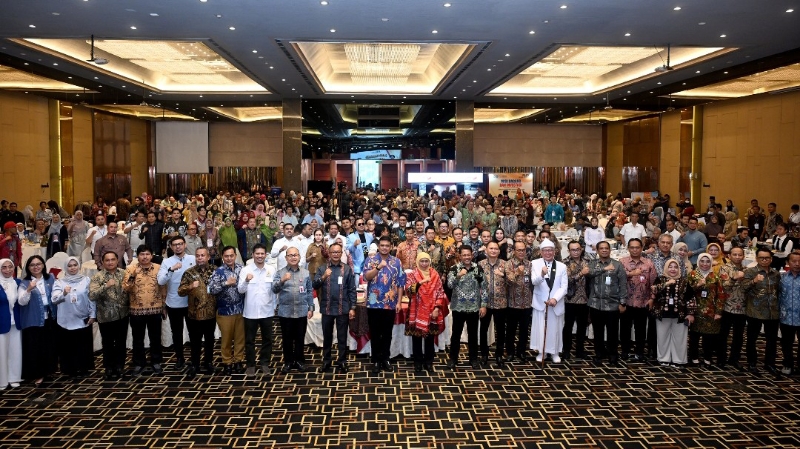
Khofifah also emphasized the importance of balanced trade relations. In her view, interregional cooperation can generate greater benefits when entrepreneurs from both provinces conduct business in both directions.
"I think we can create a balance between East Java and North Sumatra. For example, there are entrepreneurs from East Java who sell coffee, while others buy it. I am thinking of Sidikalang coffee, whose brand has an excellent reputation. Our shared task with the governor is to increase production," Khofifah said, while praising the quality of various products from North Sumatra.Her statement underscored the attention being given to key products from North Sumatra, including coffee. Khofifah called for increased production capacity so that market demand can be met consistently.
For North Sumatra, increasing production capacity is also an important part of expanding market access. Products that are in demand in East Java or other regions require consistent production, quality that meets standards, and effective distribution networks.The cooperation can subsequently extend beyond trade in goods to include strengthening supply chains, investment and business partnerships. A similar approach has been observed in trade missions led by Khofifah with other provinces, where transactions have been aimed at opening new market opportunities and establishing sustainable business partnerships.
The East Java–North Sumatra Trade and Investment Mission was also supported by various institutions in the economic sector. Participants included the head of Bank Indonesia's representative office, the Financial Services Authority (OJK), the Statistics Indonesia (BPS), the Indonesian Chamber of Commerce and Industry (Kadin), the Indonesian Young Entrepreneurs Association (HIPMI), the Indonesian Creative Economy Movement (Gekrafs), the Indonesian Women Entrepreneurs Association (IWAPI), as well as representatives of other organizations and companies from both provinces.Also in attendance was Probolinggo Regent Muhamad Haris Damanhuri.
The participation of various institutions demonstrates that the development of interregional trade requires support from governments, financial institutions, business associations and entrepreneurs. Through such cooperation, a trade mission can serve not only as a forum for transactions but also as a platform for bringing together market demand, production capacity, financing opportunities and investment prospects.Bobby Nasution views the continuation of trade missions as part of efforts to establish sustainable economic relations between North Sumatra and East Java. By improving MSME quality, meeting product standards, expanding market access and strengthening cooperation among entrepreneurs, both provinces have opportunities to further develop domestic trade amid global economic challenges. (IDNC)
REPORTER: Ahmad Zulfikar | EDITOR: Fik Sagala




 /home/u7391150/public_html/indatanews.com/theme/function.php on line 28