Thursday, 17 September 2026
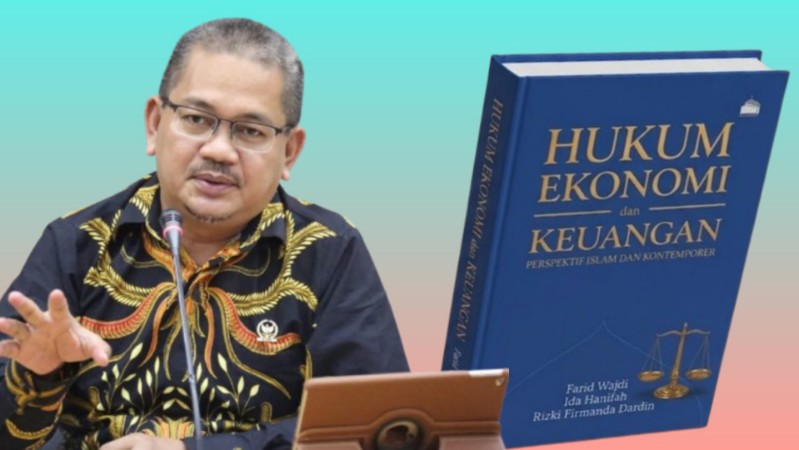
MEDAN | INDATANEWS.COM - Amid the modern world with its towering skyscrapers, rapid expansion of digital technology, and global markets that transcend geographical boundaries, economic paradoxes have become increasingly evident. While economic growth continues to accelerate across many sectors, social inequality is simultaneously deepening. Wealth is becoming increasingly concentrated in the hands of economic elites, while disadvantaged communities face growing difficulties in accessing education, capital, and decent prosperity.
Law is often regarded as the guardian of social justice. However, reality shows that economic regulations frequently serve the interests of major capital groups rather than fairly protecting public interests.From this intellectual concern emerged the book "Islamic Economic and Financial Law from Islamic and Contemporary Perspectives," a scholarly work that serves not only as academic literature but also as a reflective critique of the modern economic order and a conceptual proposal for a fairer model of economic development.
A Multidisciplinary Approach to Modern Economic IssuesThe book was written by Farid Wajdi, Ida Hanifah, and Rizki Firmanda Dardin, and published in 2026 by Pustaka Kita in Yogyakarta under ISBN 978-634-96620-3-1.
One of the book's greatest strengths lies in its strong multidisciplinary approach. It combines legal theory, political economy, maqāṣid al-sharīʿah, philosophy of justice, and the dynamics of contemporary economic regulation into a systematic and argumentative analysis. Unlike many books on Islamic economics that focus solely on normative discussions of "halal" and "haram," this work adopts a far more progressive perspective.The authors analyze economic legal structures as arenas of competing interests, examine markets as instruments that may reinforce social inequality, and explore the role of the state between public justice and the pressures of global capital dominance.
Readers are presented with comprehensive and critical discussions on global capitalism, financial crises, economic oligarchies, wealth redistribution, progressive taxation, productive zakat and waqf models, digital economies, Islamic banking, consumer protection, corporate governance, and the relationship between national law and Islamic principles of justice.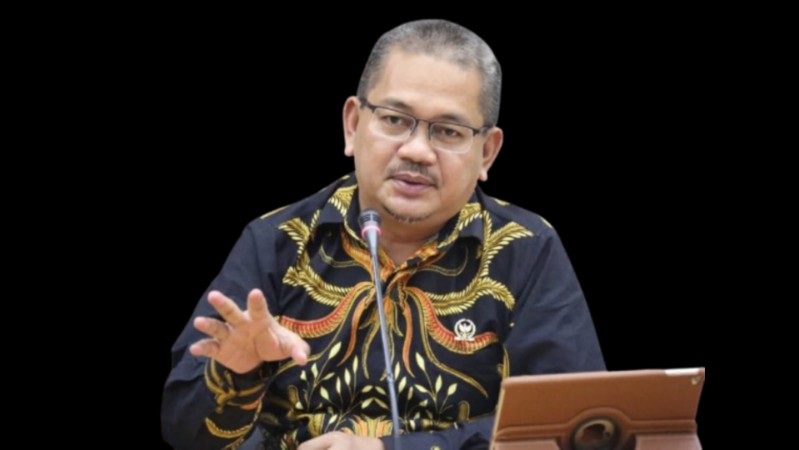
Islamic Thought and Modern Economic Theories in Dialogue
Another major strength of the book is its successful integration of classical Islamic intellectual traditions with modern economic and legal theories. The ideas of Al-Ghazali, Ibn Taymiyyah, Yusuf al-Qaradawi, and Monzer Kahf are critically connected with the thoughts of Joseph Stiglitz, Thomas Piketty, Douglass North, Karl Polanyi, John Maynard Keynes, and Amartya Sen.This intellectual dialogue creates a fresh, dynamic, and highly relevant perspective on contemporary economic inequality. The book avoids falling into romantic normativism. Every argument is supported by empirical data, modern legal theories, global economic analysis, and reflections on public policy. Law is not merely understood as a collection of formal norms, but as a structure that determines access to prosperity, social protection, and power relations within modern economic systems.
Within the Indonesian context, the book gains even greater significance. Amid rising economic inequality, weak institutional integrity, oligarchic dominance, and pressures from globalized markets, the work offers an alternative perspective grounded in distributive justice, social ethics, and sustainable development. Zakat, productive waqf, anti-monopoly principles, market supervision, and the social responsibilities of the state are presented as concrete instruments for building a more humane and civilized economic order.Academically, the book serves as an important reference for economic law, Islamic economics, legal philosophy, and public policy. Practically, it remains highly relevant for regulators, judges, lawyers, actors in the Islamic finance industry, bureaucrats, academics, students, and the wider public seeking a deeper and more critical understanding of the transformation of modern economic systems.
Ultimately, "Islamic Economic and Financial Law from Islamic and Contemporary Perspectives" is far more than a book about Islamic economics. It is a critique of global inequality, a reflection on the crisis of modern economic law, and an intellectual proposal for a fairer, more ethical, and socially oriented economic system. (IDNC)By Dr. Farid Wajdi, S.H., M.Hum
The author is the Founder of Ethics of Care, a member of the Judicial Commission (2015–2020), and a lecturer at Universitas Muhammadiyah Sumatera Utara (UMSU).





 /home/u7391150/public_html/indatanews.com/theme/function.php on line 28