Saturday, 03 October 2026
MEDAN | INDATANEWS.COM - The North Sumatra Provincial Government is accelerating the digitalization of social assistance registration and distribution through the Social Protection System (Perlindungan Sosial/Perlinsos), managed by Indonesia's Ministry of Social Affairs. The initiative aims to speed up application processing, improve transparency, and ensure that government assistance reaches the people who genuinely need it.
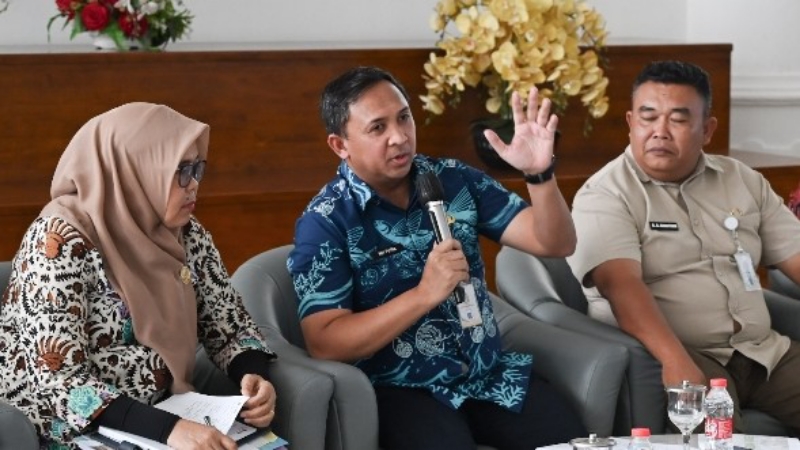
Head of the North Sumatra Provincial Social Affairs Office, Ady Putra Parlaungan, explained that digitalization represents an important step toward improving the management and quality of social welfare data. Through this system, the government can better integrate and streamline the processes of collecting, verifying, and updating information on potential social assistance recipients.
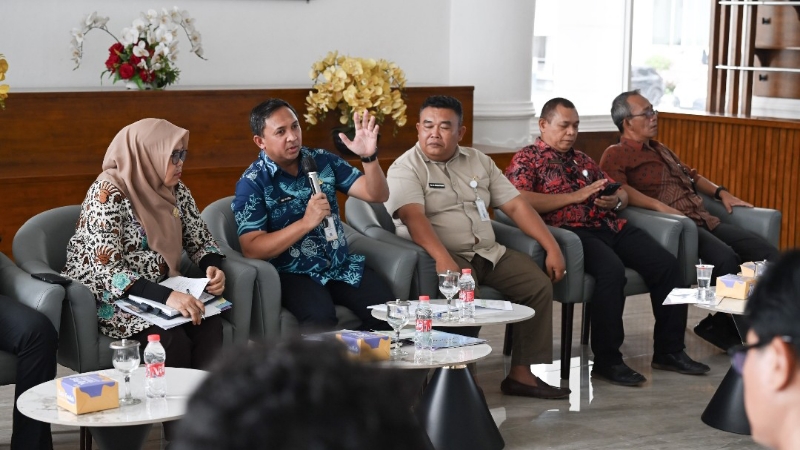
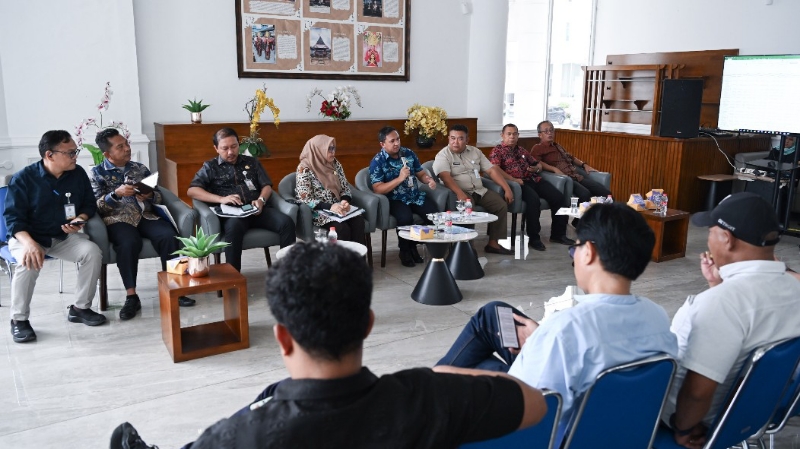
Ady made the statement during a press briefing organized by the North Sumatra Provincial Communication and Informatics Office in the lobby of the Dekranasda Building at the Governor's Office, Jalan Pangeran Diponegoro No. 30, Medan, on Friday, October 2, 2026.
According to Ady, the government has recorded a total of 4,864,605 households from 33 regencies and cities across North Sumatra in the Perlinsos system. However, only 466,102 households, or approximately 9.58 percent, have completed the registration process so far.
In response, the North Sumatra Provincial Social Affairs Office is encouraging residents to promptly register their Family Card (Kartu Keluarga/KK) data through the Perlinsos digital transformation system. The government provides two registration options: independent online registration and registration through authorized agents. Both options are accessible through the Ministry of Social Affairs' official portal.
Ady explained that public participation in the registration process is essential to accelerating the updating of social welfare data. The more families register their information, the more comprehensive the database will become, providing the government with a stronger basis for verifying and determining eligible social assistance recipients.
Medan City and North Tapanuli Regency have been selected as two pilot areas for implementing the digitalization program in North Sumatra. The government is using these two regions as starting points before gradually expanding the program to other areas.
Ady also revealed that Indonesian President Prabowo Subianto is scheduled to officially launch the digitalization program at a later date. In preparation, the regional government and relevant agencies are continuing their efforts to prepare residents and government institutions for its implementation.
Under Perlinsos Digital, the government is primarily focusing on identifying potential social assistance recipients among people classified in welfare deciles 1 through 4. Meanwhile, individuals belonging to deciles 5 through 10 may serve as registration agents, helping families and other residents classified in deciles 1 through 4 complete the registration process.
This approach provides an opportunity for people with the necessary digital skills to assist other members of the community. It is also intended to prevent limited technical knowledge or restricted access to online services from becoming barriers that exclude eligible families from the registration process.
"People belonging to deciles 5 through 10 can serve as agents and, for example, register their relatives who fall into deciles 1 through 4. However, the decision on who actually receives social assistance remains with the Ministry of Social Affairs," Ady said.
He emphasized that registering through an agent does not automatically guarantee eligibility for social assistance. The final decision on recipients remains under the authority of the Ministry of Social Affairs, based on data verification results and the applicable selection procedures.
Ady further explained that the implementation of Perlinsos Digital relies heavily on the use of Digital Population Identity (Identitas Kependudukan Digital/IKD). This digital identity serves as one of the instruments for matching and verifying residents' identities during the registration process.
To support implementation, Population and Civil Registration Offices (Disdukcapil) at the provincial, regency, and city levels are working together to ensure that biometric verification runs smoothly. An important component of this process is facial recognition technology, which matches residents' identities against information stored in the population database.
Coordination among government agencies is necessary to ensure that residents can complete registration without encountering difficulties during identity verification. Furthermore, integrating population data helps reduce potential discrepancies that could affect the accuracy of information used to identify social assistance recipients.
The North Sumatra Provincial Social Affairs Office is also responsible for monitoring the data verification and selection processes. Through this role, the regional government helps ensure that information recorded in the system reflects the actual socioeconomic conditions of residents in their respective areas.
"Regional social affairs authorities also contribute by verifying the actual conditions on the ground to ensure that social assistance programs, such as the Family Hope Program (PKH) and Non-Cash Food Assistance (BPNT), reach their intended beneficiaries," he explained.
Ady added that cooperation between the central government and regional administrations is a crucial factor in ensuring the proper implementation of social assistance programs. The Social Affairs Office is not merely encouraging residents to register but is also involved in monitoring data quality. This is intended to provide the government with as accurate a picture as possible of the living conditions of families who may qualify for social assistance.
The Family Hope Program (Program Keluarga Harapan/PKH) and Non-Cash Food Assistance (Bantuan Pangan Non Tunai/BPNT) are among the social assistance schemes for which reliable data is essential. Through an increasingly integrated data collection system, the government aims to reduce errors in beneficiary selection and assistance distribution.
According to the North Sumatra Provincial Social Affairs Office, the number of residents classified in welfare deciles 1 through 4 remains substantial. These figures provide an overview of the population's socioeconomic conditions and indicate which groups require particular attention under government social protection programs.
In the first decile, which represents the poorest segment of the population, the Social Affairs Office recorded a total of 437,761 households comprising 1,697,184 people. This group is classified as extremely poor, with a monthly income of less than IDR 800,000.
The second decile consists of 476,977 households, or 1,804,871 people. Individuals in this category earn between IDR 800,000 and IDR 1.2 million per month and are classified as poor.
The third decile comprises 499,243 households with a total of 1,765,523 people. This category includes individuals with monthly incomes ranging from approximately IDR 1.2 million to IDR 1.8 million, who are considered vulnerable to poverty.
Meanwhile, the fourth decile includes 478,197 households, or 1,585,297 people. Their monthly income ranges from IDR 1.8 million to IDR 2.5 million, placing them in the lower-income segment of society.
These figures illustrate the different economic conditions experienced by people across the four deciles. The classification serves as one of the foundations for assessing community welfare levels while supporting the identification of target groups for government social protection programs.
Ady also explained that a significant proportion of North Sumatra's population classified in deciles 1 through 4 comes from areas known as 3T regions. The term refers to areas that are underdeveloped, located along border regions, or geographically remote and difficult to access. The Nias Islands are among the areas where many residents experience these socioeconomic conditions.
The geographical characteristics of 3T regions present particular challenges for social assistance digitalization. The government must ensure that residents on islands and in areas with limited infrastructure have equal opportunities to register and participate in the data verification process.
For this reason, the involvement of regency and city governments, village administrations, and registration agents plays an important role in helping residents access the digital Perlinsos system. This support is expected to expand registration coverage while accelerating the updating of information on families in need.
Through accelerated digitalization and stronger coordination among government agencies, the North Sumatra Provincial Government hopes to make social assistance registration and distribution more transparent and accountable. The government is also encouraging residents to actively participate in updating their population data so that social protection programs can reach families who meet the applicable requirements for receiving government assistance. (IDNC)
REPORTER: Ahmad Zulfikar | EDITOR: Fik Sagala





 /home/u7391150/public_html/indatanews.com/theme/function.php on line 28