Tuesday, 15 September 2026
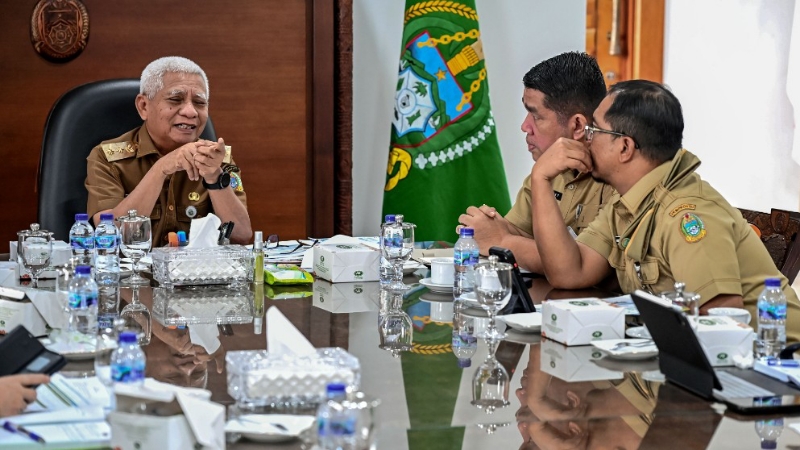
MEDAN | INDATANEWS.COM - North Sumatra Deputy Governor Surya witnessed the signing of a Joint Regulation (SKB) for Ruang Bersama Indonesia (RBI), a strategic government initiative aimed at strengthening the role of women and expanding child protection programs down to the village and neighborhood levels.
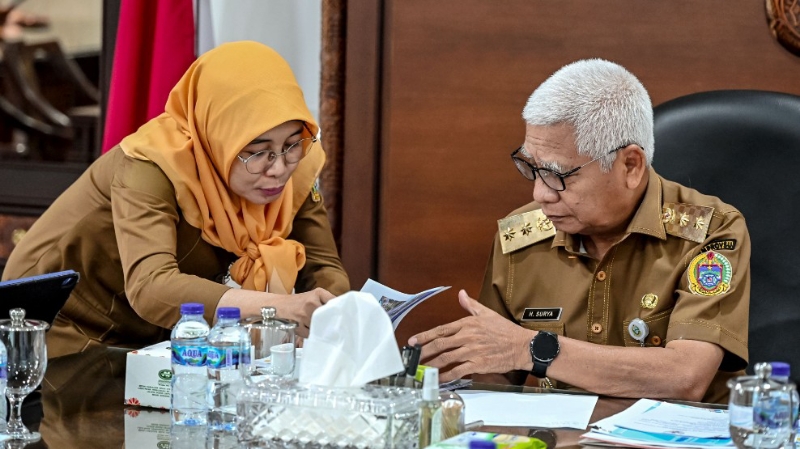
Surya attended the signing of the SKB alongside the heads of several regional government agencies (OPD) from the Deputy Governor's Office at the North Sumatra Governor's Office on Jalan Pangeran Diponegoro No. 30, Medan, on Monday, September 14, 2026.The SKB was signed by Minister of Home Affairs Tito Karnavian, Minister of Women's Empowerment and Child Protection (PPPA) Arifah Choiri Fauzi, and Minister of Villages and Development of Disadvantaged Regions Yandri Susanto. Through the SKB, the government is establishing a legal and regulatory framework for regional governments to plan, implement, and fund programs aimed at empowering women and protecting children in villages and urban neighborhoods.
The participation of the regional government in the event underscores the importance of cooperation between the central and regional governments to ensure that women's empowerment and child protection programs are implemented concretely at the grassroots level, where they are closest to the community."Protecting women is also a national issue and a major concern at the United Nations. Indonesia continues to emphasize and prioritize the protection of women and children through the President's various visions and programs," Tito Karnavian said while chairing the meeting.
Tito called on all regional governments to include the RBI program in their 2027 work plans. In his view, regional government participation is crucial to ensuring that national policies are effectively implemented within communities.The RBI program promotes collaboration among various community and government stakeholders at the village and neighborhood levels. The collaborative space is intended to strengthen women's position in development while creating a safer and more supportive environment for children's growth and development.
Minister of Women's Empowerment and Child Protection Arifah Choiri Fauzi said RBI serves as an integrated collaborative space at the village or neighborhood level. The program combines women's empowerment initiatives with child protection measures while involving both the community and local authorities.Arifah also outlined developments in gender equality and child protection in Indonesia. In 2024, the Gender Inequality Index (IKG) stood at 0.421, while the Gender Development Index (IPG) reached 91.85.
On the labor market, women's labor force participation stood at 56.42 percent, significantly lower than men's participation rate of 84.66 percent."There are still disparities between women and men, particularly in strategic areas such as representation in decision-making processes and labor force participation," she said.
These figures are among the reasons the government continues to advance programs that can expand women's opportunities to participate, particularly in decision-making and economic activities. At the same time, the government considers villages and neighborhoods strategic spaces because they are directly connected to people's daily lives.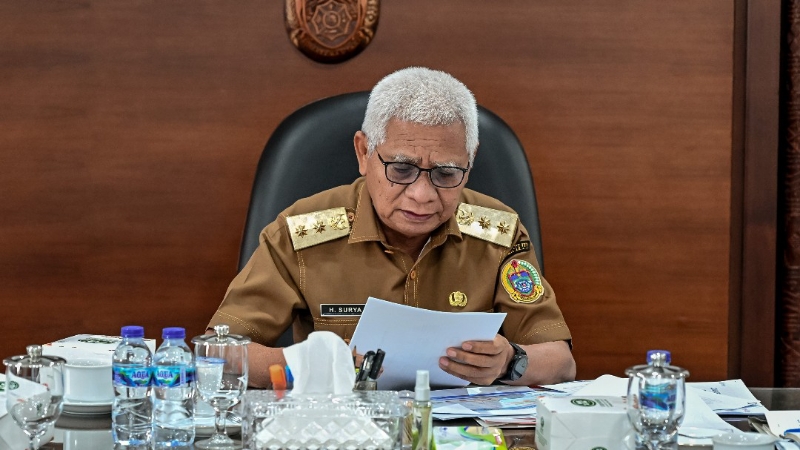
One form of RBI implementation is the Kebun Pangan Perempuan (KPP), or Women's Food Gardens. Arifah explained that KPP is not solely focused on using land to meet food needs but also serves to strengthen women's skills and self-reliance.
The program is designed to encourage women to play a stronger role by developing their skills, leadership, mutual support, and economic independence. At the same time, KPP supports household food security and the availability of nutritious food for children.This approach ensures that women's empowerment is not limited to social activities but also encompasses economic development and family resilience. By involving women in managing resources within their immediate surroundings, the government hopes to strengthen families' ability to independently secure their food needs.
The implementation of RBI will also be adapted to the conditions and potential of each region. The central government is giving villages and neighborhoods room to develop programs based on local traditions and the characteristics of their respective communities.This means RBI does not have to be implemented according to a uniform model across Indonesia. Villages can develop activities based on the needs of their communities, provided they remain focused on women's empowerment and child protection.
Yandri said many villages have already implemented various forms of RBI by utilizing local traditions and regional characteristics. These experiences demonstrate that villages have significant potential to serve as centers of community empowerment, including efforts to strengthen the role of women.
"At the Ministry of Villages, to implement the sixth point of the President's agenda, we have already implemented an integrated village economic transformation program in 1,110 villages. The actors are women according to their respective skills. In this way, women are empowered and villages have the necessary competencies," he said.According to Yandri, women must be given greater opportunities to participate in village development. Women should not merely be recipients of programs but should also serve as subjects and active participants in development.
Several villages have already provided concrete examples of how this concept can be implemented. Yandri cited Desa Muer in Sumbawa, Desa Mallari in Bone, and Desa Rossoan in Enrekang as among the villages that have carried out concrete RBI initiatives.In these villages, dedicated spaces have been created where women can voice their concerns and discuss the problems they face. Village governments can then use these inputs as a basis for preparing the Village Government Work Plan (RKP Desa).
"There are special village meetings for women. There, they discuss the challenges facing their villages. This ensures that their concerns are heard when the RKP Desa is prepared. There are also women's empowerment initiatives through the establishment of women's schools. In addition, there are community-based child protection volunteers whose goal is to reduce human trafficking through public awareness," he said.These initiatives demonstrate that women's participation in village development can take many forms, ranging from decision-making forums and skills development to strengthening women's economic position and establishing community-based child protection.
The central government hopes that the signing of the RBI SKB will strengthen coordination between ministries and regional governments. By incorporating RBI into regional planning and budgeting, women's empowerment and child protection programs are expected to receive stronger and more sustainable support.For North Sumatra, the agenda is part of efforts to strengthen cooperation between the regional government and national policy priorities. North Sumatra Deputy Governor Surya's participation in the SKB signing also provides an important impetus for regional agencies to continue implementing the policy according to the needs and characteristics of different areas across North Sumatra.
Ultimately, strengthening RBI is not only about protecting women and children but also about broader village development. When women are given opportunities to participate in decision-making, develop economic potential, and play an active role in development, villages gain increasingly strong social resources. At the same time, community-based child protection can help create a safer environment for future generations. (IDNC)REPORTER: Ahmad Zulfikar | EDITOR: Fik Sagala






 /home/u7391150/public_html/indatanews.com/theme/function.php on line 28