Monday, 26 October 2026
MEDAN | INDATANEWS.COM - Photojournalism in the digital age no longer depends on expensive cameras. What matters most is whether journalists can recognise the right moment, compose images effectively and convey a clear message through their photographs. With a smartphone, young media professionals can produce compelling, informative news images that are easy for audiences to understand.
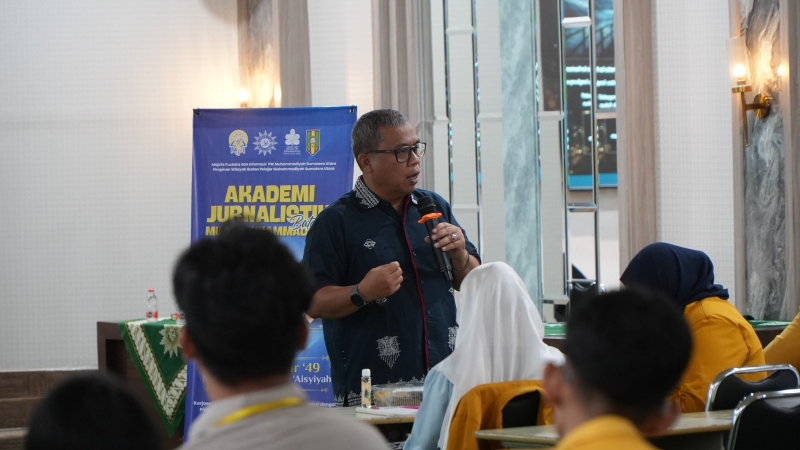
This was the message delivered by Dr. H. Muhammad Said Harahap, M.I.Kom., a member of the Library, Literature and Information Committee of the Regional Leadership of Muhammadiyah in North Sumatra and a photography lecturer at the Faculty of Social and Political Sciences at the University of Muhammadiyah North Sumatra. He spoke about smartphone photography in journalism during Batch 2 of the Muhammadiyah Young Journalists Academy (Akademi Jurnalistik Muda Muhammadiyah, AJMM), held on 24 and 25 October 2026 at the Muhammadiyah Da'wah Building in North Sumatra, Medan.The training was organised jointly by the Library, Literature and Information Committee of Muhammadiyah's Regional Leadership in North Sumatra and the Regional Leadership of the Muhammadiyah Student Association in North Sumatra. It aimed to equip young members with the skills to capture newsworthy press photographs and communicate messages effectively.
Dr Said Harahap has 21 years of professional experience as a photographer in the photo department of the daily newspaper Harian Analisa. During the training, he combined theoretical explanations with practical exercises. He emphasised that the ability to create visual content, identify the focal point of an image and understand the context of an event are among the most important foundations for aspiring journalists.In his view, basic equipment should never restrict journalists' creativity. Instead, they should sharpen their powers of observation, recognise significant moments, choose appropriate shooting angles and produce images that meet the demands of news reporting.
"A young journalist must be able to find and edit interesting photographs using a smartphone, so that audiences can understand them," he said.These skills are becoming increasingly important as digital media demand visual information that is fast, clear and engaging. Press photographs are not merely an addition to written reports. They also help audiences understand situations more clearly, identify the people involved and appreciate the human dimension of an event.
Journalists should therefore consider the message they want an image to convey before taking a photograph. The subject, background, composition and timing must support the facts and context of the report rather than simply aim for visual appeal.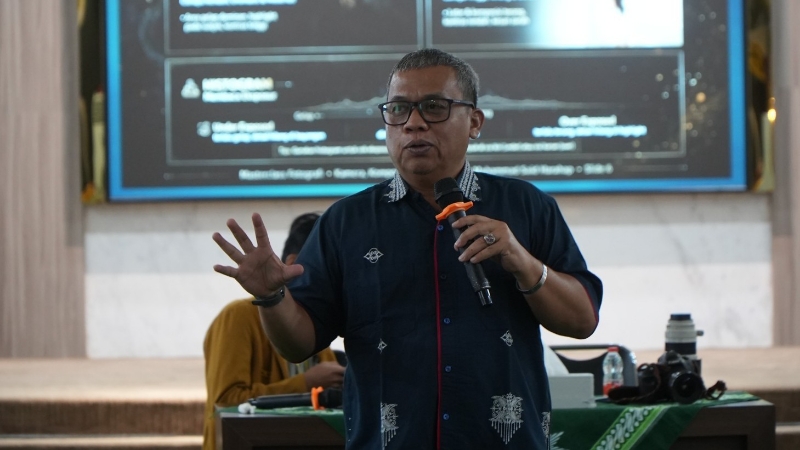
Dr Said also drew participants' attention to the many opportunities for photographic reporting during Muhammadiyah's 49th Congress, scheduled to take place in Medan in 2027. He believes the major gathering will offer numerous opportunities to tell stories from a human-interest perspective, highlighting personal experiences and circumstances that make events more relatable to audiences.
Young journalists can explore stories about participants travelling from different provinces, their journeys from distant regions, preparations by the organising committee and visitors' personal experiences during the congress.He also highlighted the potential for stories about congress participants staying at Muhammadiyah facilities or being accommodated by non-Muslim residents. Such experiences could illustrate the spirit of community and tolerance that brings people from different backgrounds together.
"That provides a very interesting basis for news photography," Said said.From this perspective, photographing the main stage or prominent figures delivering speeches is not enough. Photographers should also observe activities outside the official programme, interactions between participants, their facial expressions and their everyday experiences. These details help capture the atmosphere of an event more comprehensively.
Even seemingly ordinary moments can become powerful press photographs when their context and human significance are captured effectively. An image of participants who have travelled long distances, for example, can tell a story of commitment, personal sacrifice and their strong connection to the organisation.For aspiring journalists, the congress offers an opportunity to develop their skills while creating visual stories that introduce wider audiences to social life, cultural diversity and the spirit of tolerance.
Participants then prepared their work for publication on social media. The practical assignment combined photographic skills with journalistic writing, teaching participants not only how to capture meaningful images but also what information should be included in a caption or accompanying news report.
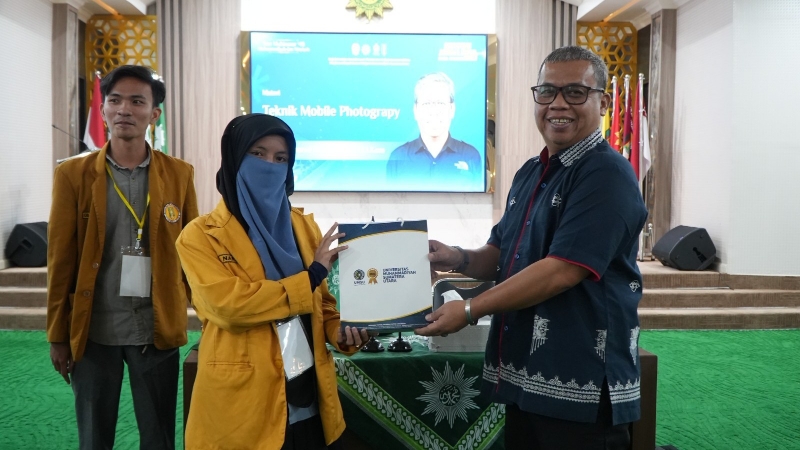
As part of the assessment, the organisers recognised two participants who, in their judgement, had demonstrated a particularly strong understanding of the smartphone photojournalism material. The awards formed part of an effort to turn the lessons into practical work that met publication standards.Dr Said Harahap praised the achievements of the two participants. He expressed hope that journalism training programmes for future generations of the Muhammadiyah Student Association would continue, enabling more young members to develop skills in communication, photography and news editing.
In his view, these abilities play a strategically important role in communicating Muhammadiyah's religious and social messages amid technological change and shifting patterns of information consumption. Young members must be able to convey messages in engaging ways while maintaining journalistic accuracy and responsibility."Members of the Muhammadiyah Student Association (IPM) are the successors to our organisation's da'wah mission. Journalism and photography will become important tools for da'wah in the digital age," he said in conclusion.
Through this training, AJMM Batch 2 aims to encourage young Muhammadiyah members to use available technology, including smartphone cameras, for journalistic work. By developing technical knowledge, sharpening their awareness of significant events and learning to communicate messages precisely, young journalists can produce images that do more than attract attention: they can also deepen public understanding. (IDNC)REPORTER: Dr.H. Muhammad Said Harahap | EDITOR: Fik Sagala