Sunday, 25 October 2026
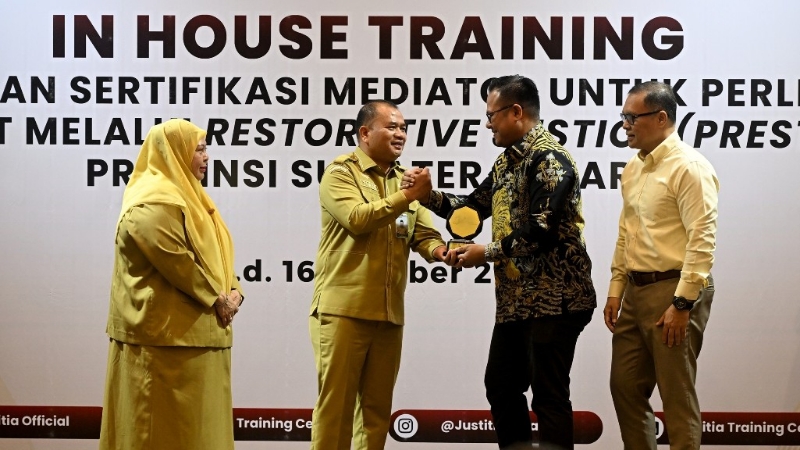
MEDAN | INDATANEWS.COM - The North Sumatra Provincial Government is expanding access to legal advice and services in villages and urban neighbourhoods by strengthening the skills of paralegals. The initiative aims to encourage peaceful dispute resolution through mediation and other out-of-court procedures, making it easier for residents to seek fair solutions without necessarily taking their cases to court.
The Acting Regional Secretary of North Sumatra, Timur Tumanggor, made the announcement on Monday, 12 October 2026, at the opening of a mediation training programme for paralegals at the Karibia Boutique Hotel in Medan. The programme is intended for paralegals working at legal aid posts (Pos Bantuan Hukum, or Posbankum) across the province's 6,110 villages and urban neighbourhoods.
"The North Sumatra Provincial Government is continuously working to ensure that people at the local level have access to legal services," Timur said.
The training is designed to improve paralegals' legal knowledge, communication skills and ability to facilitate negotiations. Through this initiative, they are expected to help residents understand their rights, identify appropriate solutions and resolve disputes before they escalate into lengthy legal proceedings.
Timur emphasised that consultation and a shared commitment to reaching agreement were important principles of social and public life. These values are also reflected in the fourth principle of Pancasila, Indonesia's state philosophy, which emphasises deliberation and consensus in decision-making.
He said mediation could bring opposing parties together, help them understand each other's interests and encourage mutually acceptable solutions, provided these remained consistent with the law.
To illustrate the importance of this approach, Timur referred to several cases that had attracted public attention in Indonesia. One was the case of Nenek Minah, a 79-year-old woman who faced legal proceedings after being accused of stealing three cocoa pods. The case highlighted how a dispute involving a person from a disadvantaged background could escalate into court proceedings.
He also cited the case of an elderly woman who was reported to the authorities by her own child over a disagreement concerning the division of inherited land. The dispute eventually went to court. In addition, he referred to cases in which parents had reported teachers to the police over alleged inappropriate conduct or violence against pupils.
According to Timur, such cases underline the need to consider not only legal requirements but also fairness and the wider impact of disputes on community relations.
However, mediation is not appropriate for every case. Where the law requires a specific legal procedure or where non-waivable rights are involved, the relevant legal provisions must take precedence.
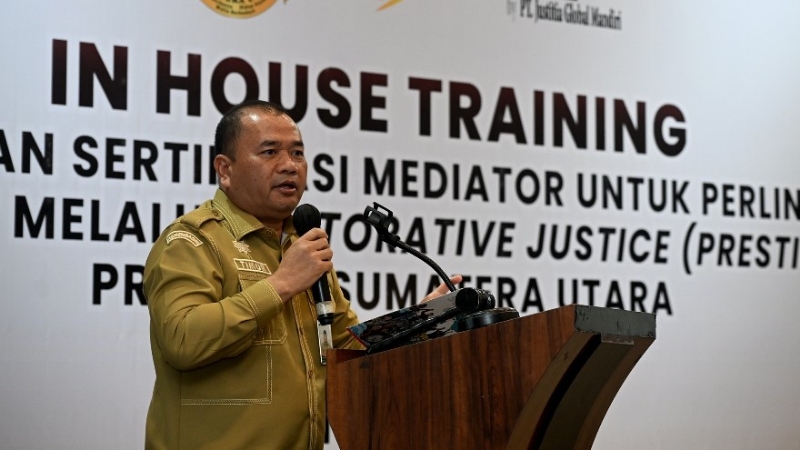
Timur described the mediation training as an important step towards improving paralegals' ability to handle a range of disputes within the community. He also referred to figures reported by the head of the North Sumatra Provincial Government's Legal Bureau.
"The head of the Legal Bureau has just reported that 713 of the 800 cases have been resolved," Timur said.
According to the figures, 713 out of 800 reported cases, or approximately 89.1 per cent, had been recorded as resolved. A fuller assessment of the results would, however, require information about the types of cases handled and the procedures used to settle them.
The four-day training programme covers legal knowledge, communication, negotiation techniques and practical methods for facilitating discussions between parties in conflict.
Timur said paralegals played a strategic role in raising public legal awareness. Their responsibilities extended beyond providing basic legal information and conducting awareness activities. They were also expected to help residents understand and exercise their rights, clarify circumstances within the scope of their authority, support negotiations and identify appropriate channels for resolving disputes.
Their presence in villages and urban neighbourhoods could enable residents to seek assistance at an early stage, reducing the risk of disagreements developing into prolonged disputes.
Paralegals must also understand the limits of their authority and follow the applicable procedures. They are expected to provide reliable information and refer cases to lawyers or the relevant institutions when more specialised legal assistance is required.
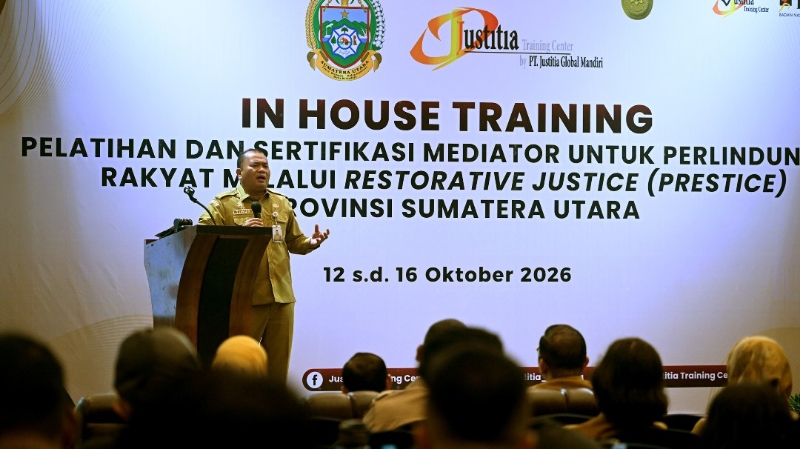
The Director of the Justitia Training Centre, Andriansyah Tiawarman K, welcomed the cooperation behind the mediation training programme. He also praised the Governor and Deputy Governor of North Sumatra for supporting PRESTICE, an acronym for Perlindungan Rakyat dengan Restorative Justice, or the protection of the public through restorative justice.
Andriansyah described the programme as an innovative approach to handling legal cases, with an emphasis on reparation and fair outcomes, particularly for people from disadvantaged backgrounds. Restorative justice seeks to enable those involved to take responsibility and reach appropriate solutions within the framework of the law.
He stressed that improving access to justice required close cooperation between the regional government, training institutions, paralegals and other relevant authorities. Legal training at village level, he said, must translate into practical support for residents rather than remain limited to classroom activities.
"The legal preparation and training of paralegals in villages is crucial because they are on the front line in ensuring access to justice and resolving disputes within the community through out-of-court procedures," he said.
By strengthening paralegals and supporting the PRESTICE programme, the North Sumatra Provincial Government hopes to make legal information and assistance more accessible. Properly trained paralegals are expected to help identify disputes at an early stage, prevent escalation and facilitate fair, peaceful resolutions where the law permits out-of-court settlement.
The success of these efforts will depend on the quality of training, clearly defined responsibilities and effective cooperation with legal aid providers and relevant institutions. Equally important is ensuring that negotiated settlements protect the rights of vulnerable parties and comply with applicable law. (IDNC)
REPORTER: Ahmad Zulfikar | EDITOR: Fik Sagala