Saturday, 24 October 2026
MEDAN | INDATANEWS.COM - Higher education institutions play a strategic role in strengthening food security through the use of available land, the cultivation of food crops, the adoption of agricultural technologies and the promotion of entrepreneurial thinking among students. These approaches deserve greater attention to ensure that universities and other higher education institutions serve not only as centres of education and research, but also as sources of practical solutions for society.
Timur Tumanggor, Acting Regional Secretary of North Sumatra Province, called on higher education institutions to use their campuses as examples of self-sufficient food production. In his view, making productive use of available land could help increase food supplies while bringing scientific knowledge more directly into everyday community life.
He made the remarks at the launch of the Kampus Mandiri Pangan (Campus Food Self-Sufficiency) programme at Medan Agricultural Polytechnic, on Jalan Binjai, kilometre 10, on Wednesday, 21 October 2026. He praised the institution's initiative and expressed hope that the programme would encourage other higher education institutions and the wider community to develop productive agricultural activities.
"We hope that higher education institutions can set an example in making use of available land, cultivating food crops, applying agricultural technologies and fostering entrepreneurial thinking among students. In this way, the scientific knowledge students acquire at university can benefit society," Timur Tumanggor said.
Timur stressed that higher education institutions needed to strengthen the links between their educational activities and the needs of the public. They had qualified personnel, scientific expertise and access to technologies that could support the sustainable development of agriculture.
The Kampus Mandiri Pangan programme gives students opportunities to apply their knowledge in practical settings. Activities include managing land, cultivating food crops, using agricultural technologies and developing entrepreneurial initiatives. This approach can also encourage creativity and help students identify business opportunities in the agricultural sector.
The productive use of campus land can provide a practical example for communities seeking to make better use of home gardens and limited plots around residential buildings. Such efforts could increase food production close to where people live while encouraging greater public participation in securing local food supplies.
Timur expressed hope that the programme would go beyond a symbolic launch. Higher education institutions should continue developing sustainable agricultural practices and encourage students to share their knowledge with local communities. This would enable more people to benefit from the initiative.
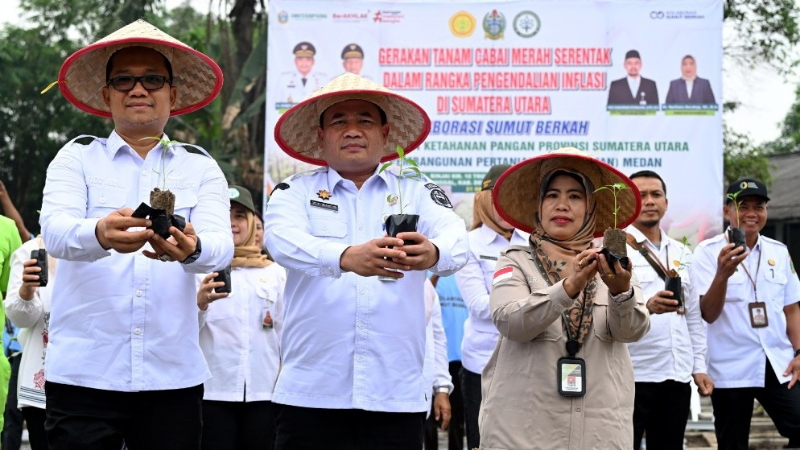
The launch of the Kampus Mandiri Pangan programme was accompanied by a joint chilli-planting initiative in several parts of North Sumatra. The initiative aims to encourage higher education institutions and local communities to use available land for chilli cultivation and increase local production.
Timur highlighted the importance of chillies in maintaining food price stability. Price fluctuations for this commodity can directly affect household expenditure and the purchasing power of the public. Increasing production and ensuring an adequate supply of chillies should therefore form part of regional inflation-control measures.
"Chillies are a commodity that can have a significant impact on inflation. Price fluctuations can directly affect people's purchasing power. We must therefore pay particular attention to increasing production and ensuring sufficient availability," Timur Tumanggor said.
In his view, the planting initiative could help improve the availability of this important agricultural commodity. If communities and educational institutions maintain their cultivation activities, local production could meet part of the demand while encouraging more people to contribute to food security.
However, the success of such measures depends on sustained cultivation, the use of appropriate technologies and consideration of market demand. Harvests must also become available at the right time to ensure that increased production delivers tangible benefits to the public.
The initiative also gives students an opportunity to gain a better understanding of the links between agricultural production, food distribution and price movements. Armed with this knowledge, they are expected to develop approaches that take into account not only cultivation and harvesting, but also consumer needs and the long-term economic viability of agricultural businesses.
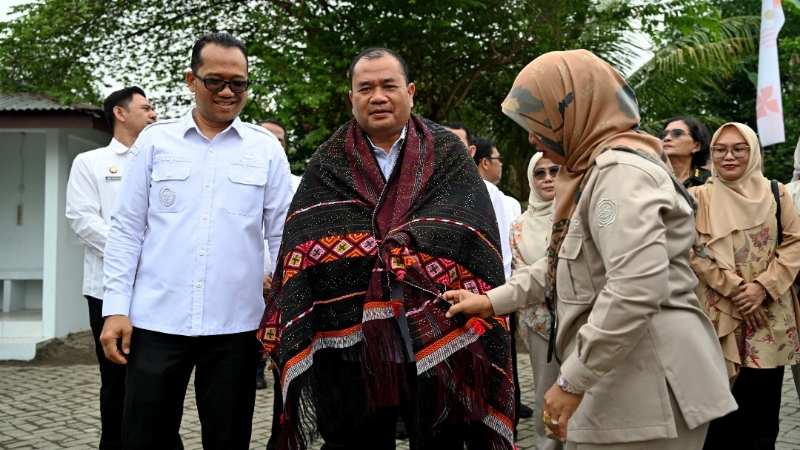
Nurliana Harahap, Director of Medan Agricultural Polytechnic, said agricultural students needed to be able to apply scientific knowledge in practical settings and respond to challenges facing society. Ensuring food availability was among the fundamental issues requiring particular attention.
"We hope these activities will improve students' ability to put the knowledge they acquire at the institution into practice. We also hope the movement to make productive use of available land will spread more widely, enabling us to achieve food self-sufficiency," Nurliana Harahap said.
The Kampus Mandiri Pangan programme creates opportunities for students to develop practical skills while gaining first-hand experience of the challenges facing agriculture. Through cultivation activities, they can gain experience in land management, production processes, the application of technology and the development of agricultural business models.
Nurliana expressed hope that the initiative to make productive use of available land would expand, allowing higher education institutions and communities to play a greater role in strengthening food self-sufficiency. She also emphasised the importance of putting knowledge acquired during university studies into practice so that education could deliver tangible and meaningful benefits to society.
Co-operation between higher education institutions, regional administrations, financial institutions and communities could further strengthen the programme's implementation. Support from a range of stakeholders would create opportunities to develop innovations, build skills and extend productive agricultural practices to more areas.
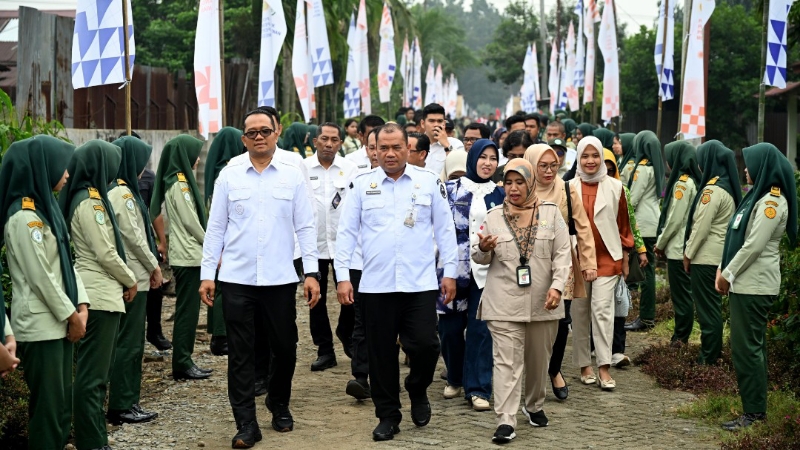
The launch was also attended by Abdul Khalim, Deputy Director of the Bank Indonesia Representative Office in North Sumatra Province; Mashandayani, Chair of the Family Welfare and Family Development Working Group in Tanjungbalai; as well as heads of various central government agencies operating in the region and representatives of regional companies in North Sumatra.
Several other regional leaders joined the event online, including Oloan P. Nababan, Regent of Humbang Hasundutan; Amizaro Waruwu, Regent of North Nias; and Sowa'a Laoli, Mayor of Gunungsitoli.
The participation of various stakeholders underlines the importance of joint efforts to strengthen food security. By making better use of available land, advancing agricultural technologies and developing students' skills, Kampus Mandiri Pangan aims to demonstrate how scientific knowledge can help address social challenges while supporting the stability of food supplies across North Sumatra. (IDNC)
REPORTER: Ahmad Zulfikar | EDITOR: Fik Sagala