Friday, 04 September 2026
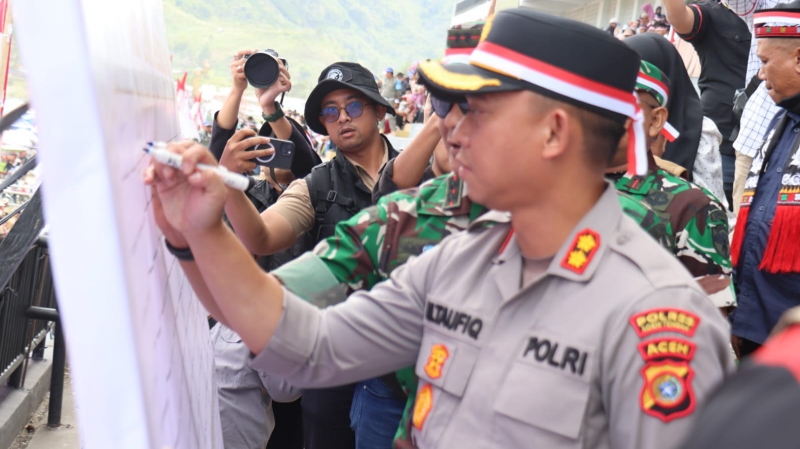
ACEH TENGAH | INDATANEWS.COM - Cheers from thousands of spectators who filled the traditional Gayo horse-racing track at the racecourse in Belang Bebangka Village, Pegasing District, Aceh Tengah, on Sunday, August 30, 2026, ended with a message of unity and a shared commitment to maintaining security and public order.
Around 3,000 spectators joined the regional government, the Indonesian Military (TNI) and National Police (Polri), the organizing committee, participants, and local residents in a national assembly and peace declaration. The event marked the conclusion of the traditional Gayo horse races held to commemorate the 81st anniversary of the independence of the Republic of Indonesia.The event, which began at 9:00 a.m. local time, also served as an important moment to reaffirm that the Gayo community can continue preserving its traditions and horse-racing heritage without neglecting security, public order, and sportsmanship.
A number of officials attended the event, including Commander of Military District 001/Lilawangsa Brigadier General TNI Ali Imran, Chairman of the Indonesian National Sports Committee (KONI) Lieutenant General (Ret.) Marciano Norman, Aceh Tengah Regent Haili Yoga, Aceh Tengah Deputy Regent Muchsin Hasan, Aceh Tengah Police Chief AKBP Muhamad Taufiq, as well as representatives of the Regional Leadership Coordination Forum and other relevant officials.The declaration also reaffirmed the participants' rejection of any form of unrest, provocation, or actions that could potentially trigger conflict within the community.
The message of unity became an important part of the conclusion of the traditional Gayo horse races. The event not only brought participants together in sporting competition, but also gathered a large number of people to witness one of the sporting traditions that has long been part of the social life of the Gayo community.Aceh Tengah Regent Haili Yoga expressed his appreciation to everyone who contributed to maintaining security and public order throughout the racing series.
He praised the community, organizing committee, participants, horse owners, jockeys, and security personnel for working together to ensure that the event could proceed safely and orderly through its conclusion."Winning or losing is part of every competition. What matters most is preserving brotherly ties and the good name of the region," Haili Yoga said.
In his view, the spirit of brotherhood must be maintained in every competition. Sporting rivalry should never become a reason to disregard social relations and community unity.The presence of thousands of spectators at the racecourse also reflected the community's strong interest in the tradition. Therefore, organizers and all parties involved have a responsibility to ensure that the event is conducted with fairness, sportsmanship, and security.
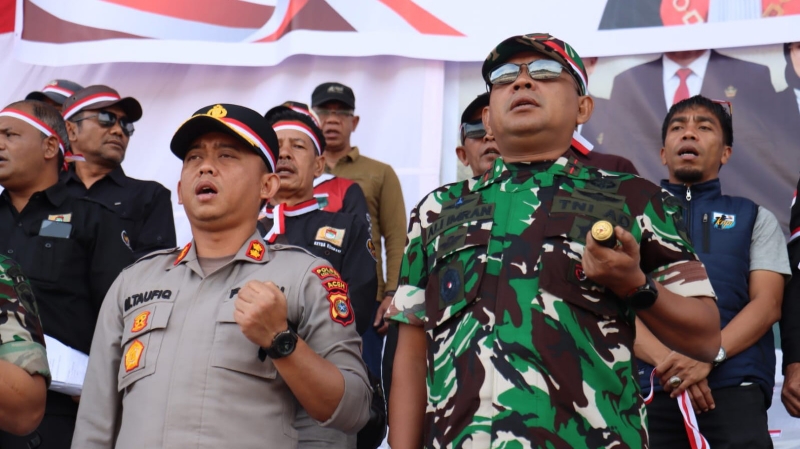
According to Marciano, all parties must develop a collective stance against provocation, misinformation, hate speech, intolerance, and other actions that could threaten social cohesion.
The message is particularly relevant at a sporting event where large numbers of people from different backgrounds and with different interests come together. Competition must remain within the boundaries of fair play and must not create problems beyond the racecourse.Marciano Norman then officially declared the traditional Gayo horse races commemorating the 81st anniversary of the independence of the Republic of Indonesia closed.
The official closing also marked the end of the entire horse-racing series held at the racecourse in Belang Bebangka Village, Pegasing District, Aceh Tengah.The conclusion of the event marked not only the end of the competitions, but also served as a reminder that traditional sports can provide a platform for strengthening social cohesion and national spirit.
Traditional horse racing holds an important position in the social and cultural life of the Gayo community. In addition to attracting spectators, the events provide a space for preserving traditions that have been passed down through generations.Therefore, the staging of horse races requires support from various parties so that cultural values and sporting activities can continue to coexist with public order and security.
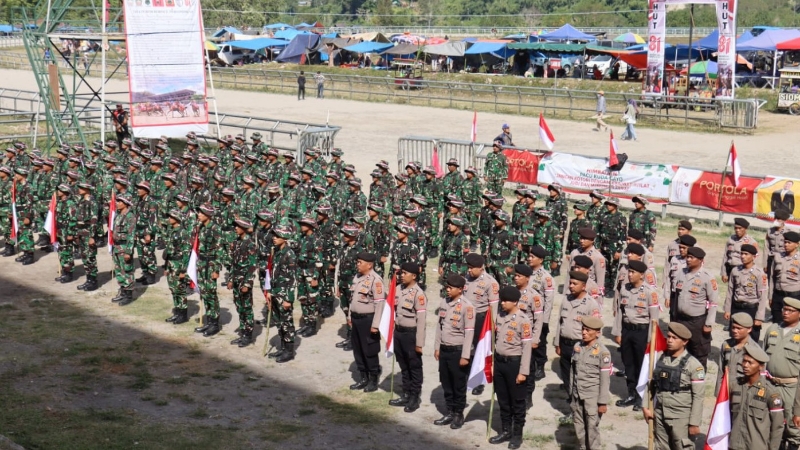
"The security measures were not only intended to ensure the orderly conduct of the event, but also to provide the public with a sense of security throughout the event until its conclusion," Rasimin said.
He explained that security personnel were tasked not only with preventing potential disruptions during the competitions, but also with ensuring that members of the public could safely follow the entire series of activities.According to Rasimin, community participation in maintaining order was an important factor in securing an event attended by thousands of people. Public awareness of the need to follow the rules and keep the situation calm and orderly helped security personnel carry out their duties effectively.
The national assembly, peace declaration, and closing of the traditional Gayo horse races ended at around 10:30 a.m. local time. The entire series of events proceeded safely, orderly, and smoothly.The conclusion of the event also demonstrated how the preservation of Gayo culture can be integrated with sporting activities and the strengthening of national spirit. The racecourse was not merely a venue for competition, but also a gathering place for the community to strengthen brotherly ties.
The peace message conveyed during the assembly and declaration underscored that continuing the tradition requires the support of all stakeholders. The community, government, security forces, organizing committee, participants, horse owners, and jockeys all share responsibility for ensuring that the horse races remain a source of pride for the Gayo community.The safe and peaceful conclusion of the traditional Gayo horse races also conveyed a broader message: tradition, sport, unity, and the spirit of independence can grow side by side. A shared commitment to security and sportsmanship provides an important foundation for preserving horse racing as part of the cultural wealth of Aceh Tengah. (IDNC)
REPORTER: Adli Safwan | EDITOR: Fik Sagala




 /home/u7391150/public_html/indatanews.com/theme/function.php on line 28