Saturday, 24 October 2026

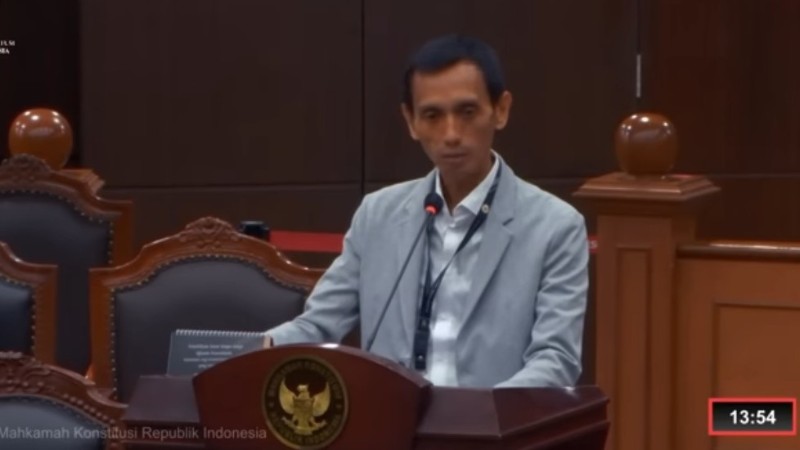
JAKARTA | INDATANEWS.COM ~ The Constitutional Court of the Republic of Indonesia (Mahkamah Konstitusi) has once again held a hearing in the judicial review of the Military Justice Law. The case centers on Articles 9, 43, and 127, which were challenged by the families of two alleged victims of violence involving members of the Indonesian National Armed Forces (TNI), Eva Meliani Br. Pasaribu and Lenny Damanik. The session focused on hearing expert testimonies submitted by the petitioners.
Legal Experts Raise Concerns Over Current Military Justice FrameworkThree constitutional law experts were presented during the hearing: Prof. Dr. Zainal Arifin Mochtar (Gadjah Mada University), Dr. Al Araf (University of Brawijaya), and Feri Amsari (Andalas University). All three delivered critical assessments of the current structure of Indonesia's military justice system, arguing that it requires urgent reform to align with constitutional principles.
Read Also:"An Outdated Legacy of the New Order Era"
The petitioners argue that the Military Justice Law is a remnant of Indonesia's New Order (Orde Baru) authoritarian period and has not undergone comprehensive reform. According to them, the law effectively allows military personnel accused of criminal acts in civilian contexts to be processed within the military justice system, potentially disadvantaging civilian victims seeking equal justice.
Read Also:Experts: Law Violates Equality Before the Law
Prof. Dr. Zainal Arifin Mochtar stated that Articles 9, 43, and 127 of the law are potentially unconstitutional. He argued that they grant overly broad jurisdiction to military courts, including authority over general criminal offenses that should fall under civilian jurisdiction.
He emphasized that this structure violates the principle of "equality before the law" and undermines the rule of law by failing to clearly separate military and civilian criminal jurisdictions."Sebodoh Itu kita terus mempertahankan ini," Zainal remarked, criticizing the long-standing lack of reform.
Read Also:Military Justice System Under Pressure for Reform
Dr. Al Araf warned that the current system creates conditions for structural impunity. In practice, cases involving military personnel often remain within internal military mechanisms instead of being brought before civilian courts.
He cited international examples, including Denmark, France, Sweden, and Portugal, where military justice systems are largely integrated into civilian legal frameworks during peacetime. According to him, military courts should only serve a limited and exceptional role in times of peace.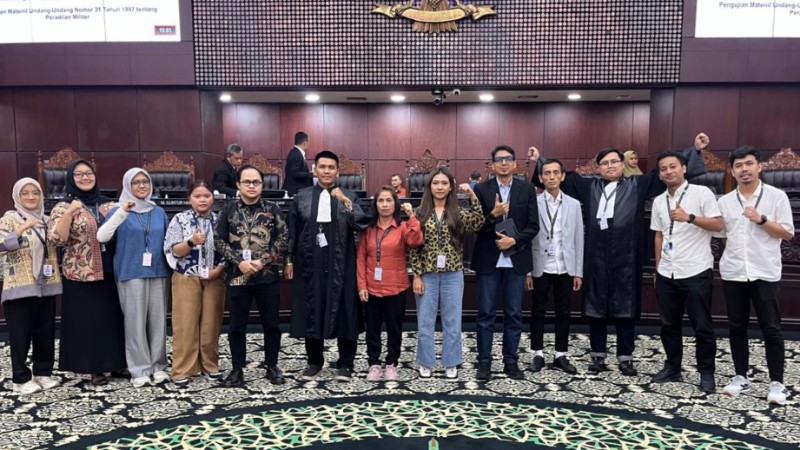
Read Also:
Parliament Urged to Act on Reform Efforts
Constitutional law expert Feri Amsari criticized Parliament for its passive stance on reforming the Military Justice Law. He urged the Constitutional Court to issue a decisive ruling that restricts military court jurisdiction strictly to military offenses.Such a ruling, he said, could trigger accelerated legislative reform without lengthy parliamentary delays. He also highlighted several cases involving alleged abuses by military personnel where investigations lacked transparency.
Read Also:These include incidents such as a sulfuric acid attack against human rights activist Andrie Yunus, which, according to him, reflects serious deficiencies in investigative accountability and victim protection.
Court Requests Additional Legislative Records
During the hearing, the Constitutional Court also raised procedural concerns regarding missing documentation from previous legislative deliberations. Justice Prof. Enny requested that the relevant meeting transcripts be submitted to support legal evaluation of the case.The hearing has been adjourned and is scheduled to continue in the next session. The petitioners are expected to present witnesses, while the government and the Indonesian Armed Forces (TNI) will appoint their own experts. The Court has also requested a written statement from the TNI Commander. (IDNC)
Read Also:REPORTER: Darmailawati | EDITOR: Fik Sagala