Monday, 09 November 2026

DELI SERDANG | INDATANEWS.COM - The Deli Serdang Regency Government is calling on all sections of society to work together to combat drug abuse and illicit drug trafficking. Prevention efforts must begin at family, neighbourhood and village level. Active public participation is considered crucial to restricting the reach of drug networks and, in particular, protecting the younger generation from the dangers of illegal substances.
The commitment was reaffirmed by Hendra Wijaya, Assistant for Economic and Development Affairs of Deli Serdang Regency, who represented Regent Asri Ludin Tambunan at an event entitled 'Together with the Community, Fighting Drugs from the Villages'. The event formed part of the police's Quick Wins priority programme, 'Police Together with the Community', and was organised by Medan City Police at the village head's residence in Amplas Village, Percut Sei Tuan District, on Wednesday, 4 November 2026.On the occasion, Hendra conveyed the regent's appreciation to the Medan Police Chief and all police units for their various efforts to combat drug trafficking. He emphasised that the regional government would support these initiatives through closer coordination and by involving administrative structures down to village level.
According to Hendra, the regent had highlighted the important role of all district heads in supporting police operations. They were expected to mobilise administrative staff and raise public awareness so that communities could work together to protect their respective neighbourhoods from drug abuse and illicit trafficking.Hendra believes prevention efforts become significantly more effective when communities are actively involved. Local residents, after all, are most familiar with conditions in their immediate surroundings and are therefore better placed to identify suspicious activities at an early stage.
"This is not solely the responsibility of the police or the Indonesian National Armed Forces (TNI). It requires the involvement of every section of society. When the community and village administration share the same commitment, the room for drug trafficking activities will continue to shrink," he said.These geographical circumstances make stronger neighbourhood surveillance and close cooperation across administrative boundaries particularly important. The regional government must work with security forces and residents to establish effective communication, enabling potential drug-trafficking activities to be identified at an early stage and tackled more quickly.
In Hendra's view, protecting communities from drugs cannot be achieved through police operations alone. Awareness within families, vigilance among neighbours and residents' willingness to report suspicious activities must also become an integral part of everyday life.Village administrations and neighbourhood heads have a strategically important role to play. They can organise discussions with residents, improve monitoring of local surroundings and encourage positive activities, particularly those involving young people.
In this way, opposition to drugs should not become visible only when security forces conduct operations. Instead, it must develop into a shared commitment that is firmly embedded in everyday community life.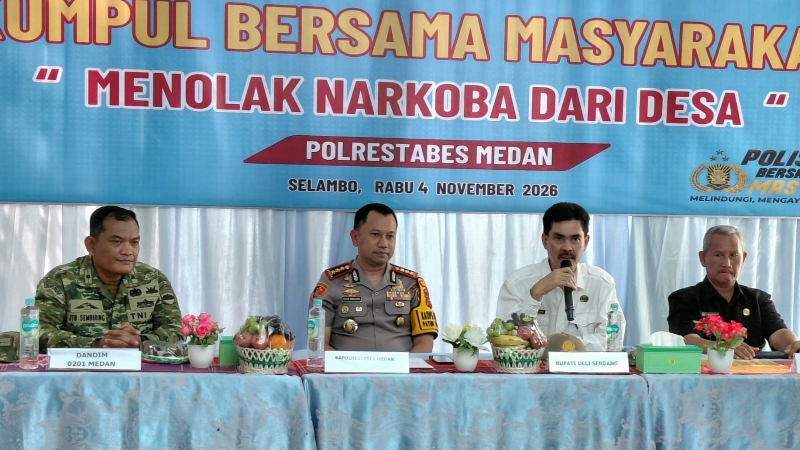
Meanwhile, Medan Police Chief Police Commissioner Jean Calvijn Simanjuntak stressed that tackling drugs required a broader approach than relying exclusively on law enforcement. Public education, prevention and active community participation must go hand in hand to create an environment that firmly rejects drug abuse and illicit trafficking.
He cited efforts to address drug-related problems in the Jermal area as an example. These included public awareness campaigns, preventive patrols and continuous police investigations and enforcement operations. The approach had already helped change public attitudes and increase acceptance of police presence in the area.This development demonstrated that constructive dialogue and consistent monitoring could strengthen public trust in security forces. Good relations between residents and the police also made it easier to identify drug-related problems at an early stage, before they spread further.
Jean Calvijn believes a similar approach should be extended to villages and neighbourhoods. Residents must not only understand the dangers of drugs but also recognise the various social factors that can drive people towards substance abuse.These include educational disadvantages, economic difficulties and limited employment opportunities. Prevention efforts must therefore address the underlying causes, enabling communities, particularly young people, to gain better living conditions and prospects that help them stay away from drugs.
"If we only address drugs at the end of the chain, through arrests, we will not solve this problem. We must examine the root causes and build effective prevention measures together with the community," he emphasised.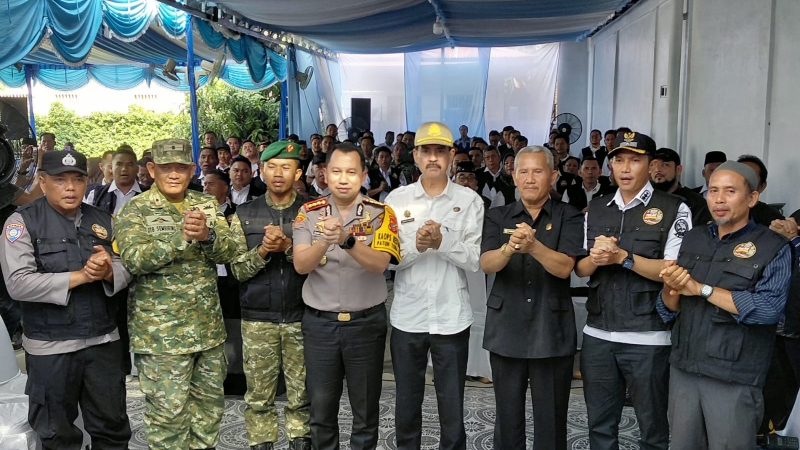
During the event, the Medan Police Chief also urged village heads, neighbourhood heads, hamlet heads and all administrative staff to adopt three shared commitments to strengthen the anti-drug movement.
First, every section of society must take a firm stand against drug abuse and illicit trafficking in its own neighbourhood. This commitment must be demonstrated through genuine vigilance and active participation rather than remaining limited to statements or declarations of intent.Second, residents must increase their vigilance in areas particularly vulnerable to drug abuse and trafficking. Communities should pay closer attention to changes in their surroundings and suspicious activities that could threaten public safety and order.
Third, all stakeholders must strengthen communication and cooperation between residents, the regional government, the Indonesian National Police (Polri) and the Indonesian National Armed Forces (TNI). Such cooperation is essential to ensure that emerging problems can be addressed through swift and targeted coordination.Through the 'Together with the Community, Fighting Drugs from the Villages' initiative, the Deli Serdang Regency Government hopes to embed the anti-drug movement within even the smallest units of society. The regional government is also urging administrative structures across the regency to communicate prevention messages to families and residents.
This commitment must extend beyond formal events and joint declarations. Instead, communities must translate it into practical action, including monitoring their neighbourhoods, raising awareness within families, encouraging community involvement and maintaining active communication with security forces.Cooperation between the regional government, police, armed forces and residents provides an important foundation for creating a safer environment and protecting the younger generation from the dangers of drugs. Through the involvement of all sections of society, villages are expected to become a crucial first line of defence against drug abuse and a key front in disrupting illicit drug-trafficking networks. (IDNC)
REPORTER: Edi Saputra | EDITOR: Fik Sagala