Sunday, 06 September 2026
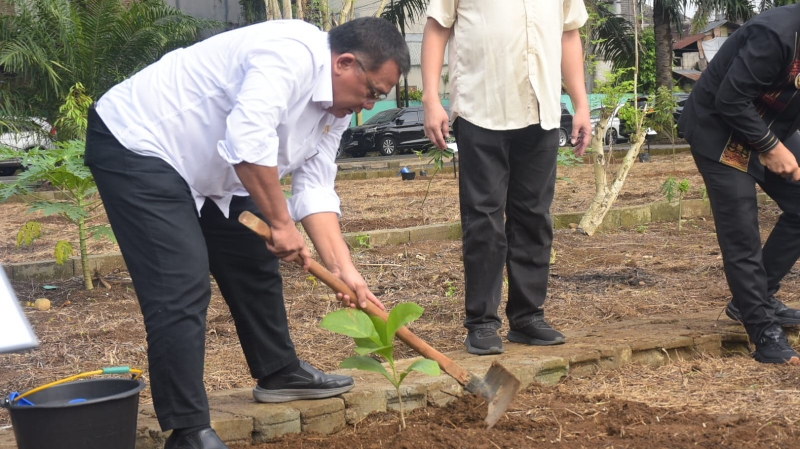
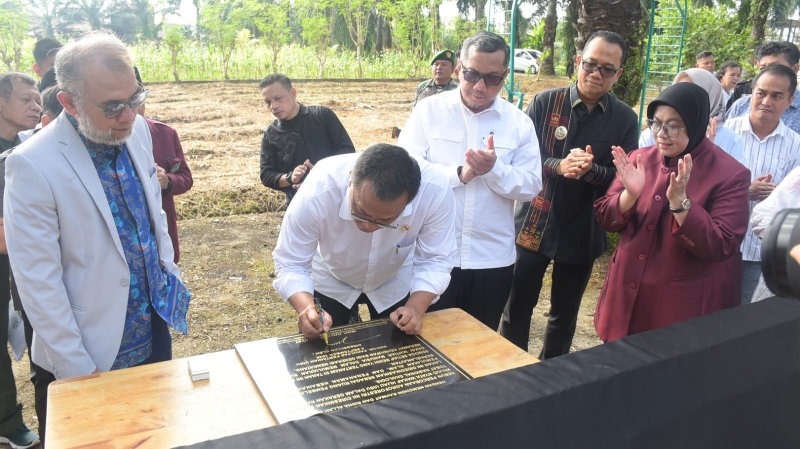
DELI SERDANG | INDATANEWS.COM - Deli Serdang Deputy Regent Lom Lom Suwondo SS, together with Environment Minister and Head of the Environmental Control Agency Mohammad Jumhur Hidayat, planted a red teak tree on Saturday, September 5, 2026, at the Agroforestry Experimental Site of the Faculty of Agriculture at the Universitas Islam Sumatera Utara (UISU) on Jalan Karya Wisata, Medan Johor District, Medan.
The tree planting was part of the movement to plant two billion trees across Indonesia. At the same time, the initiative provided an important opportunity to strengthen collective awareness of the importance of sustainable environmental protection, improvement, and restoration.
The tree-planting movement is not merely a symbolic planting activity. The government is calling on the public and all relevant stakeholders to recognize that environmental restoration requires behavioral change, shared responsibility, and concrete long-term action.
At the event, Mohammad Jumhur Hidayat called on all segments of society to build collective awareness through a movement he described as an "ecological turn." In his view, the movement requires all stakeholders to acknowledge the various actions that have contributed to environmental degradation, stop such practices, and then take concrete steps to restore the environment.
Momentum for an Ecological Turn
Jumhur said environmental awareness must not stop at acknowledging mistakes. All stakeholders must subsequently take concrete restoration measures capable of creating tangible impacts on both the environment and society.
"In the environmental sector, acknowledging a mistake means restoration must be the next step. Restoration can be pursued through various approaches - at the moral level, through individual awareness, as well as through policies that support behavioral change in society," he said.
He stressed that environmental problems require a comprehensive approach. The government cannot handle these challenges alone, as problems such as deforestation, pollution, and waste are directly linked to the activities of communities and businesses.
Therefore, Jumhur urged regional governments, universities, businesses, community organizations, religious organizations, and the public to assume responsibility according to their respective capacities. Cooperation among various stakeholders is a crucial factor in ensuring that the environmental restoration movement does not remain limited to symbolic activities.
The planting of red teak trees at the Agroforestry Experimental Site of the UISU Faculty of Agriculture also highlights the important role of universities in developing environmental awareness. Campuses can serve both as learning spaces and laboratories for developing agroforestry practices and environmental restoration measures that can later be implemented on a broader scale.
In addition to reforestation and environmental restoration, Jumhur highlighted the importance of improving waste management. In his view, changes in public behavior must be accompanied by policies that also hold manufacturers accountable for the environmental impacts of their products.
He emphasized the broader implementation of Extended Producer Responsibility (EPR). Under this concept, manufacturers should not focus solely on production and economic profit, but must also consider the entire life cycle of their products, including the management of waste generated after consumers use them.
"We want to ensure that there is a clear management system for the waste generated. Manufacturers must take responsibility so that the environmental burden is not borne entirely by the public and the government," he said.
According to Jumhur, the waste issue continues to require significant attention, as the government and the public still face considerable challenges in waste management. For this reason, manufacturer participation is essential to creating a more integrated waste management system.
The implementation of producer responsibility should also encourage changes in production processes. Companies can design products and packaging in ways that make them easier to manage at the end of their useful life. This could reduce pressure on the environment as well as on disposal and waste treatment facilities.
Jumhur also reminded stakeholders that economic growth must not come at the expense of public safety or environmental protection. He stressed that every economic activity must take into account its impact on the environment and surrounding communities.
"Economic profit can be achieved, but not at the expense of people and the environment. Restoration must take place because it is a right of the environment and a right of society," he stressed.
According to Jumhur, environmental restoration is not merely an obligation that generates costs. If properly developed by the government, communities, universities, and businesses, it can also create economic opportunities and new jobs.
Nursery operations, tree planting, land rehabilitation, area maintenance, and various other environmental restoration activities require workers and expertise. This can create employment opportunities for local communities while supporting the development of an economic ecosystem linked to environmental protection.
This approach is important because the environmental protection agenda must go hand in hand with efforts to improve public welfare. People should therefore view environmental restoration not only as an obligation, but also as an activity that provides social and economic benefits.
The movement to plant two billion trees in Indonesia is part of efforts to strengthen this awareness. Tree planting can help restore vegetation cover, support ecological balance, and increase public awareness of the importance of environmental protection.
Jumhur hopes regional governments can further strengthen the environmental restoration movement through sustainable programs. At the same time, he called on universities to continue research and development efforts to provide solutions to various environmental challenges.
The business sector also has an important role to play in implementing sustainable economic activities. Community and religious organizations, meanwhile, can contribute to strengthening environmental awareness among the public through educational programs and joint initiatives.
Deli Serdang Deputy Regent Lom Lom Suwondo SS also attended the event and took part in the tree planting. The presence of the regional government underscores the importance of cooperation between regional and central governments and universities in strengthening the environmental restoration agenda.
The event was held at the Agroforestry Experimental Site of the UISU Faculty of Agriculture. The site provides a suitable setting for disseminating knowledge about plants, forestry, and agriculture, as well as the relationship between human activities and ecological sustainability.
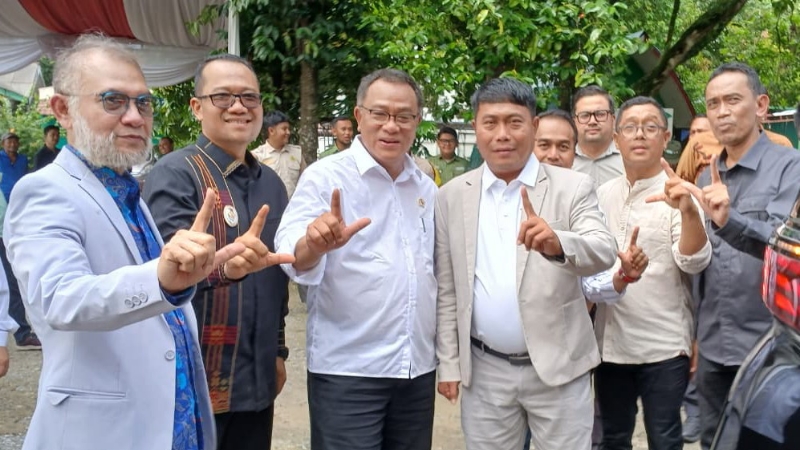
Also attending the event were UISU Rector Safrida, Chairman of the Yayasan Wakaf UISU Foundation Indra Gunawan, Deputy Mayor of Tanjungbalai Muhammad Fadly Abdina, and members of the academic community of the UISU Faculty of Agriculture.
Through the tree planting, the participating stakeholders not only planted red teak seedlings but also reaffirmed the message that environmental restoration requires a shared commitment. The "ecological turn" movement initiated by Environment Minister Jumhur is intended to help drive a shift from mere awareness toward concrete action for environmental protection.
This includes reforestation, waste management, behavioral changes, producer responsibility, and the enforcement of restoration obligations for those who cause environmental damage. Through the consistent involvement of various stakeholders, the environmental restoration movement is expected to deliver both ecological benefits and social and economic opportunities for the public. (IDNC)
REPORTER: Edi Saputra | EDITOR: Fik Sagala






 /home/u7391150/public_html/indatanews.com/theme/function.php on line 28