Saturday, 24 October 2026

JAKARTA | INDATANEWS.COM - The Indonesian government plans to build 60 vocational training centres in various regions across the country to improve public access to vocational education and training. Alongside expanding training infrastructure, the government is preparing a programme to provide one million people with fully state-funded training within a year. The funding will also cover the certification of skills acquired through the programme.
Manpower Minister Yassierli announced these targets on Tuesday, 13 October 2026, at the 2026 national working meeting of the Indonesian Higher Education Vocational Education Forum in Jakarta. The programme forms part of the government's efforts to improve the quality of human resources by equipping people with skills that meet labour market requirements."We will provide training for one million people within a year, fully funded by the government, including certification," Yassierli said.
The initiative will give people the opportunity to participate in training without having to bear the full cost themselves. Government support will also cover certification, enabling participants to demonstrate their acquired competencies and improve their prospects of entering the labour market.The construction of 60 vocational training centres in different regions is intended to extend the reach of vocational education and training. The new facilities could also bring training opportunities closer to people seeking to develop their professional skills. These include jobseekers preparing for specific occupational fields.
The government aims not only to increase the number of training participants but also to ensure that the skills they acquire meet employers' requirements. This approach is important as industrial needs continue to change, requiring workers to possess relevant competencies that they can apply directly in the workplace.
Through fully state-funded training programmes, the government seeks to remove financial barriers for people who want to improve their professional skills. Certification also plays an important role by providing companies and prospective employers with evidence of an individual's qualifications.However, expanding access to vocational training must go hand in hand with improvements in training quality, an adequate supply of qualified instructors and closer alignment with industrial needs. This will help ensure that the growing number of participants does not simply lead to more training completions, but also better prepares them to compete for jobs.
The government must also ensure that the construction of training centres across different regions takes account of local skills requirements. Analysing economic potential and labour demand can help align training provision with the competencies most sought after in each area.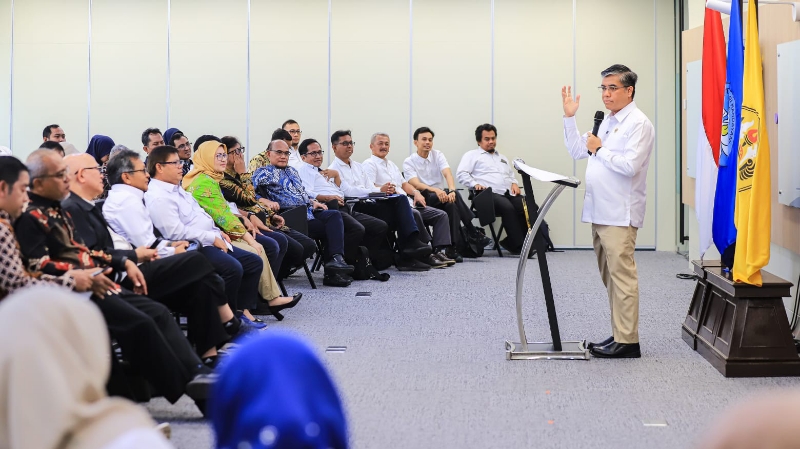
To align training programmes more closely with industrial requirements, the Ministry of Manpower is improving its use of labour market data through Labour Market Intelligence (LMI) while also updating Indonesia's Standard Occupational Classification (Klasifikasi Baku Jabatan Indonesia, KBJI). Both instruments help identify the occupations and competencies required by businesses and industry.
The use of labour market data can help the government and educational institutions determine which competencies need to be developed as a priority. Information on occupations in demand can also inform the design of training content, enabling programmes to respond more effectively to changes in workforce demand.This data-driven approach is important for narrowing the gap between jobseekers' existing skills and the qualifications employers require. Without a sound analysis, there is a risk that training programmes will develop competencies that do not fully match available employment opportunities.
Vocational training programmes must therefore take account of changes across industrial sectors, emerging occupations and growing demand for specific skills. Close cooperation between the government, educational institutions and businesses is also necessary to ensure that training provision keeps pace with developments in the labour market.
Yassierli explained that applicants' competencies were an important criterion for companies when assessing their suitability for particular roles. Under the so-called skill-first approach, the assessment focuses on the skills candidates actually possess.
"Companies with access to Big Data are now looking for applicants' competencies, in other words, their skills. This is precisely the approach we are trying to establish among Indonesia's workforce," Yassierli added.This approach highlights the importance of practical skills that enable people to perform specific tasks in the workplace. By placing greater emphasis on competencies, companies can assess candidates according to their actual abilities rather than relying exclusively on academic qualifications or employment history.
For vocational education and training institutions, this development provides an incentive to strengthen cooperation with businesses and industry. Curricula, practical training and teaching methods must reflect workplace requirements so that graduates can apply their acquired skills directly in their professional lives.Achieving this alignment also requires active participation from businesses. Companies can identify their workforce needs, provide feedback on training content and support participants' skills development. Through targeted cooperation, vocational education can make a greater contribution to preparing workers for industrial requirements.
The planned training for one million people and the construction of 60 vocational training centres are intended to broaden access to skills development across Indonesia. Ultimately, the programme's success will depend on whether participants improve their abilities, obtain recognised certificates and secure jobs that match their competencies. (IDNC)REPORTER: Ahmad Zulfikar | EDITOR: Fik Sagala