Tuesday, 29 September 2026
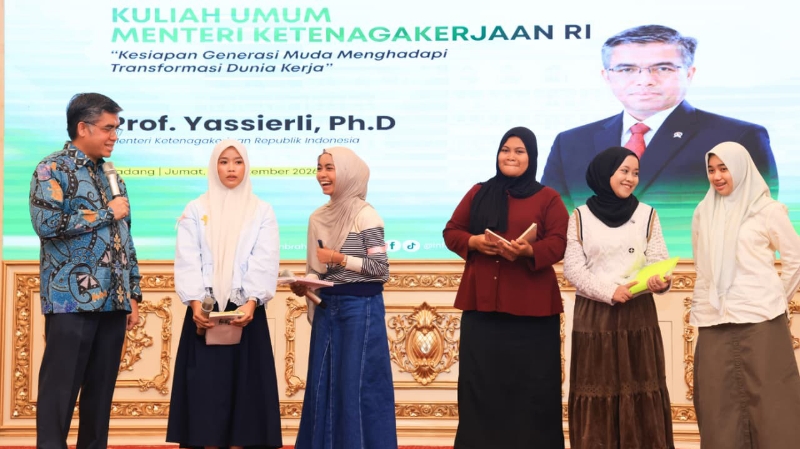
PADANG | INDATANEWS.COM - Labor Minister Yassierli has called on the younger generation to continuously strengthen their skills and adaptability to prepare for the rapidly changing world of work. Developments in artificial intelligence (AI), digitalization, the green economy, and demographic changes are reshaping both the types of jobs available and the way people perform their work.
According to Yassierli, an academic diploma alone is no longer sufficient as a foundation for entering the workforce. Young people must also possess skills that meet industry requirements, gain practical work experience, remain adaptable, and demonstrate a willingness to continuously learn and develop their personal capabilities."Facing these changes, it is not enough simply to have a diploma. We must prepare the younger generation to have relevant skills and work experience, remain adaptable, and be willing to keep learning," Yassierli said during a public lecture at Baiturrahmah University in Padang on Friday, September 25, 2026.
Rapid technological developments are also changing the requirements for workers. Some occupations are being transformed through the use of new technologies, while new fields of work are emerging that require different qualifications and skills.Therefore, young people should understand these changes as part of the dynamics of the labor market. The ability to acquire new skills is becoming an important requirement for workers seeking to remain aligned with the demands of the job market.
Yassierli explained that young people should prepare for changes in the workplace through reskilling and upskilling. Both approaches can help workers expand their capabilities while adapting to evolving workplace requirements.
Reskilling gives people an opportunity to acquire new skills that differ from their existing competencies. This can create opportunities to move into other fields of work that are emerging as a result of technological developments.Upskilling, meanwhile, focuses on strengthening and further developing existing skills. By improving their competencies, workers can better meet the increasingly complex and dynamic demands of their jobs.
According to Yassierli, skills development must be carried out continuously. The workforce no longer needs only people with basic technical abilities, but also workers who are capable of continuously developing themselves and combining different competencies according to the requirements of their respective occupations.The Ministry of Manpower is working to strengthen Core Skills and Integrated Skills to improve the workforce readiness of the younger generation. Core Skills include technical competencies, certifications, professional portfolios, and practical experience that can serve as evidence of an individual's abilities.
Integrated Skills, meanwhile, focus on the ability to combine different competencies to complete tasks according to the requirements and needs of the workplace.Strengthening both areas is considered important as technological advances increasingly reshape the boundaries between different fields of expertise. Young people need both technical capabilities and the ability to integrate different areas of knowledge when dealing with workplace challenges.
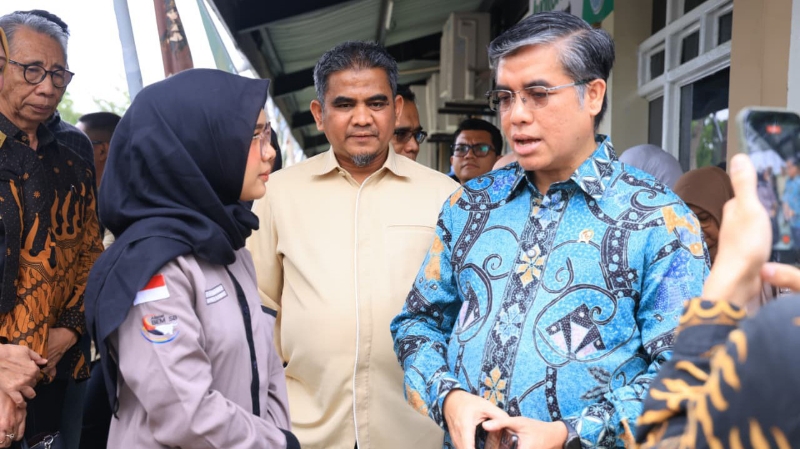
"Amid the development of AI, human capabilities in creativity, empathy, integrity, and decision-making must continue to be strengthened. Therefore, we must learn to work together with technology," Yassierli said.
He explained that human capabilities such as creativity, empathy, integrity, and decision-making will continue to play an important role in responding to changes in the workplace. Young people should therefore view technology as part of their professional environment and learn to use it appropriately and effectively.The ability to work alongside technology also requires a commitment to continuous learning. As technologies evolve and workflows change, workers need to regularly update their knowledge and skills so they can continue performing their responsibilities effectively.
In addition to technical competencies, Yassierli said young people should strengthen their adaptability through a growth-oriented mindset, practical experience, and perseverance in developing their capabilities. Such a mindset encourages people to view learning as an ongoing part of their professional lives.Practical experience also plays an important role because skills are not developed solely in the classroom. Practical activities allow young people to experience workplace situations, solve problems, make decisions, and apply the knowledge they have acquired directly.
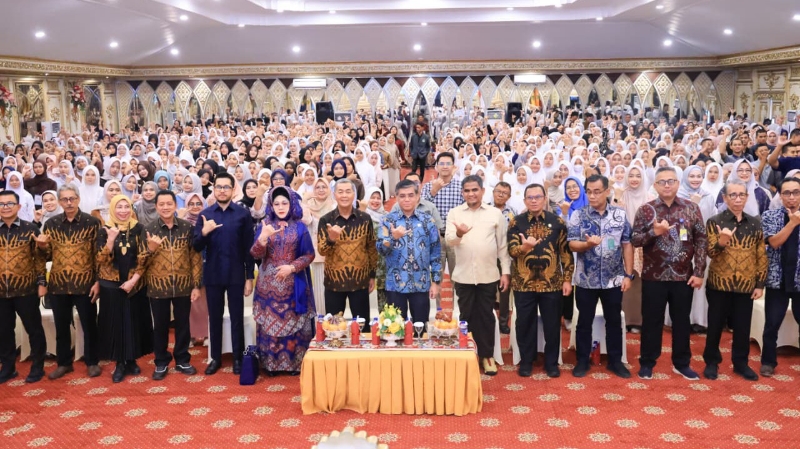
These programs provide young people with opportunities to acquire skills that are more closely aligned with the requirements of the workplace. Vocational training supports the development of technical competencies, while training programs provide practical experience in real working environments.
Competency certifications can also help strengthen the recognition of professional skills. Through clearly defined competency standards, young people can obtain evidence of their abilities that may be useful both when entering the workforce and when pursuing further career development.Yassierli emphasized that the government is not only encouraging people to develop their skills but also seeking to establish an ecosystem that supports the process. Available training opportunities, work experience, talent development, and certifications are components of this support, helping young people become better prepared for changes in the labor market.
"The world of work will continue to change. Therefore, the younger generation must be willing to keep learning, develop their skills, and adapt to change. The government is here to ensure that a supportive ecosystem is in place," he said.Changes in the world of work driven by technological advances, digitalization, the green economy, and demographic developments demonstrate that learning does not end with obtaining a diploma. Young people must continuously update their skills to keep pace with labor market requirements.
The message also highlights the importance of lifelong learning in preparing a skilled workforce. With relevant competencies, sufficient experience, adaptability, and a willingness to work alongside technology, young people can respond to the changing demands of the workplace.The government must also ensure that skills development programs reach broad sections of society so that opportunities for further training are not limited to certain groups. Cooperation among the government, educational institutions, businesses, industry, and society is an important part of building a workforce capable of responding to change.
By strengthening skills and developing a supportive ecosystem, the younger generation can be better prepared for the dynamics of the labor market. Technological change brings not only challenges but also new opportunities for those willing to learn, develop their capabilities, and adapt to the changing demands of the workplace. (IDNC)REPORTER: Ahmad Zulfikar | EDITOR: Fik Sagala





 /home/u7391150/public_html/indatanews.com/theme/function.php on line 28