Sunday, 01 November 2026
MEDAN | INDATANEWS.COM - Ulos is more than a symbol of Batak cultural heritage. It also has considerable potential to become a fashion product capable of competing in international markets. Through innovative designs and the creativity of designers, this traditional textile can reach new consumers, open up wider markets for local products and create economic opportunities for designers and craftspeople.
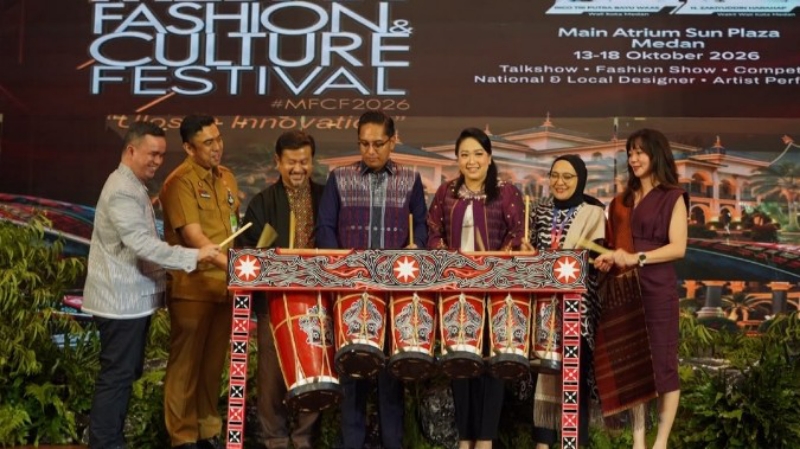
This potential was highlighted at the Medan Fashion & Culture Festival (MFCF) 2026, held under the theme Ulos in Innovation. Medan Mayor Rico Tri Putra Bayu Waas officially opened the festival at the Main Atrium of Sun Plaza Medan on Tuesday, 13 October 2026. Running until 18 October 2026, the festival brings together Indonesia's rich traditional textile heritage and the creativity of designers to produce contemporary fashion.
The opening ceremony was attended by representatives of the Regional Leadership Coordination Forum, Chair of the Medan Regional National Handicraft Council Airin Rico Waas, Acting Medan Regional Secretary Erfin Fachrurrazi, and Acting Chair of the Medan branch of Dharma Wanita Persatuan, Fahriatun Nisa Erfin Fachrurrazi. Rico Waas formally inaugurated the event by striking a traditional Batak taganing drum.
MFCF 2026 not only introduces ulos and other traditional textiles to the public but also provides a promotional platform for designers and craftspeople seeking to expand their market reach. Through creative approaches, the organisers aim to demonstrate that cultural heritage can evolve in line with changing trends without losing its identity.
Rico Waas emphasised that Indonesia's traditional textiles hold value far beyond their beautiful motifs and visual appeal. Each piece of fabric carries a history, identity and cultural values passed down from one generation to the next.
He said this cultural wealth represented an important asset for Indonesia's fashion industry, enabling it to develop distinctive products capable of competing in global markets. Designers therefore need to draw on their creativity to transform traditional textiles into garments that meet the needs and preferences of contemporary consumers.
"Our local clothing and traditional fabrics are truly priceless because they have such deep cultural roots. I firmly believe our local textiles can break into international markets," Rico Waas said.
He explained that Indonesia has a wide variety of traditional textiles reflecting the cultural richness of its different regions. Alongside ulos from the Batak community, the country is home to Malay, Karo, Minangkabau and Riau textiles, as well as batik from Java. This diversity provides designers with a wealth of inspiration for creating fashion pieces with a distinctly Indonesian identity.
Rico believes design innovation is one way to introduce the richness of traditional textiles to younger generations and overseas consumers. By combining traditional characteristics with modern approaches, designers can broaden the use of locally produced fabrics across a wide range of fashion products.
Such development also requires sustained promotional efforts. Fashion festivals, runway shows and opportunities for designers to engage directly with the public can help showcase the quality and uniqueness of traditional textiles to prospective buyers.

Alongside efforts to promote Indonesian fashion overseas, Rico Waas highlighted the importance of strengthening the domestic market. He said local designers needed public support to establish a strong consumer base before expanding their reach internationally.
He encouraged people in Medan to take pride in products created by Indonesian talent by making a habit of wearing and purchasing garments designed by local fashion professionals. Support from domestic consumers can help sustain creative businesses while encouraging designers to continue developing new collections.
"Medan must be able to lead in its own city. It is important for us to get into the habit of wearing locally designed clothing and buying products from our own designers," he stressed.
Rico hopes designers from Medan will not restrict themselves to the local market but will have the confidence to expand nationally and internationally. In his view, regional cultural heritage can provide a source of inspiration that distinguishes Indonesian designers' work from other fashion products.
Achieving this ambition requires the involvement of various stakeholders, including the government, creative industry professionals, event organisers and consumers. Sustained collaboration can strengthen the fashion ecosystem while creating more opportunities for traditional textiles to establish a presence in wider markets.
In this context, ulos has the potential to evolve beyond a traditional textile worn during customary ceremonies and become an integral part of modern clothing. Such innovation could open up new opportunities for traditional fabrics while preserving the cultural values they embody.
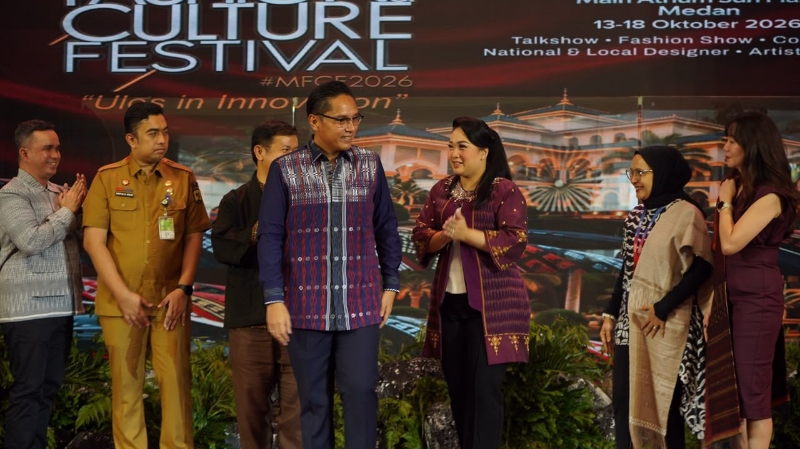
M. Odi Anggia Batubara, chair of the MFCF 2026 organising committee and head of the Medan City Tourism Office, said the festival featured eight local designers and two national designers. The event forms part of the Medan City Government's efforts to develop the creative economy, particularly the fashion subsector, while expanding market opportunities for regional creative products.
Odi explained that the fashion industry encompasses an interconnected chain of economic activities, involving textile craftspeople, material suppliers, designers, business operators and consumers purchasing finished products. Consequently, growth in the fashion industry can create business opportunities for a broad range of participants, rather than benefiting only the designers featured in runway shows.
Through MFCF 2026, the organisers aim to bring cultural heritage and the creativity of industry professionals together to produce goods with greater added value. The festival's promotional activities also give designers an opportunity to introduce their distinctive work to the public and reach a wider pool of prospective consumers.
Over the six-day programme, the festival features a range of activities, including fashion shows, discussions on ulos and traditional crafts, modelling competitions for children and teenagers, musical performances and appearances by artists. The organisers have also scheduled a special Ulos Day programme for 17 October 2026.
Designers showcasing their work at the festival include Torang Sitorus, Wieke Dwiharti, Yuni Pohan, Haze Be Wear, Isye Siregar, Mojo Kebaya, Feby Ayang, Yenti Lim, Nadia Azhari, Sadina and Deti Fitri.
Their participation demonstrates the range of creative approaches used to transform cultural inspiration into fashion. The involvement of both local and national designers also creates opportunities to exchange ideas and expand promotional prospects for creative industry professionals in Medan.
Through MFCF 2026, ulos and Indonesia's traditional textiles have a platform to reach wider audiences through contemporary interpretations. The next challenge is to maintain consistent promotional efforts, strengthen product quality and improve market access so that designers' creativity can translate into sustainable business opportunities.
With support from consumers and continued development of the creative industry, traditional textiles could secure a stronger position in the fashion sector. Cultural preservation would then not only safeguard regional identity but also contribute to economic growth, creating opportunities for local craftspeople and designers to compete in global markets. (IDNC)
REPORTER: Ahmad Zulfikar | EDITOR: Fik Sagala