Friday, 18 September 2026
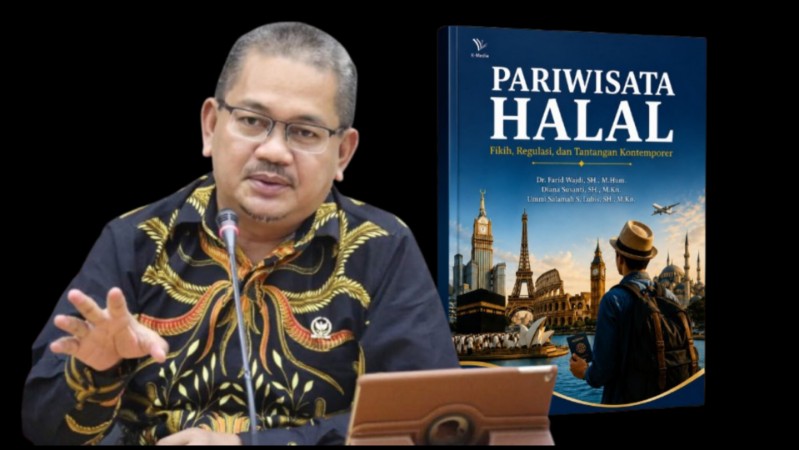
MEDAN | INDATANEWS.COM - The development of the global economy, advances in digital technology, and increasing human mobility have fundamentally transformed the tourism industry. Tourism is no longer viewed merely as a leisure activity for recreation; it has evolved into a space where values, economic interests, cultural identities, and development goals intersect. In this context, the concept of halal tourism has gained growing relevance as it seeks to integrate spiritual, ethical, and sustainability principles into a comprehensive tourism model.
This idea is explored extensively in the book Halal Tourism: Fiqh, Regulation, and Contemporary Challenges by Farid Wajdi, Diana Susanti, and Ummi Salamah S. Lubis. Published by K-Media Yogyakarta (ISBN 978-634-7734-26-6), the book provides an academic response to the changing preferences of Muslim travelers worldwide who seek travel experiences that align with Sharia principles without compromising service quality, comfort, and professionalism.One of the book's greatest strengths is its comprehensive approach to halal tourism. Traditionally, halal tourism has often been reduced to food certification, prayer facilities, or other supporting services for Muslim travelers. However, the authors highlight the limitations of this narrow perspective. They present halal tourism as an ecosystem that integrates spiritual values, economic justice, social responsibility, and environmental sustainability within a unified development framework.
Through comparative analyses of various countries-both Muslim-majority and non-Muslim-majority-the book highlights Indonesia's significant opportunity to become a global leader in halal tourism. Its rich cultural heritage, diverse traditions, and abundant natural resources provide strategic advantages that can transform Indonesia from a tourism destination into a center for ethical, inclusive, and sustainable tourism.
Ultimately, the book serves not only as an academic reference but also as an intellectual guide for policymakers, industry stakeholders, researchers, and the broader public. Through well-founded arguments and accessible explanations, the authors invite readers to view halal tourism as a future-oriented development paradigm that balances economic growth with moral, social, and environmental responsibility.In the era of Society 5.0, this work reminds us that true progress in the tourism industry can only be achieved when it is grounded in humanity, sustainability, and the common good. (IDNC)
AUTHOR: Dr. Farid Wajdi, S.H., M.Hum et al.


 /home/u7391150/public_html/indatanews.com/theme/function.php on line 28